
Lewis Baltz

Lewis Baltz
To artist biography

Lewis Baltz

Which art books, prints and posters are available by and about this artist? Here is a sample of items of interest to a typical collector:
Book images
1974
with:
Edition:
1st
Edition size:
Out of Print
Other edition(s):
Hardcover with dust jacket
ISBN:
Condition: Near Fine

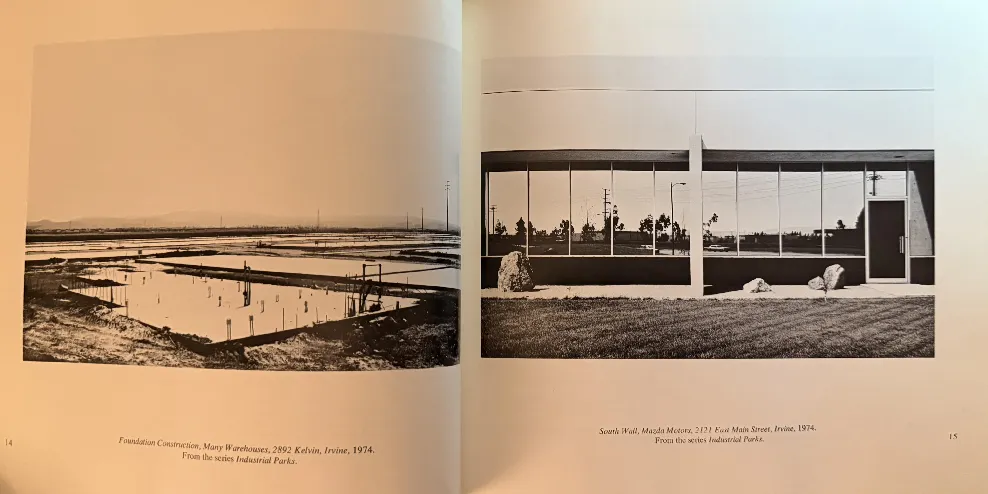
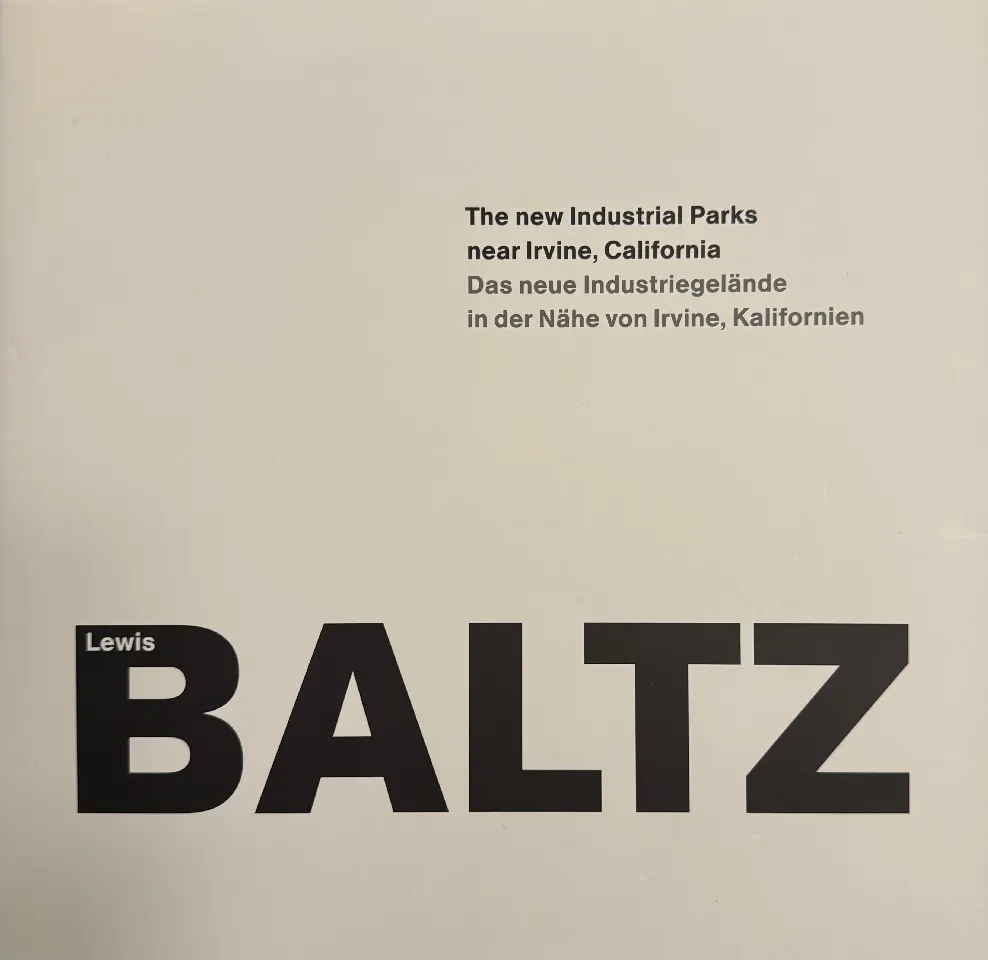
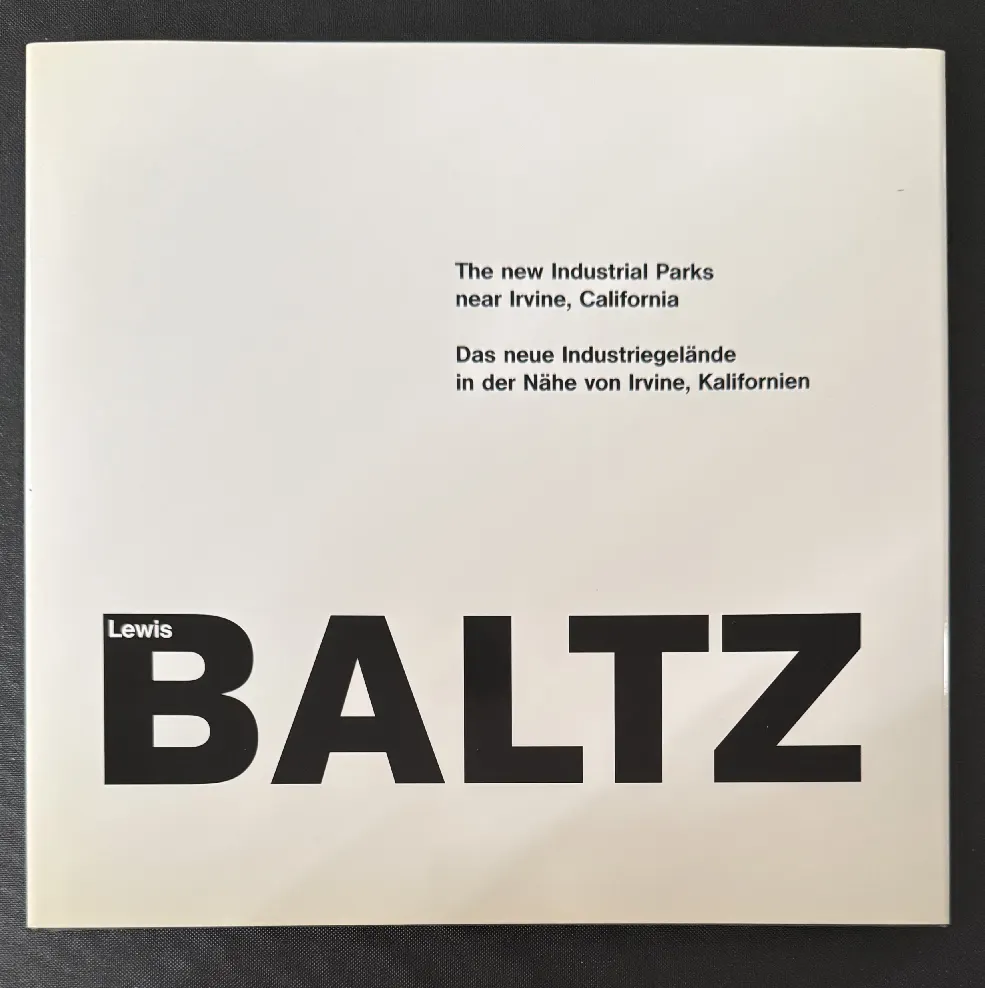
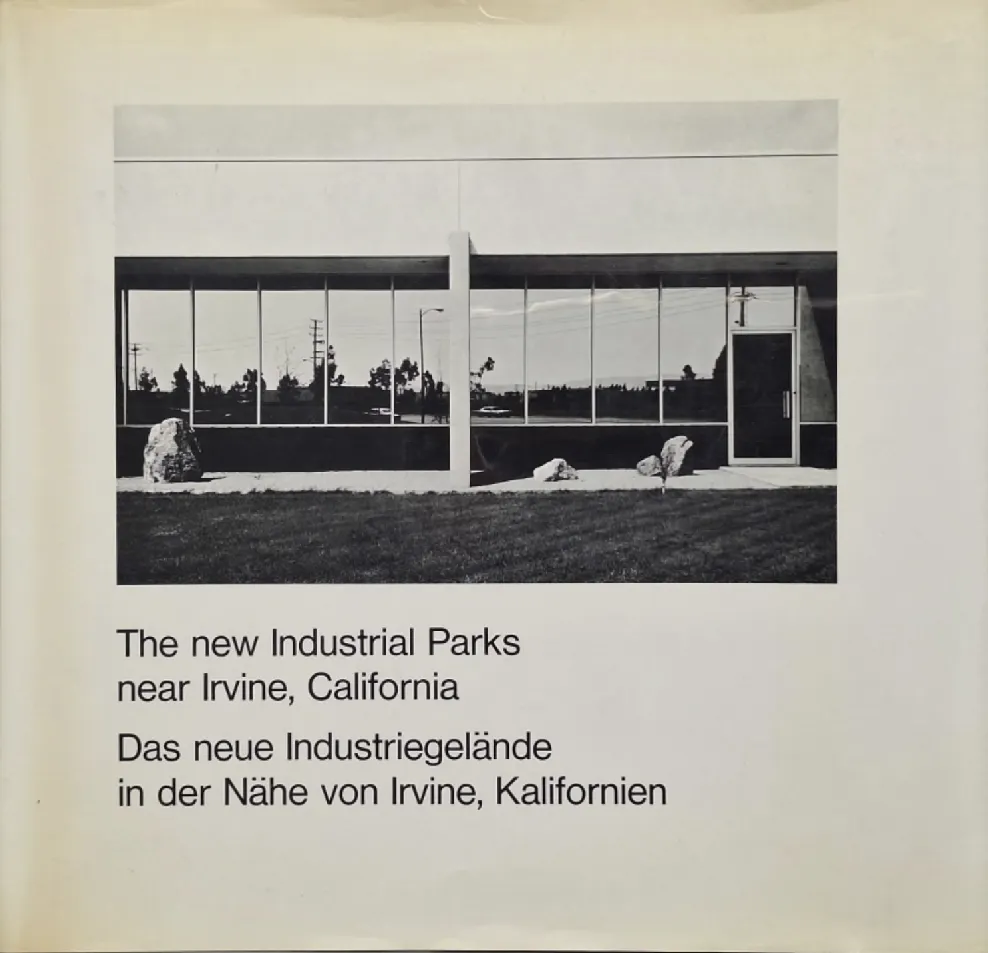
In the late 1960s and early ’70s Lewis Baltz became fascinated by the stark, repellent, manmade landscape that was rolling over California’s then still agrarian terrain. Baltz made a number of projects on this subject, the best known of which, The new Industrial Parks near Irvine, California, was first published in 1974. With this book Baltz took his place near the center of the New Topographics movement, a newly coined term emblematic of a cool, distanced, yet critical view of the emerging man-altered landscape. The Topographic position, detached and glacial, has since influenced photographic practice in the United States, Germany and Japan.

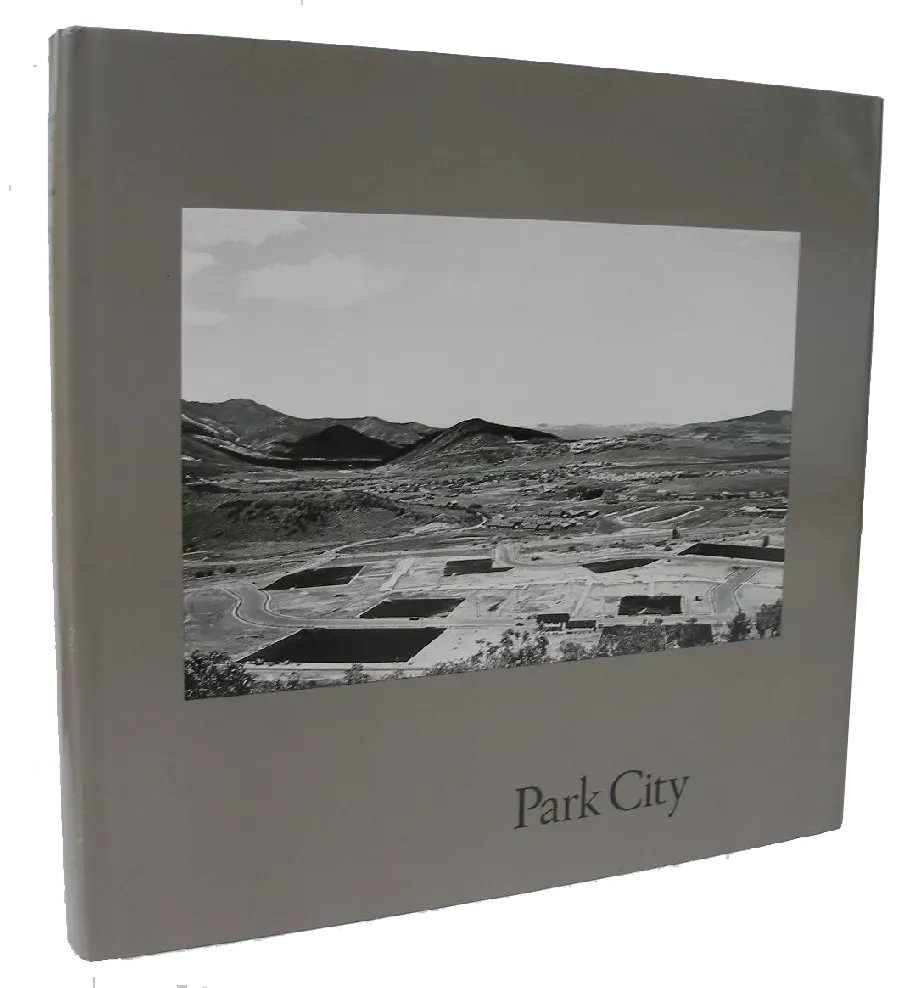
Taken from 1978 to 1979 in a then-developing section of Park City, Utah, this series has long been celebrated as one of the central portfolios in Baltz’s groundbreaking career, and the final, rueful embellishment upon his seminal works of the 1970s. The complete Park City portfolio, consisting of 102 elements, will be on display in the exhibition.

Park City is today one of America’s prime resort destination, well-known for its multiple world-class ski parks as well as being the home of the Sundance Film Festival.  With a full-time population under 8,000 people, Park City has an estimated 4,000,000 tourists visiting annually, driven to the area through power of conspicuous enterprise. Like Baltz’s earlier series, The new Industrial Parks near Irvine, California, Park City is at once a deadpan reportage of a housing development under states of construction as it is a diary of the seemingly inexorable march of commerce that drove the rush. In clarified, Spartan detail, Baltz captured the then-changing land as a premonition, taken at maximum depth of field; even the most barren and unearthly ground can be a place for financial definition in the boom generation of America.

Nature as a source of aesthetic pleasure is rendered out in these photographs. Taken in its entirety, the images combined become more a narrative proscribing something else altogether. Baltz’s purview of these distinctly uninteresting structures insinuates nature within the uncomfortable company of a social contract, in the sense of Hobbes’ treatise on the lone benefit of moving from the wilderness of the State of Nature into Society: inclusion into the civilization means the right to sue one another at will. This series is in its own way a remark on the postindustrial age’s way of manufacturing nature into a functional product: a profit-ready landscape. In the quintessentially American proposition of manifest destiny –of absorption, of turning anything into an alluring specter for the appetite- Park City intimates the afterglow of the new dystopia: The World is ugly,/And the people are sad.

From the press release for the original exhibition at the Susan Spiritus Gallery, New York (September 22 to November 11, 1978): "The fifteen images in the portfolio were recorded in the environs of northwestern Nevada, both urban and rural. Some of the prints are reminiscent of Baltz' previous photographs in his Irvine and Maryland portfolios, while others represent a departure from these styles. In the words of the artist, the portfolio represents an accumulation of fifteen separate and distinct images largely unrelated."

2010
Out of Print
Signed
Edition:
1st as a 10-volume set
Prior edition(s):
Ten hardcover volumes in a slipcase.
Condition: Near Fine

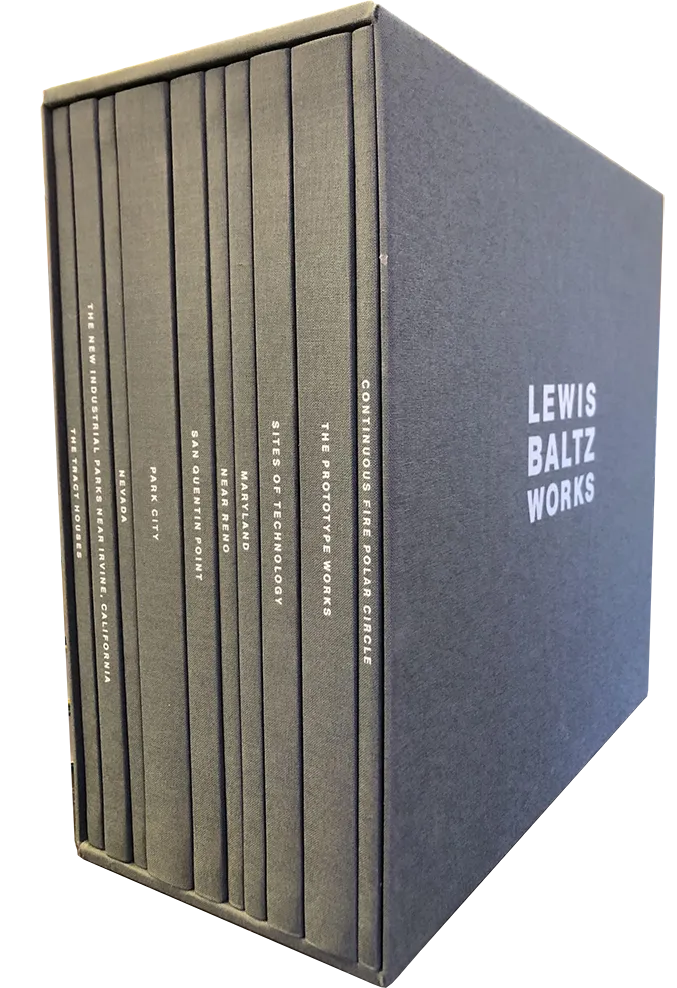
Printed in luminous quadratone, Works is considered the definitive edition of Baltz's work, a few years before his death; it is also a testament to the importance of the book as a primary medium in Baltz’s practice. The edition contains reissues of six of Baltz’s most significant books, as well as four then unpublished projects. Each of the books had been crafted in close collaboration with Baltz, who oversaw each stage of production with Gerhard Steidl. From scanning of the vintage prints, to book design, selection of paper and binding materials, pre-press and printing, Baltz shaped the form and aesthetic of these publications.

1986
with:
Edition:
1st
Edition size:
Out of Print
Other edition(s):
Hardcover with DJ
ISBN:
Condition: Near Fine
Book images
2005
with:
Edition:
Edition size:
Numbered 46/55 on paper colophon in the print's folder.
All three books are signed by Baltz
Out of Print
Other edition(s):
Hardcovers with DJ housed in an acrylic slipcase with ltd edition print.
ISBN:
9783865211262
Condition: Fine

This is the limited edition with signed print for the three-volume set including the reedition of the The New Industrial Parkways, (1974, 2001) and the first editions of The Tract Houses and The Prototype Works. Each of these volumes were later reprinted as single-volume editions.

RAM/Steidl

2001
with:
Edition:
2nd
Edition size:
Out of Print
Other edition(s):
1974
Hardcover with dust jacket
ISBN:
9780963078568
Condition: Fine

In the late 1960s and early ’70s Lewis Baltz became fascinated by the stark, repellent, manmade landscape that was rolling over California’s then still agrarian terrain. Baltz made a number of projects on this subject, the best known of which, The new Industrial Parks near Irvine, California, was first published in 1974. With this book Baltz took his place near the center of the New Topographics movement, a newly coined term emblematic of a cool, distanced, yet critical view of the emerging man-altered landscape. The Topographic position, detached and glacial, has since influenced photographic practice in the United States, Germany and Japan.

Spine is slightly scuffed on the edges

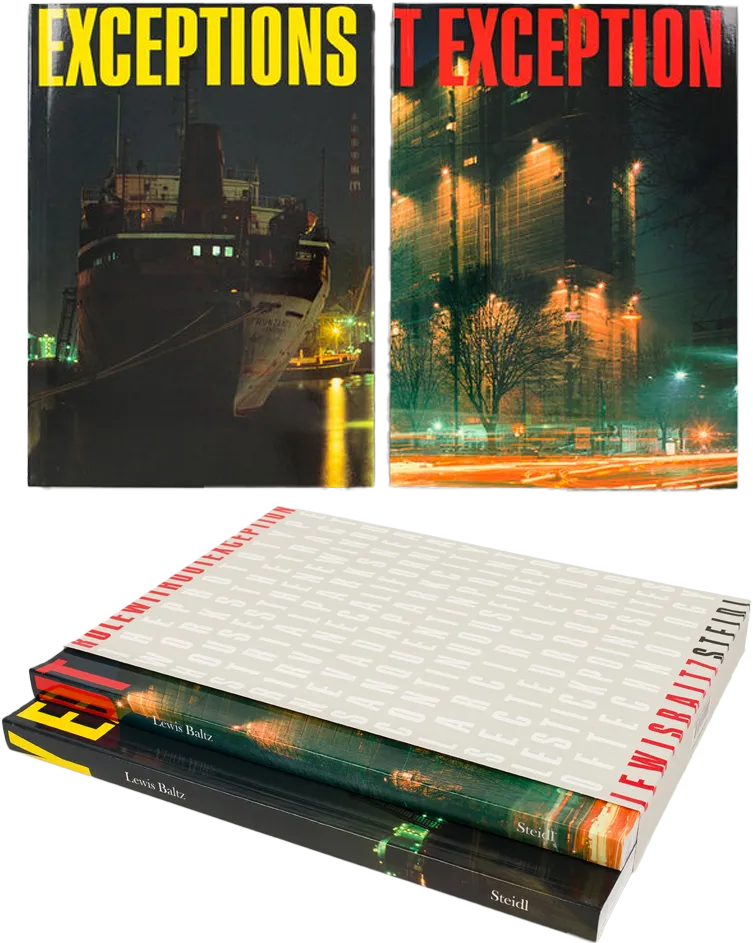
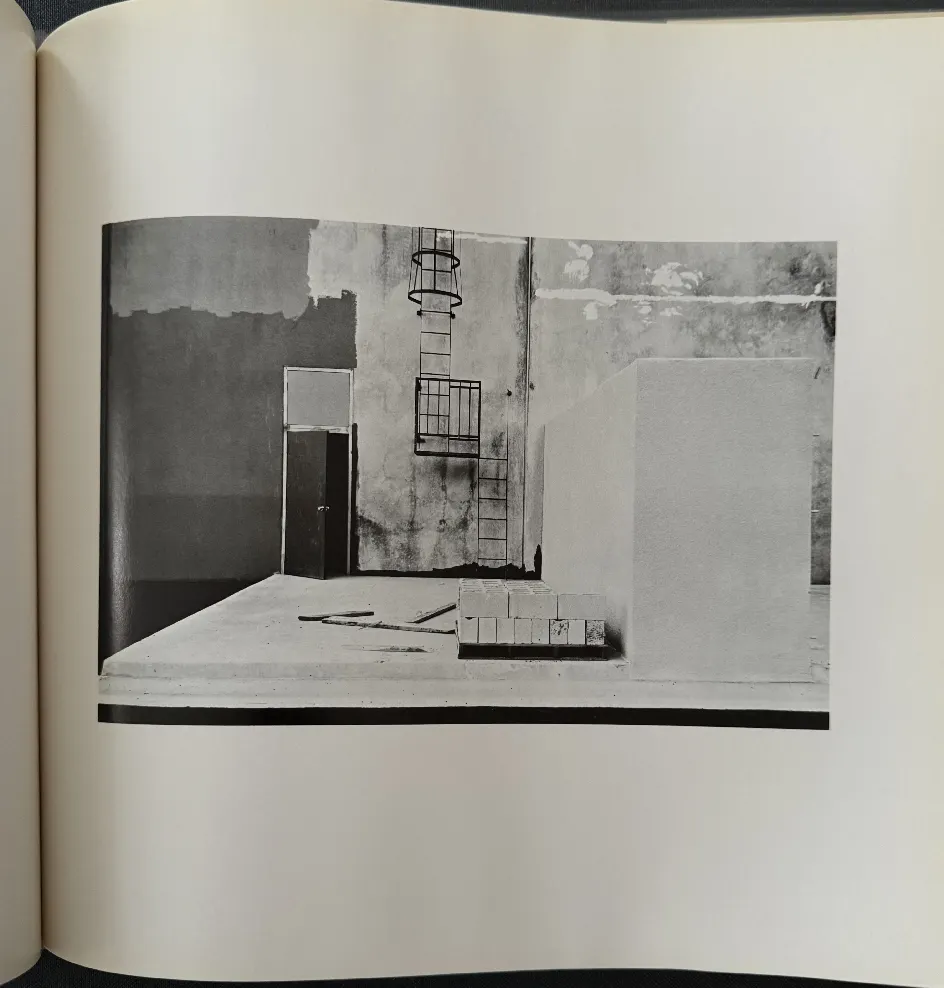
This two-volume book covers the full sweep and depth of Lewis Baltz's influential oeuvre. Rule Without Exception is a reissue of Baltz's award-winning midcareer retrospective book which accompanied a travelling exhibition of the same name in 1991. The book surveyed Baltz's work from The Prototype Works of 1967 through to Sites of Technology of 1991, showing the range of his images of industrialized landscapes and technological sites. Each section of the book was accompanied by installation views as well as texts by distinguished writers, some newly commissioned for this edition. Only Exceptions was a new book chronicling Baltz's new work- usually site-generated commissioned works, from 1992 to 2012 and was published on the occasion of an exhibition organized by the Kunstmuseum, Bonn. Only Exceptions includes Baltz's work in California, Leipzig's Black Triangle, Reggio Emilia, Groningen, Rome, Venice, and two projects with Jean Nouvel in France and Italy.

This is the first edition of the 1991 exhibition catalog. A reprint of this catalog was released by Steidl in 2012 as the first volume of a two-volume edition.

2010
with:
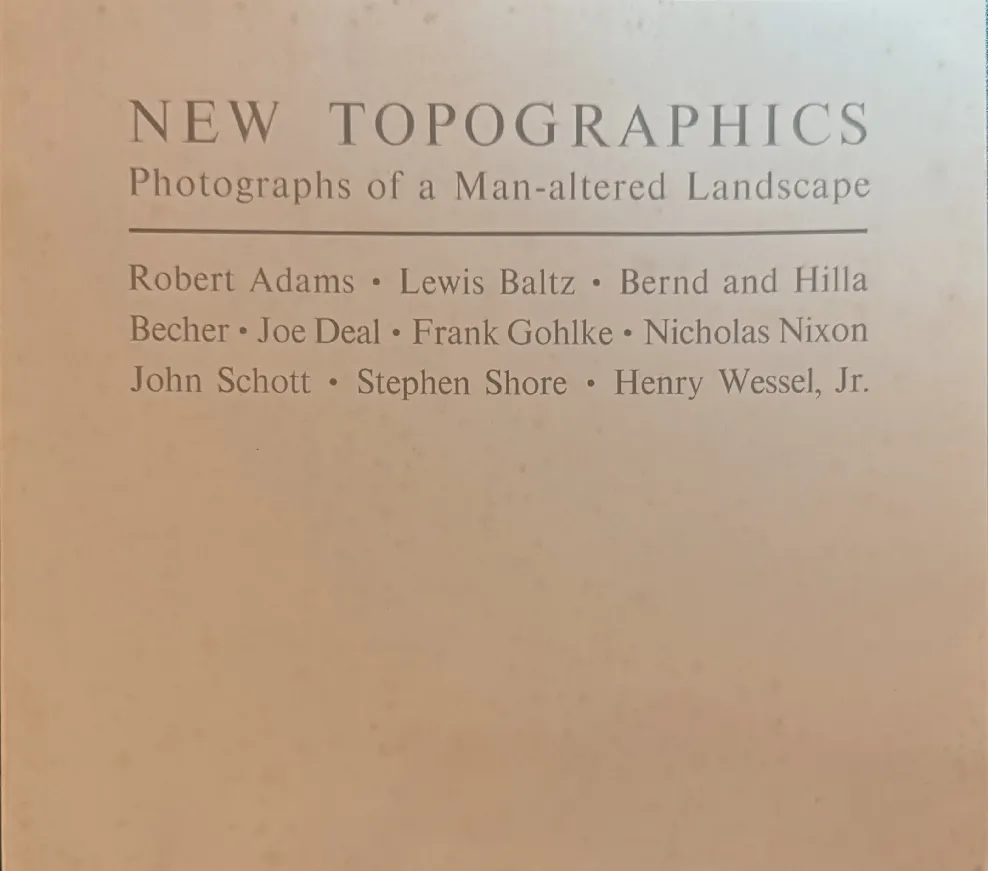
Lewis Baltz, Bernd and Hilla Becher, Joe Deal, Frank Gohlke, Nicholas Nixon, John Schott, Stephen Shore, Henry Wessel.
Edition:
1st
Edition size:
Out of Print
Other edition(s):
Hardcover without dust jacket, as issued
ISBN:
9783865218278
Condition: Fine

First edition about the catalogue of the 1975 show in Rochester, NY. This is not the 2025 reprint.

Edition:
Numbered 46/55
Sold out from publisher
Signed and numbered on print's verso
Year of work:
1974
Image size:
136 x 205 mm
Print size:
264 x 267 mm
Printed in
2005
Framed size:
Unframed
Provenance:
Steidl
Digital print.
Condition:
Fine

Print was issued in 2005 as part of the limited edition of the 3-volume set re-issue of The New Industrial Parkways, The Prototype Works and The Tract Houses.

Literature and Collections:
edition:
Numbered 46/55
Sold Out
Signed and numbered on print's verso
Image size:
136 x 205 mm
Year of work:
1974
Edition:
3/30
Year of work:
1989
Image size:
28 x 19.5 cm
Print size:
40 x 30 cm
Printed in
2012
Framed size:
Provenance:
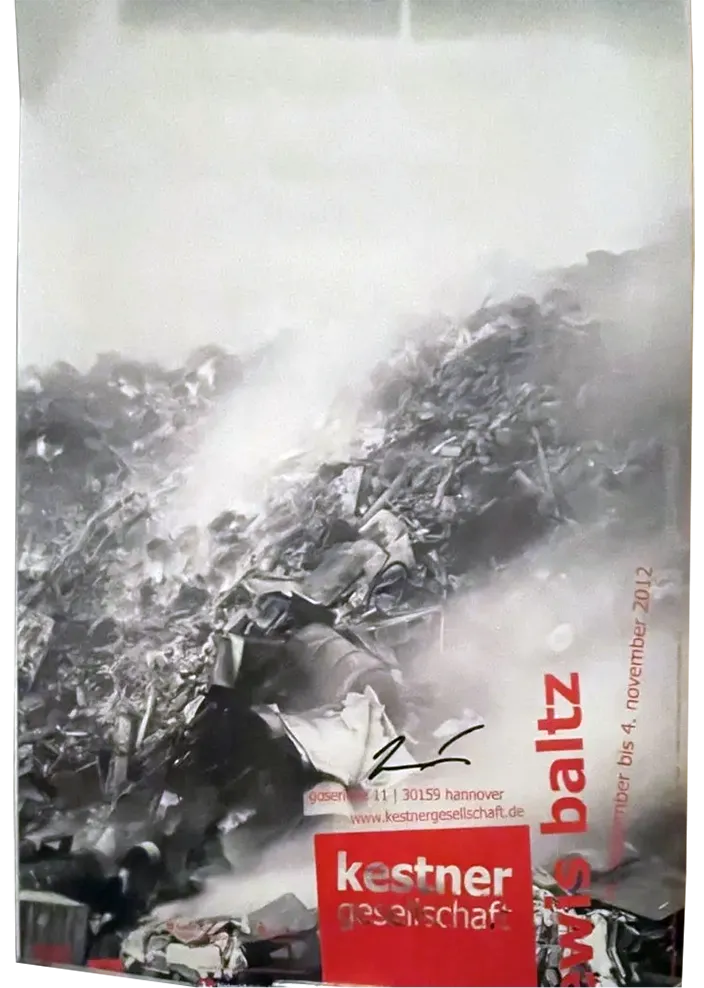
Kestner Gesellschaft
C Print
Condition:
Pristine

Signature label with the print

Literature and Collections:

In the Sites of Technologies Volume, plate 39 in the Works 10-volume set published by Steidl in 2010

No items found.

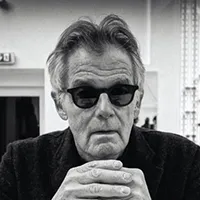
Lewis Baltz, American (1945–2014)

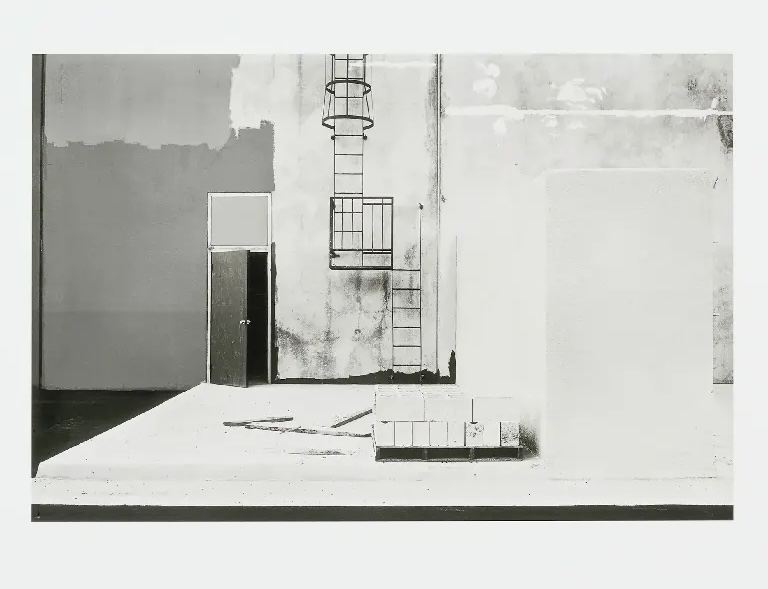
Baltz was a visionary American photographer best known for his stark, conceptual images of the suburban and industrial landscapes of postwar America. A central figure in the New Topographics movement of the 1970s, Baltz helped redefine landscape photography by focusing not on sublime nature, but on the banal, often brutal imprint of human development.

Born in Newport Beach, California, Baltz came of age amid the rapid expansion of the American West. His early work documents this transformation—capturing tract housing, office parks, and concrete block buildings with an austere, almost forensic precision. He earned an MFA from Claremont Graduate School and taught at several institutions, later living and working extensively in Europe.

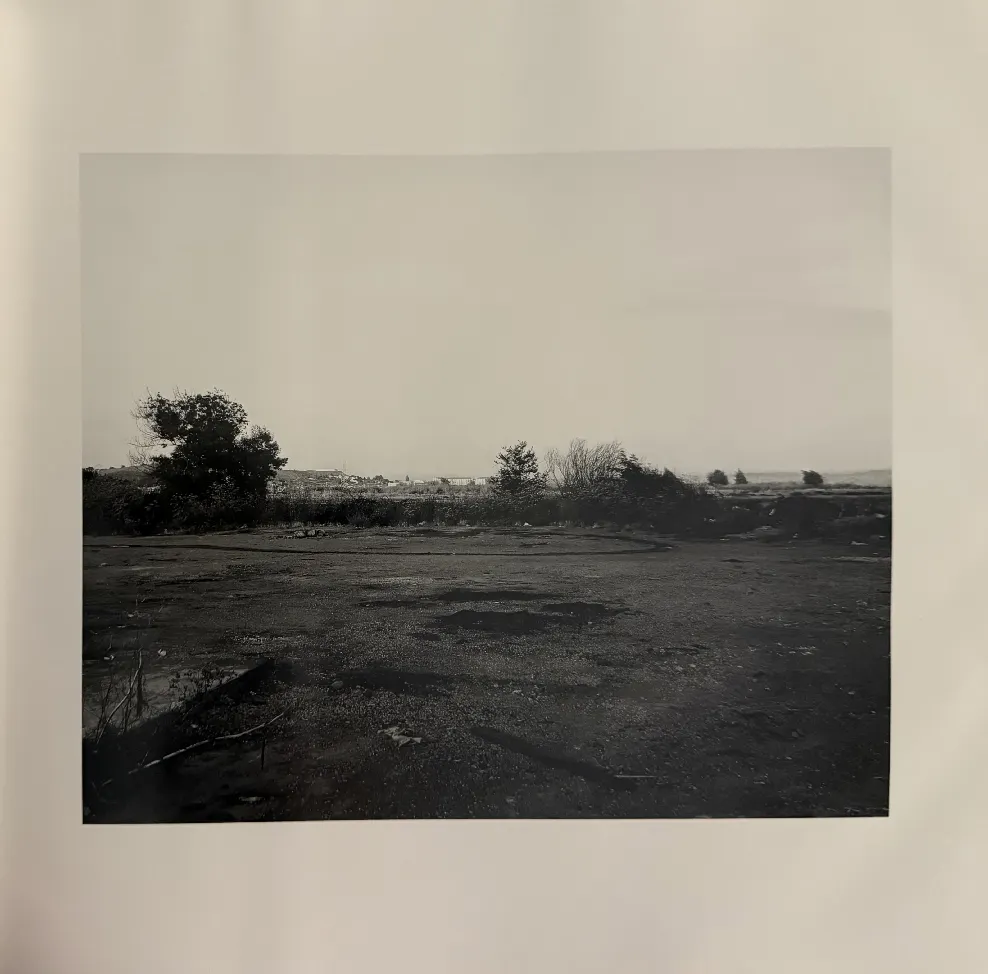
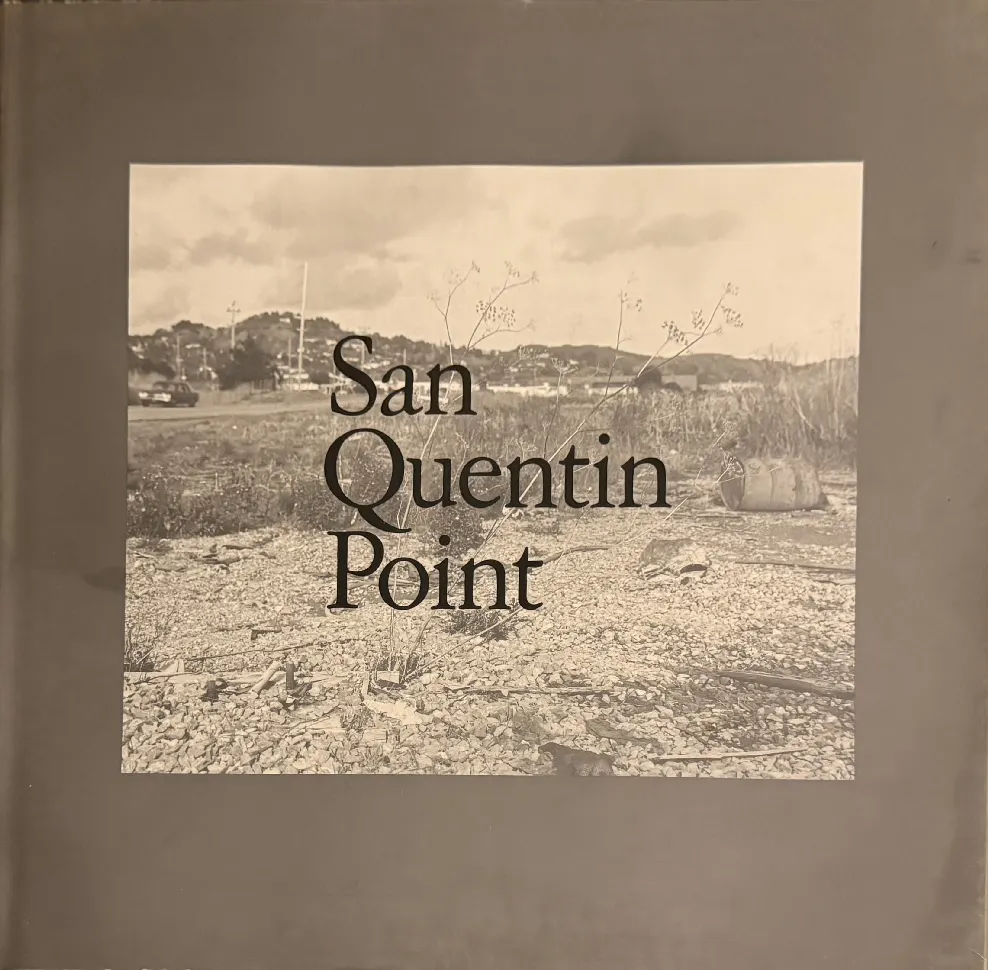
Baltz rose to prominence with his inclusion in the landmark 1975 exhibition New Topographics: Photographs of a Man-Altered Landscape, alongside Robert Adams, Bernd and Hilla Becher, and others. His early photobooks—such as The New Industrial Parks near Irvine, California (1974), Park City (1980), and San Quentin Point (1986) demonstrated his minimalist visual language, characterized by flat lighting, strict geometry, and an impersonal tone, reflecting both a critique and documentation of late-capitalist development.

In the 1980s and 90s, Baltz expanded into color photography and multimedia installations, often exploring themes of surveillance, information systems, and the invisible architectures of power. Despite this evolution, his work remained anchored in the philosophical and political undercurrents of modern space and control.

His photographs are held in the collections of major museums, including:

  • The Museum of Modern Art (MoMA), New York
  • The Getty Museum, Los Angeles
  • San Francisco Museum of Modern Art (SFMOMA)
  • Centre Pompidou, Paris
  • Tate Modern, London

With cool clarity and relentless focus, Lewis Baltz chronicled the physical and psychological landscapes of the late 20th century, leaving behind a legacy that is both critically analytical and hauntingly poetic.