Marco Breuer

Marco Breuer

Which art books, prints and posters are available by and about this artist? Here is a sample of items of interest to a typical collector:

→
Black Dog Publishing & Yossi Milo
2014
with:
Edition:
1st
Edition size:
Signed
Out of Print
→
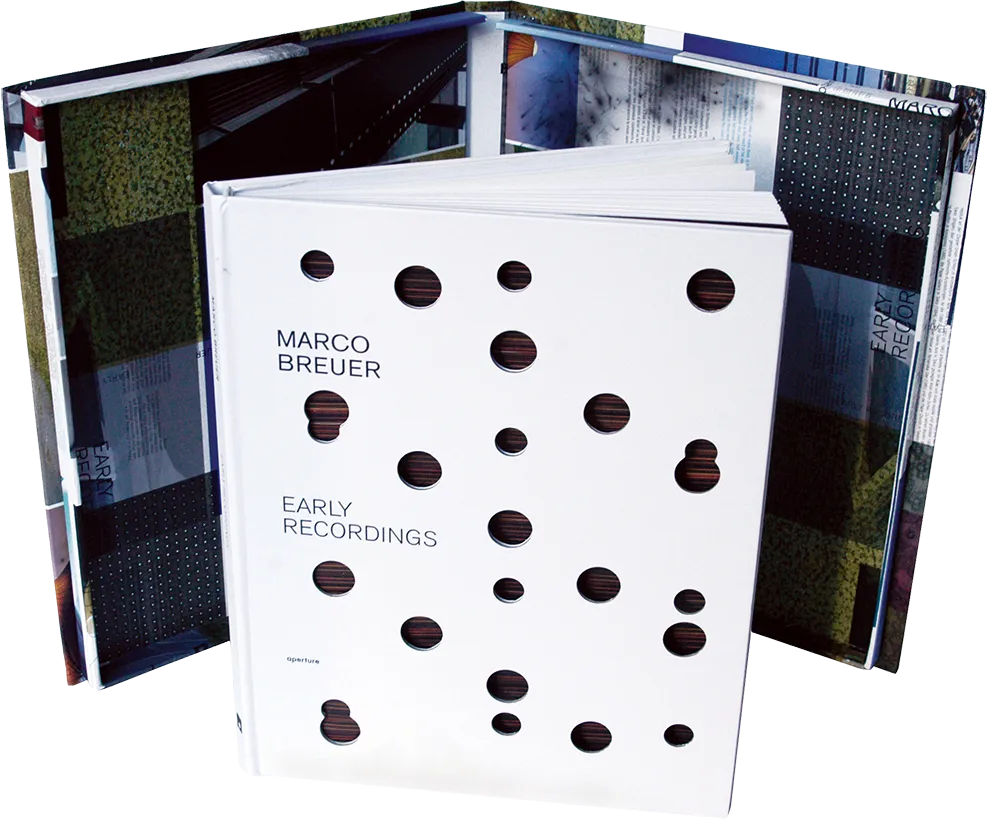
Aperture
2007
with:
Edition:
1st
Edition size:
Out of Print
S M T W T F S
▲
All images
→

Marco Breuer’s S M T W T F S operates as an incisive physical intervention into the photographic medium, treating the photographic paper not merely as a passive surface for recording light, but as a robust sculptural material subject to burning, scraping, folding, and chemical abrasion.

Published by Karma in 2015, the volume documents Breuer’s rigorous, process-driven experiments where the traditional apparatus of the camera is often bypassed entirely. Instead, the artist engages in direct, tactile assaults on chromogenic paper, puncturing and scorching the emulsion to create abstract records of time, gesture, and elemental transformation.

The thematic core of the work investigates the fragility and materiality of photographic representation. By titling the monograph after the days of the week, Breuer underscores an obsessive, cyclical rhythm of labor and material degradation, capturing the passage of time through the literal scars inflicted upon the surface of the image.

Horowitz
2002
with:
Edition:
1st
Edition size:
1000
Out of Print
2002

Horowitz

Out of Print
Signed
Edition:
1st
Prior edition(s):
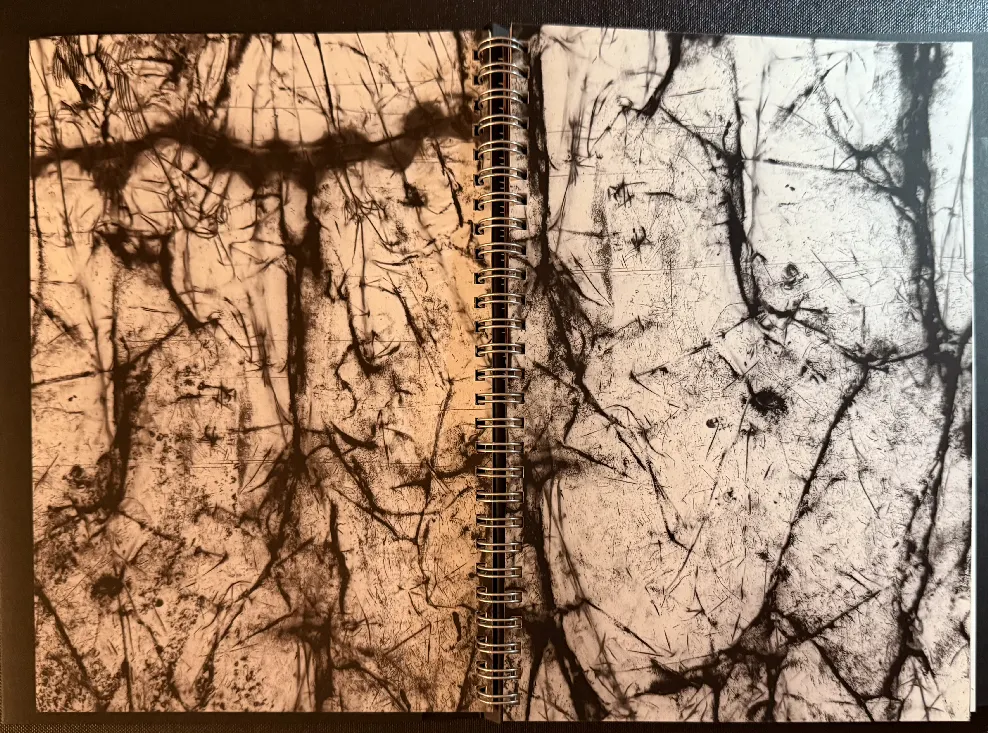
Spiraled binding in slipcase with additional leaflet in back cover.
Conditon:
Near Fine
→
Horowitz
2000
with:
Edition:
1st
Edition size:
Out of Print
No items found.
No items found.

Marco Breuer (born 1966 in Landshut, Germany) is a pioneering conceptual and contemporary photographer known for his radical, process-driven interventions that bypass the traditional camera entirely. Rather than capturing light through a lens, Breuer physically engages with photographic materials, directly burning, scratching, folding, puncturing, and chemically altering chromogenic paper to create abstract records of time, gesture, and elemental transformation.

His practice treats the photographic surface not as a passive medium for recording an external world, but as a robust sculptural object subject to physical forces. Working often in series or cyclical groupings that explore the tactile traces of labor and material degradation, his compositions reveal intricate, unexpected textures, rich velvety blacks, and subtle shifts of color born from direct destruction.

His work has been exhibited internationally and collected by major cultural institutions including the Museum of Modern Art, the Art Institute of Chicago, and the San Francisco Museum of Modern Art, cementing his legacy as a vital figure who continually pushes the boundaries of what constitutes photographic art.