SOLD
Copyright ©
Marco Breuer
or applicable right holders.
Poster



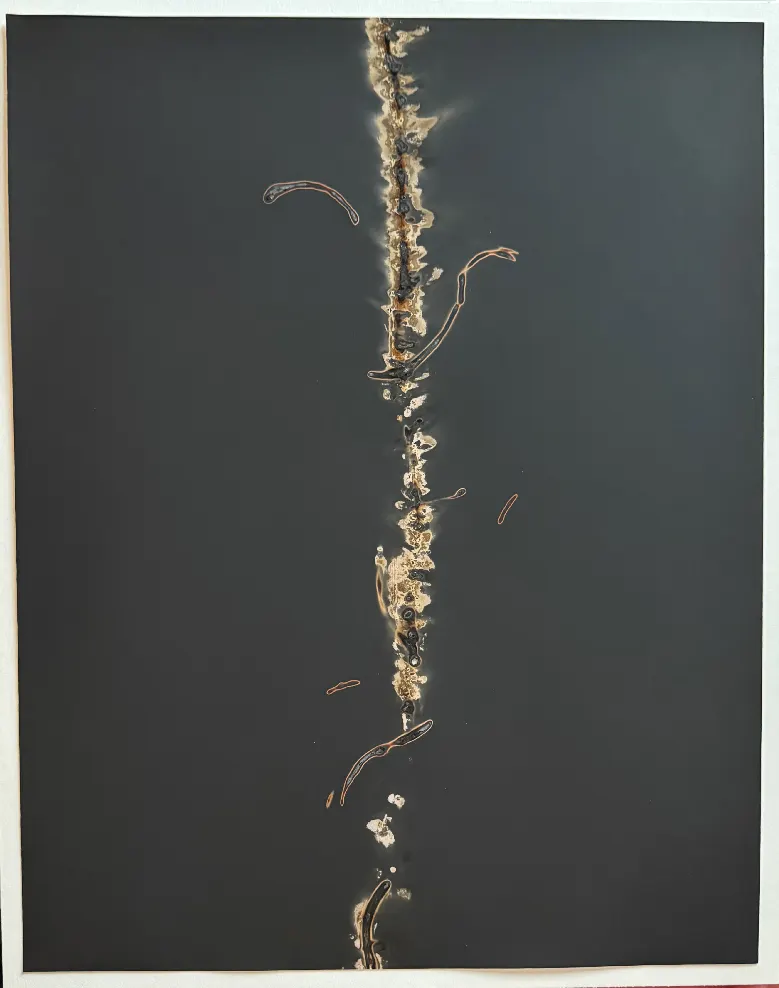
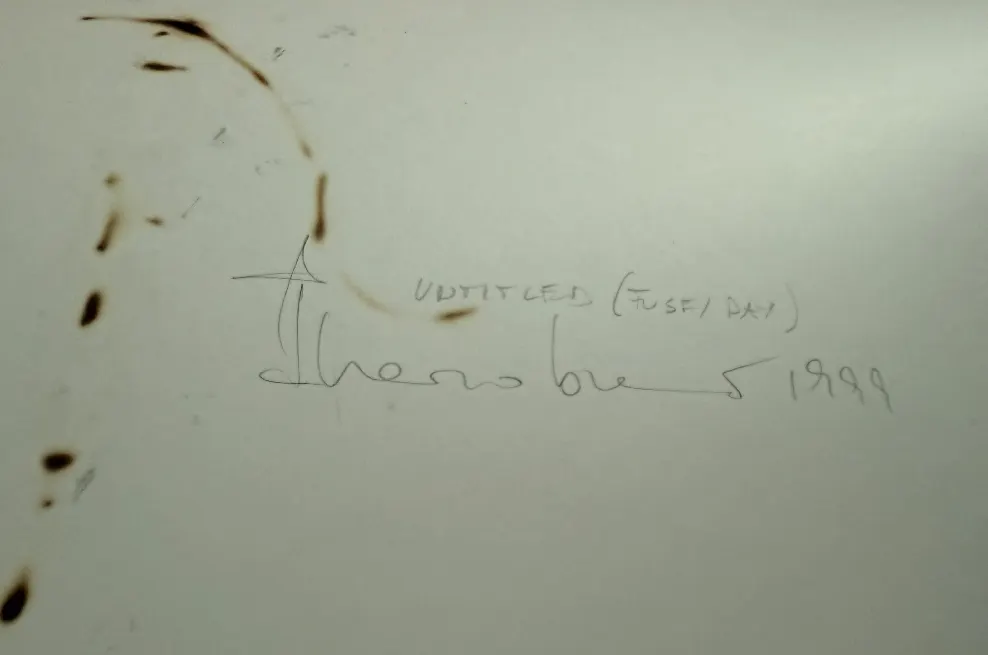
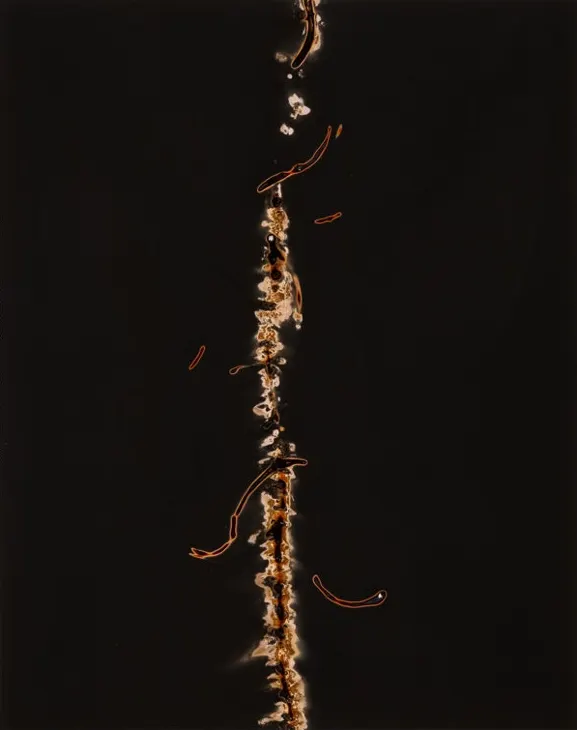
Marco Breuer’s Fuse Day (1999) operates as a radical, process-driven intervention into the photographic medium, bypassing the camera entirely to investigate the physical properties of photographic paper.
Rather than recording an external optical scene, Breuer subjects chromogenic paper to direct heat, burning, and chemical abrasion. In this work, the application of intense heat causes the emulsion to blister, scorch, and fracture, creating jagged, luminous striations of white and amber against a deep, velvety black void. The resulting surface bears the literal scars of elemental transformation, recording the passage of time and physical energy through destruction.
Within Breuer's broader oeuvre, Fuse Day exemplifies his pioneering exploration of photography as a tactile, sculptural object. By treating the print surface not as a transparent window onto the world but as an autonomous material subject to physical forces, the work challenges conventional notions of representation and elevates process-driven abstraction to the forefront of contemporary art.