



Which art books, prints and posters are available by and about this artist? Here is a sample of items of interest to a typical collector:
Sherrie Levine (born 1947 in Hazleton, Pennsylvania) is an American photographer, conceptual artist, and central figure of the Pictures Generation. Emerging in the late 1970s and 1980s alongside artists like Cindy Sherman and Richard Prince, Levine upended traditional notions of originality, authorship, and ownership by directly photographing iconic works by canonical male modernists.
Levine’s foundational photographic practice is rooted in re-photography, taking pictures of existing photographs, reproductions, and historical prints, and presenting them as her own art.
Rather than seeking to create a "better" or more technically proficient print, Levine maintained the flat, unpretentious quality of the source material. Her prints emphasize the physical mediation of the page, the screen, and the archive.
While Levine’s breakthrough occurred through two-dimensional photography, her engagement with the photographic medium later evolved to interrogate how images function as objects. Her conceptual framework expanded into her sculptural works, such as casting chess sets, billiard tables, and water fountains in bronze, or re-photographing ethnographic artifacts like African masks, continuing her lifelong inquiry into the life, death, and rebirth of cultural images.
Her photographs are held in major international museum collections worldwide, cementing her status as one of the most influential conceptual photographers of the late 20th century.

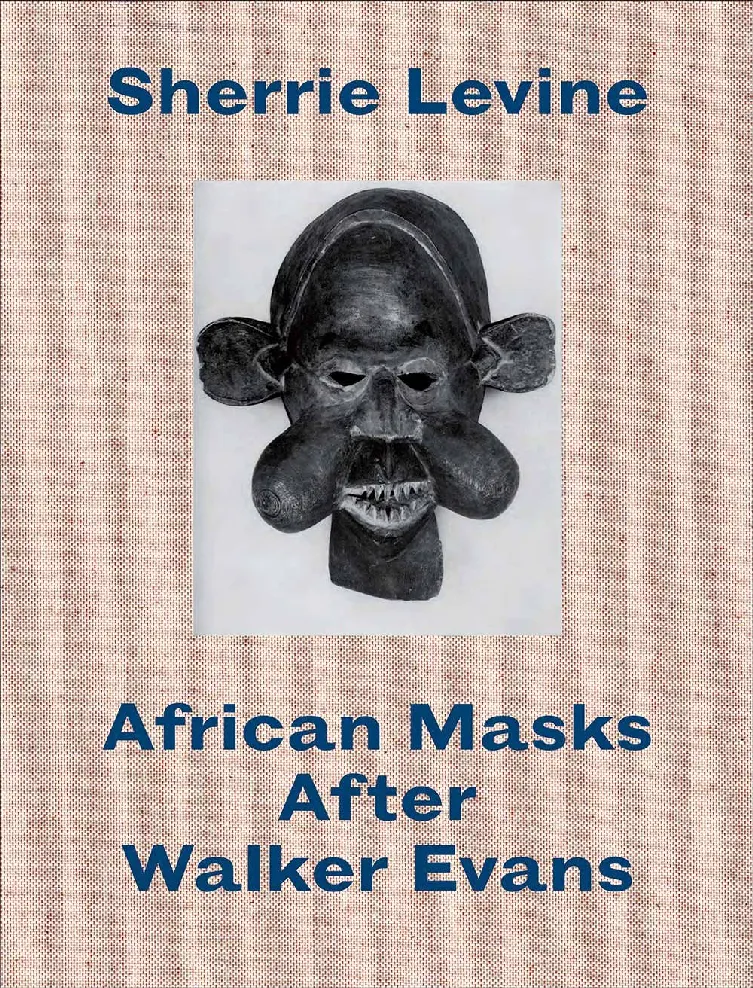
African Masks After Walker Evans captures Levine's ongoing engagement with appropriation, authorship, and the modernist canon.
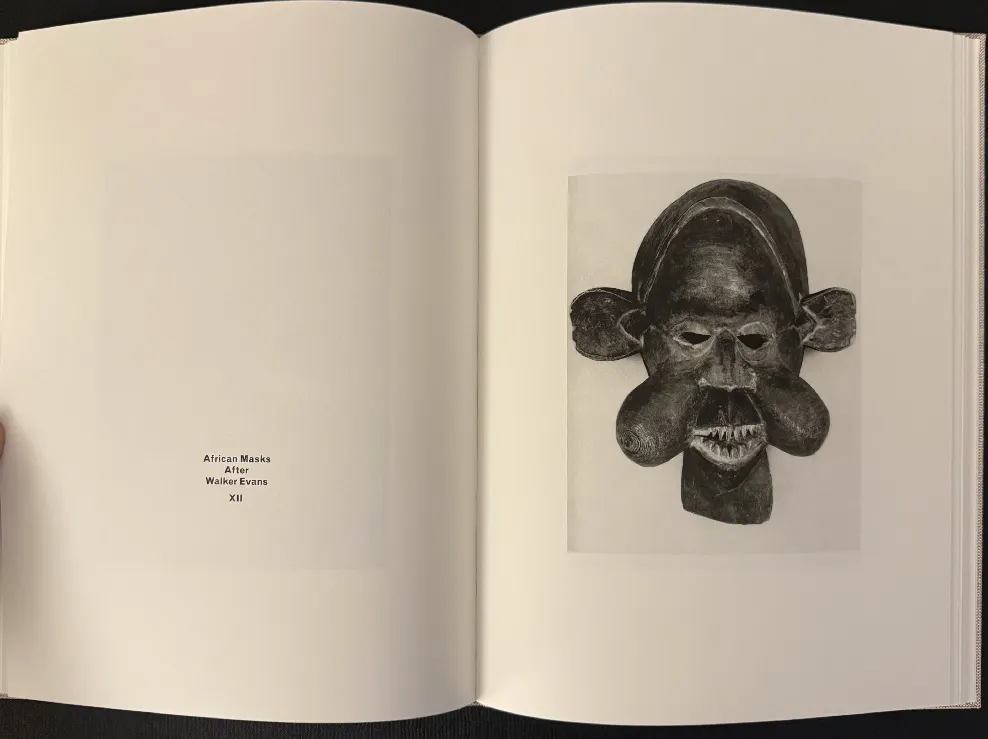
The work features photographs of anonymous African tribal masks that were originally photographed by Walker Evans for his landmark 1935 exhibition catalog, African Negro Art, at the Museum of Modern Art (MoMA).
By re-photographing Evans's documentation of these ritual objects, Levine collapses historical distance, turning an ethnographic record into a commentary on modernism's fascination with "primitive" art, the aura of the original artifact, and the layers of mediation between the object, the first photographer, and the subsequent artist.
Released in a limited edition structure (indicated in the collection metadata across pages 1 to XXIV), the book serves as both a standalone artist's book and a conceptual archive reflecting Levine's signature strategy of restaging historical images to question ownership and representation.