


Which art books, prints and posters are available by and about this artist? Here is a sample of items of interest to a typical collector:

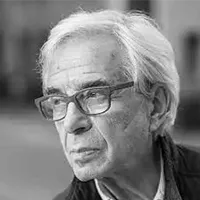
Timm Rautert (b. 1941) is a seminal German photographer, theoretician, and educator whose career spans over five decades. Known for combining conceptual rigor with documentary precision, he is widely regarded as one of the most influential figures in post-war German photography.
Born in West Prussia (now Tuchola, Poland), Rautert studied under the legendary Otto Steinert at the Folkwang School of Design in Essen during the late 1960s. Moving away from traditional aesthetics, he developed his groundbreaking project Bildanalytische Photographie (Image-Analytical Photography, 1968–1974). This series established a systematic "grammar of photography," exploring how light, exposure time, framing, and context dictate the perception and truth value of an image.
Throughout the 1970s and 1980s, Rautert turned toward freelance visual storytelling and photojournalism, working extensively for ZEITmagazin alongside writer Michael Holzach. His portraits from this era, such as his celebrated series Deutsche in Uniform (Germans in Uniform) and Eigenes Leben (Own Life), and his documentation of industrial labor and automation captured key socio-cultural shifts in West Germany.
In 1993, Rautert was appointed Professor of Photography at the Academy of Visual Arts (HGB) in Leipzig, a position he held until 2008. Beside Bernd and Hilla Becher, Rautert is considered one of the defining academic mentors of contemporary German photography, shaping an entire generation of artists emerging from the "Leipzig School".
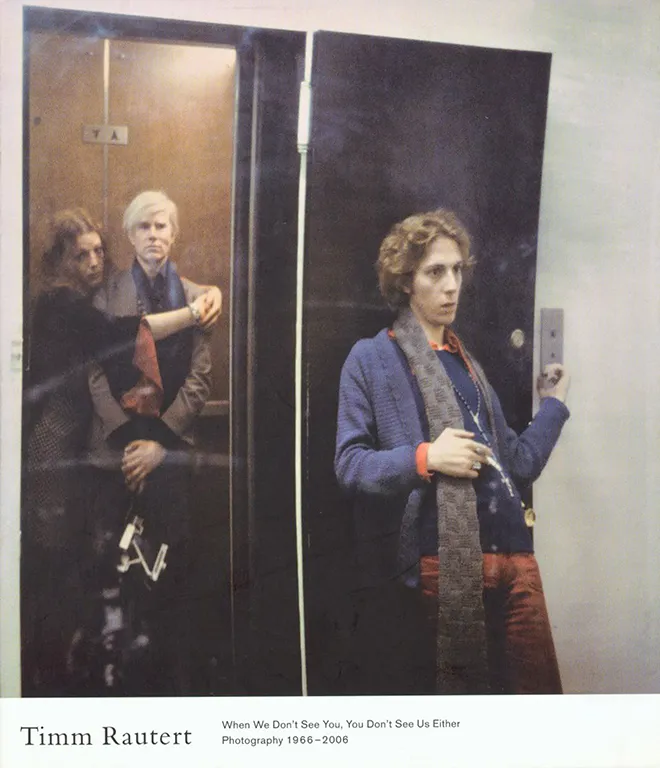
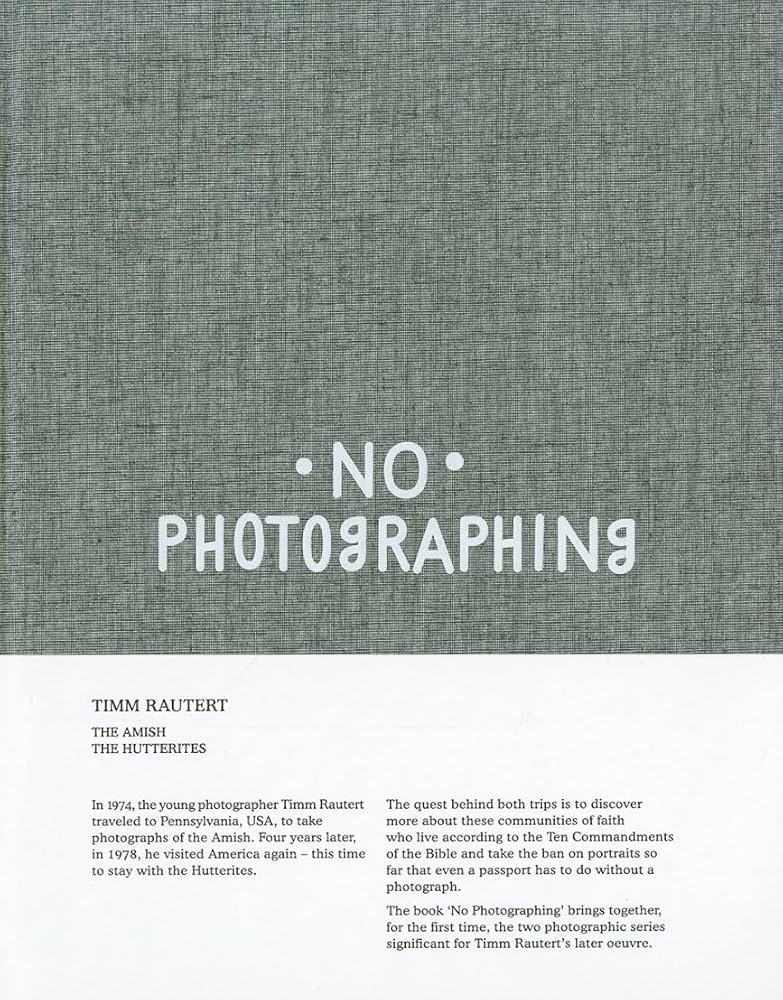
In 2008, Rautert became the first photographer to be awarded the prestigious Lovis Corinth Prize. His work has been widely published in books by Steidl, including When We Don't See You, You Don't See Us Either: Photography 1966–2006 (2007) and No Photographing (2011). In late 2025, Rautert donated his complete artistic estate, comprising thousands of prints and extensive archives, to the Museum Folkwang in Essen.
