
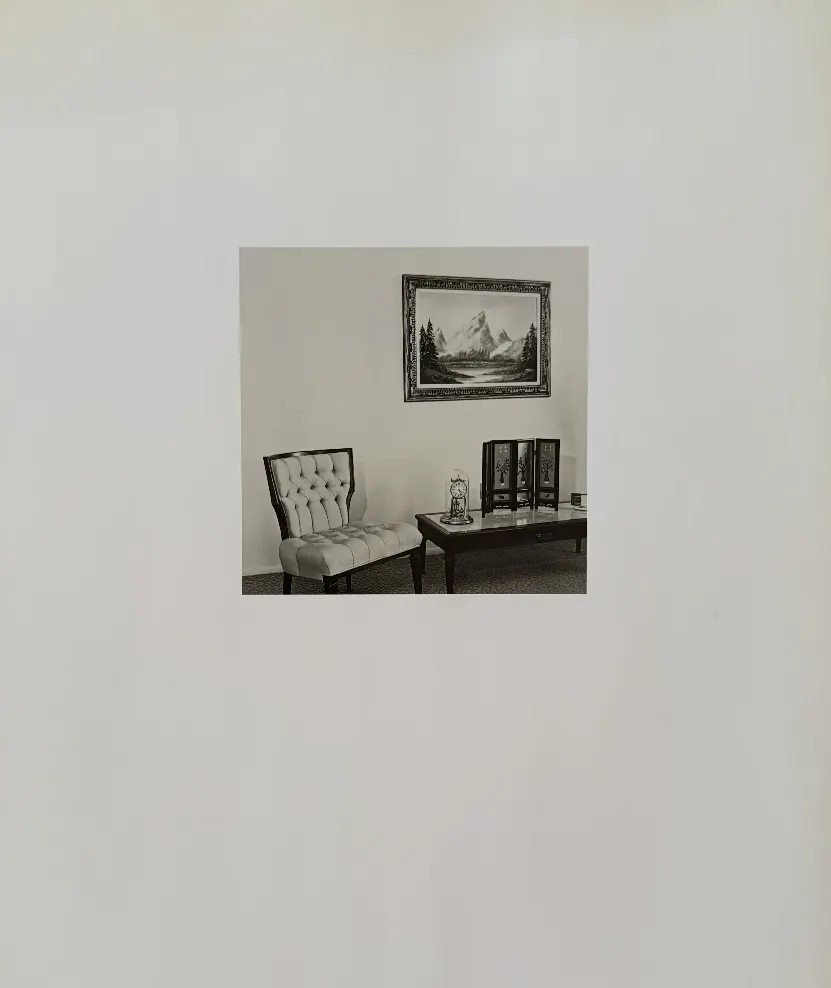


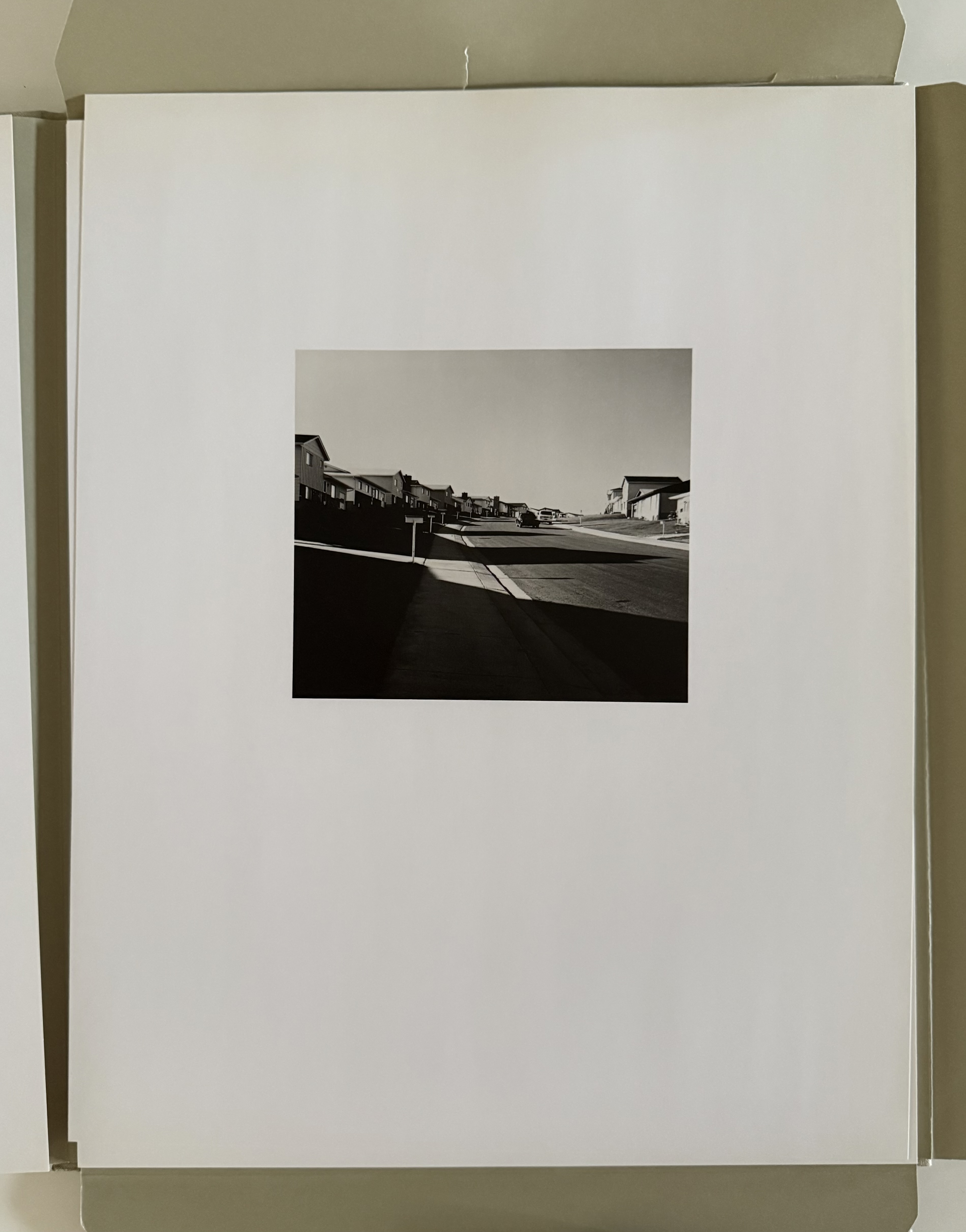


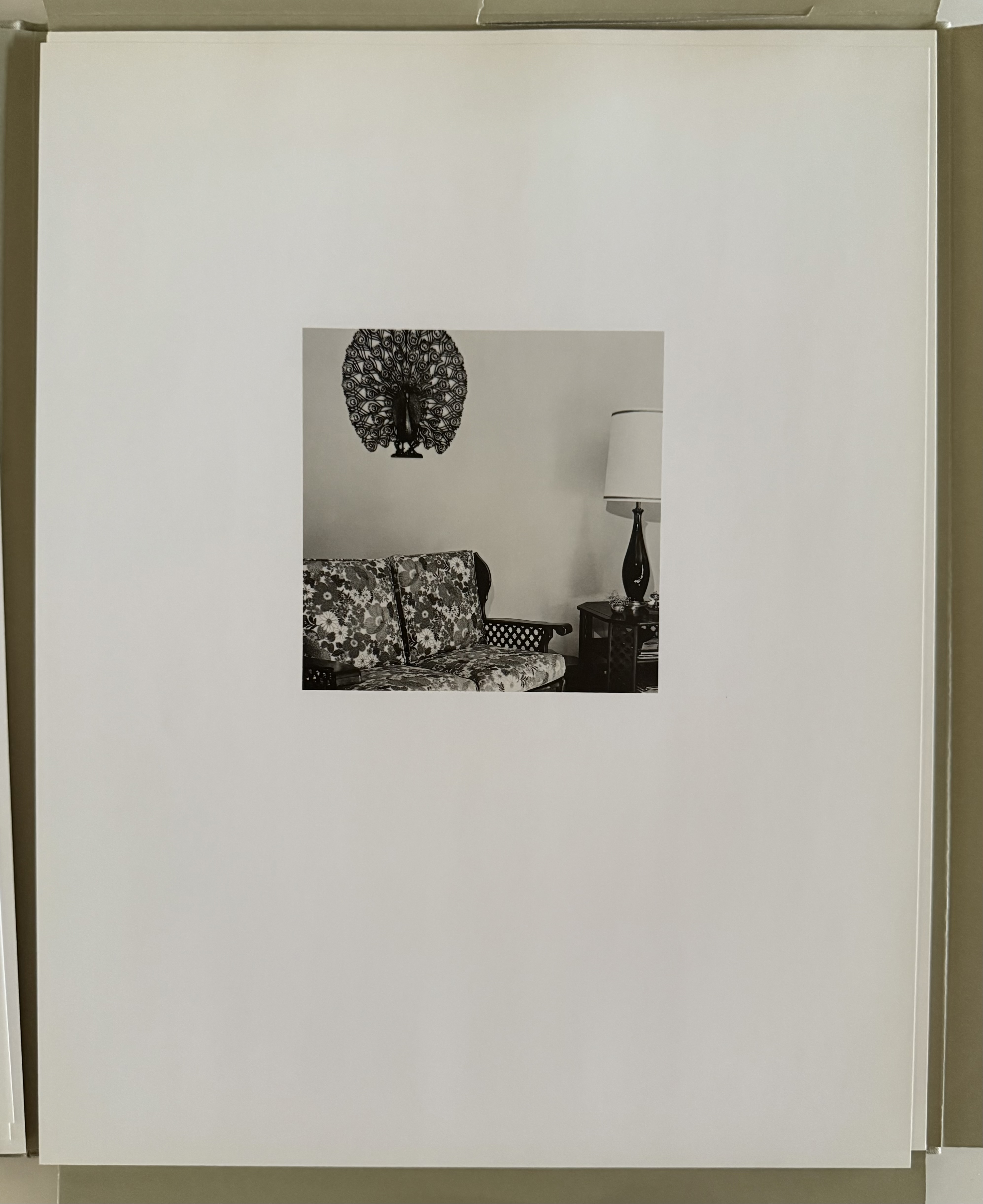
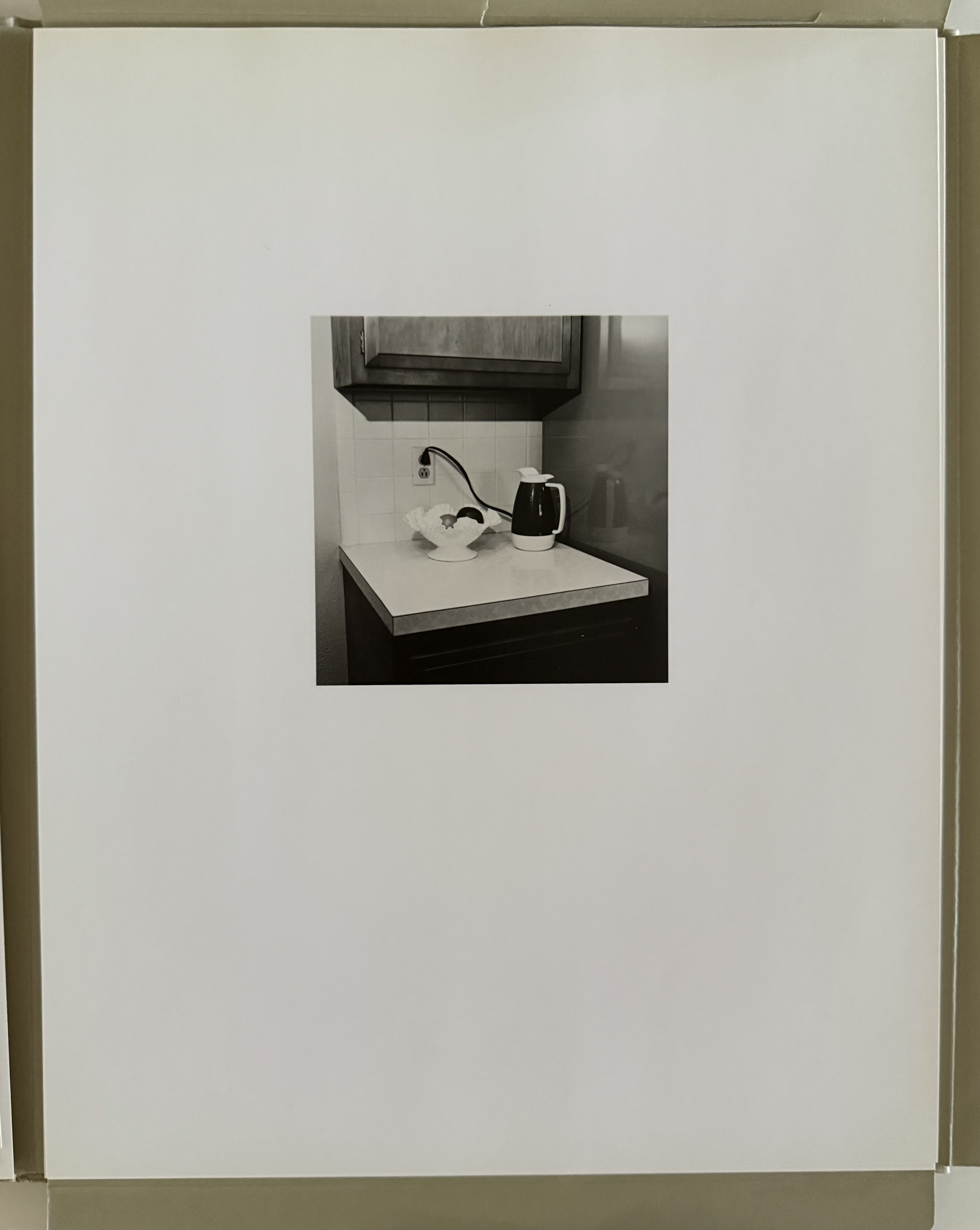
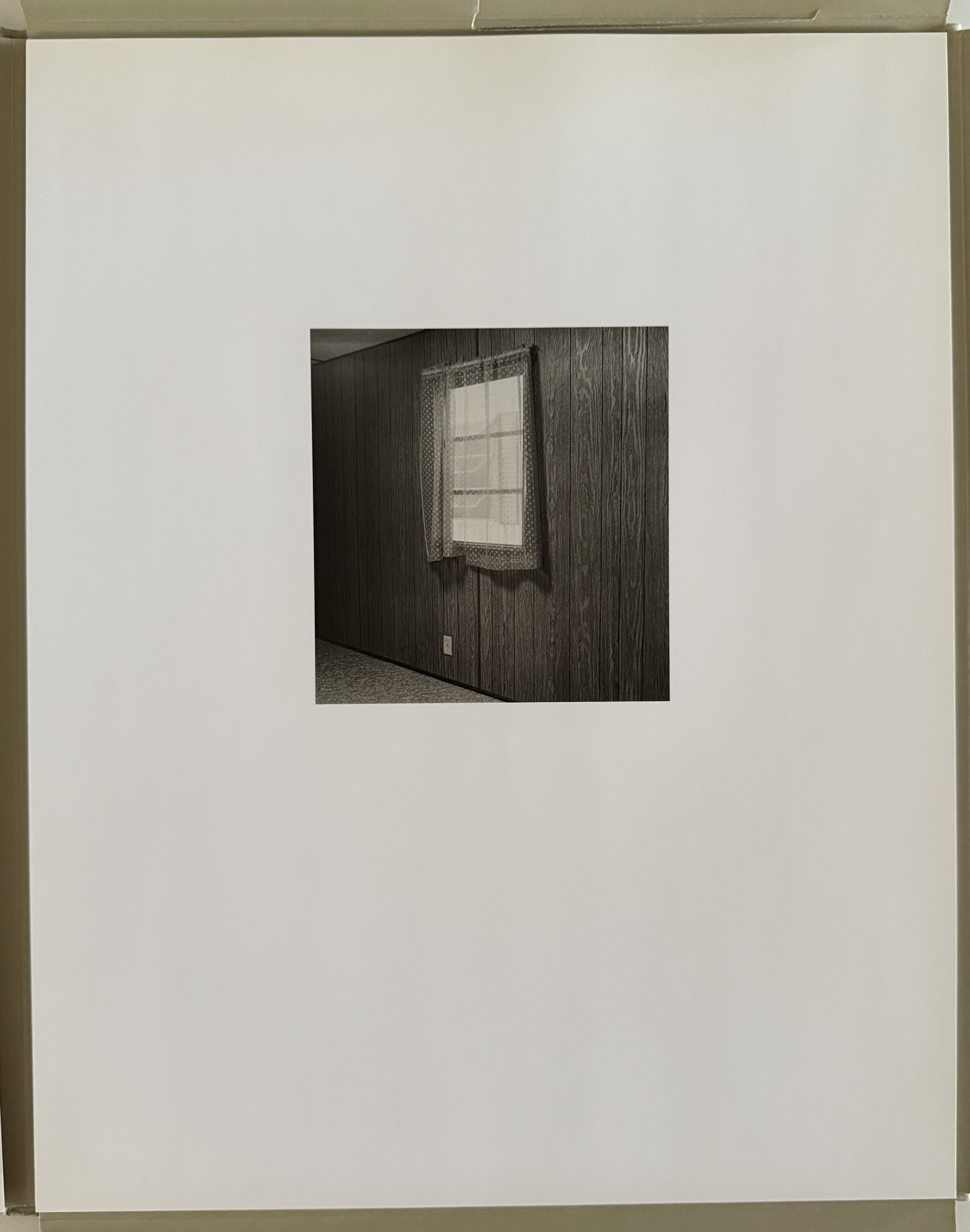
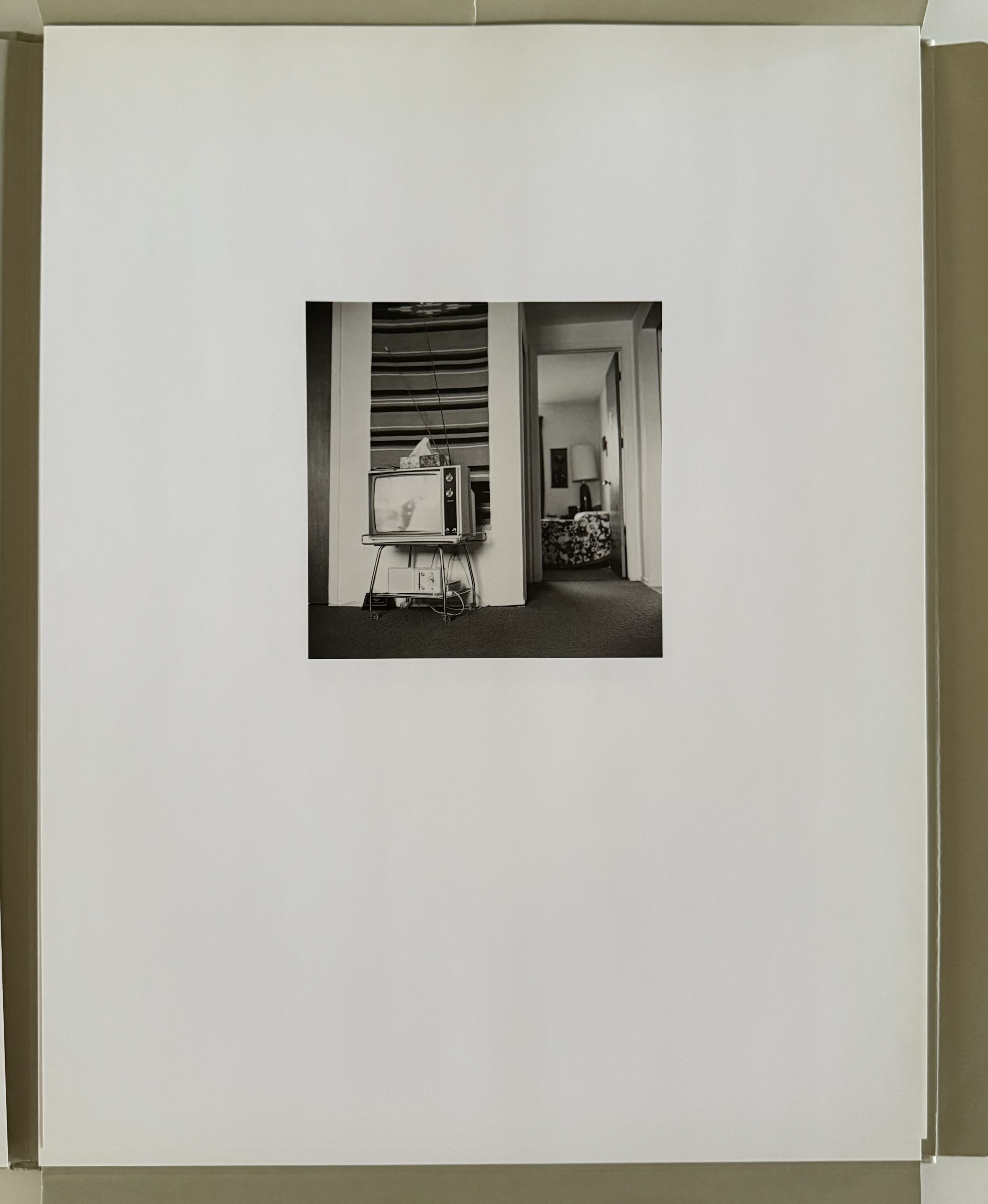
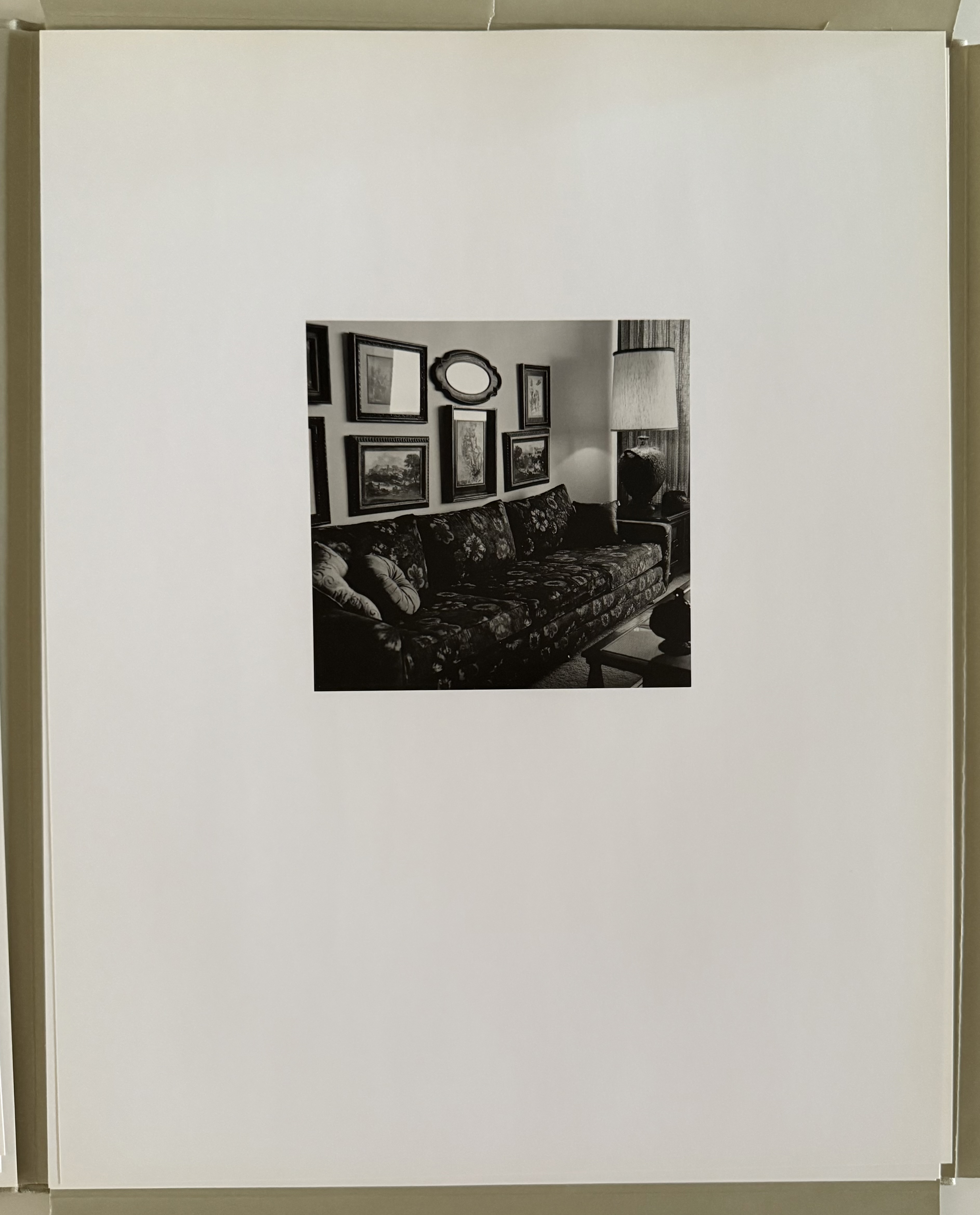
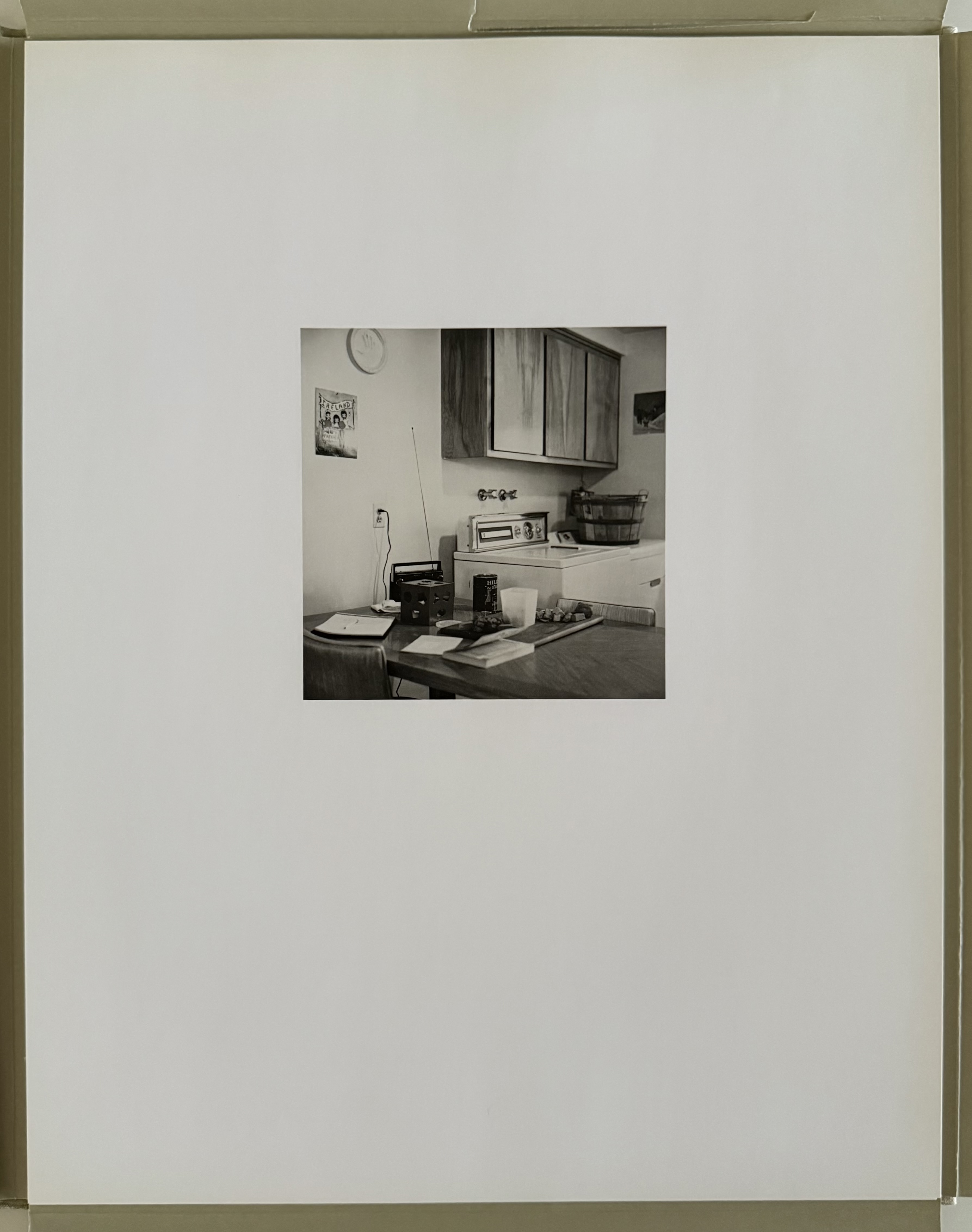
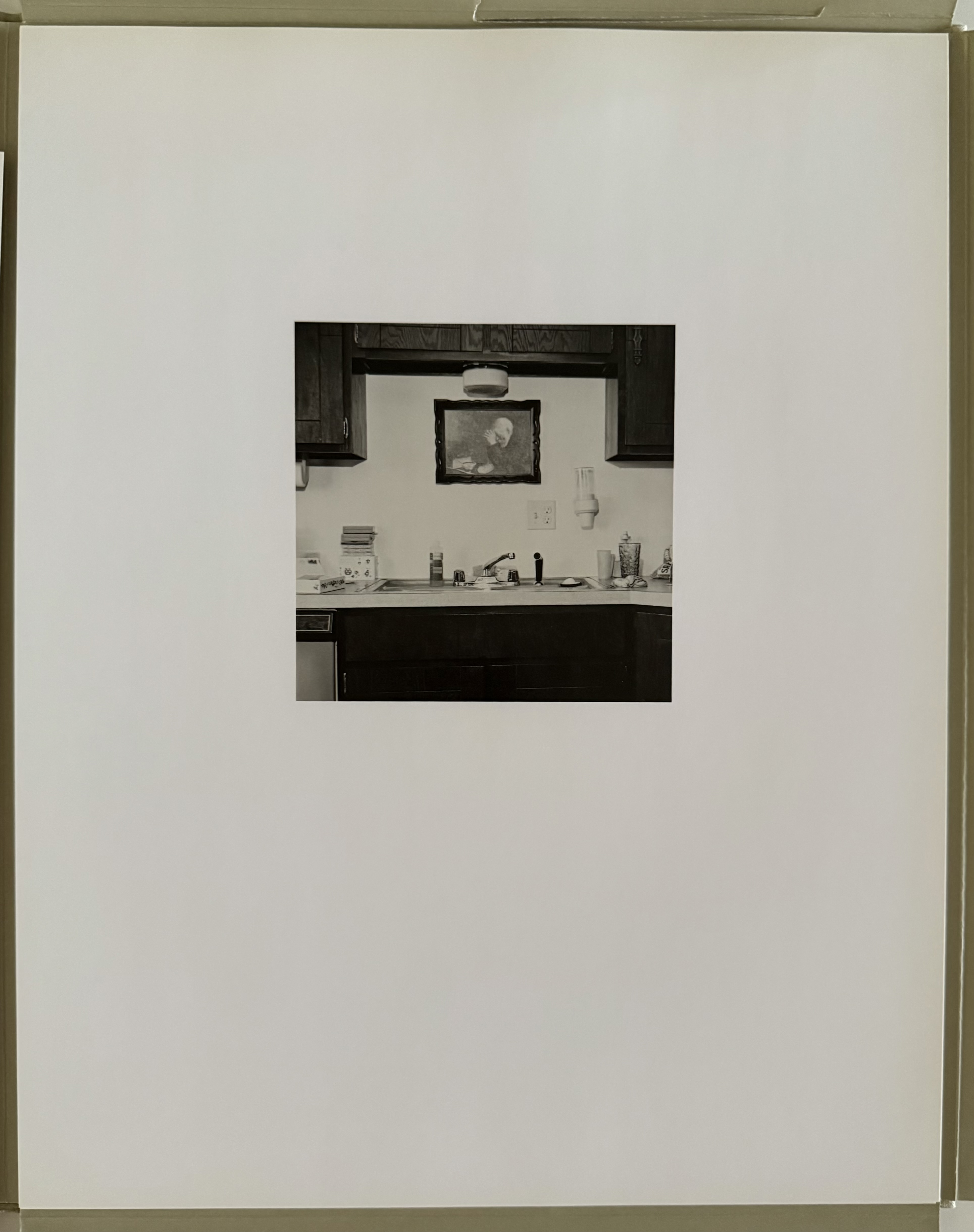

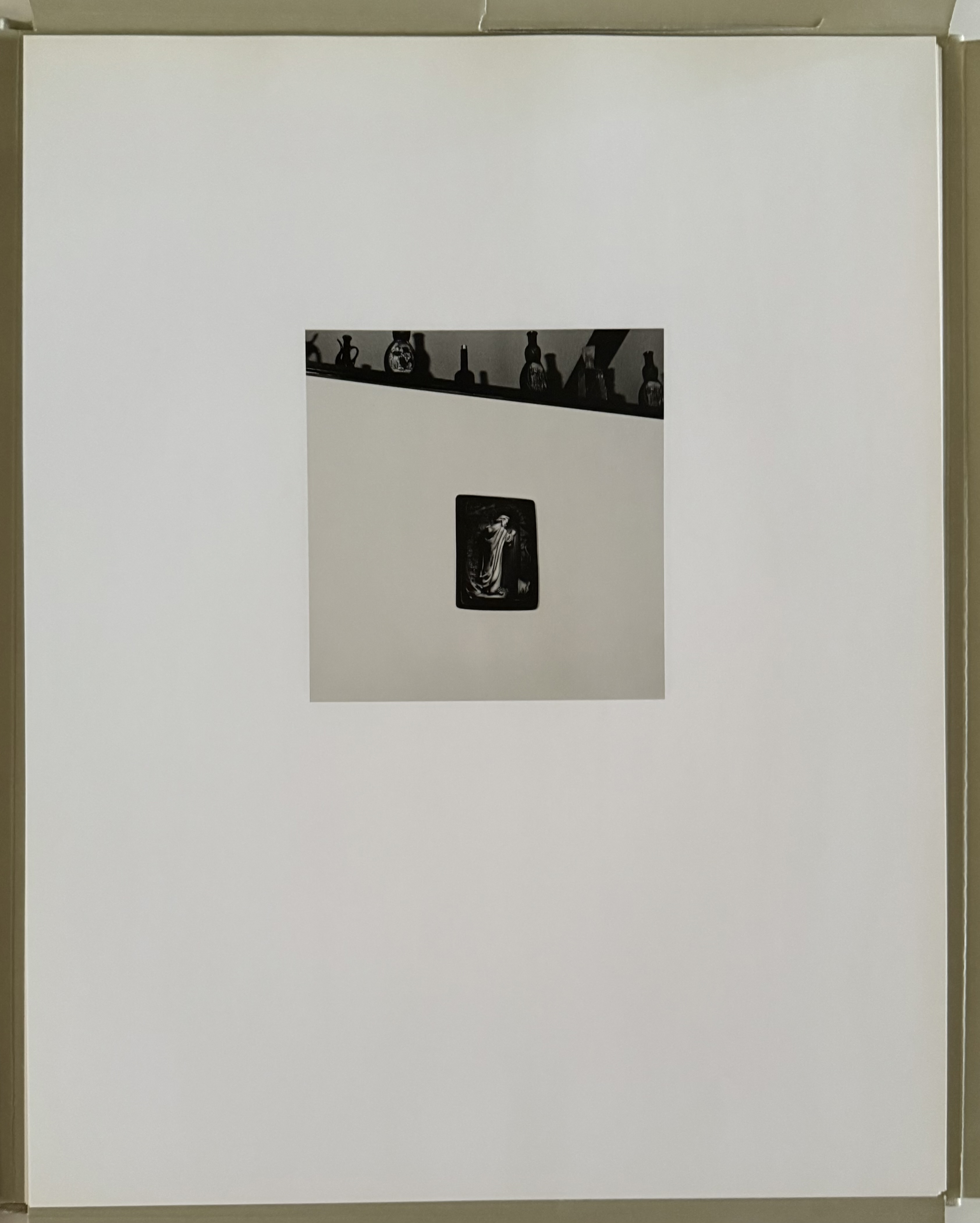
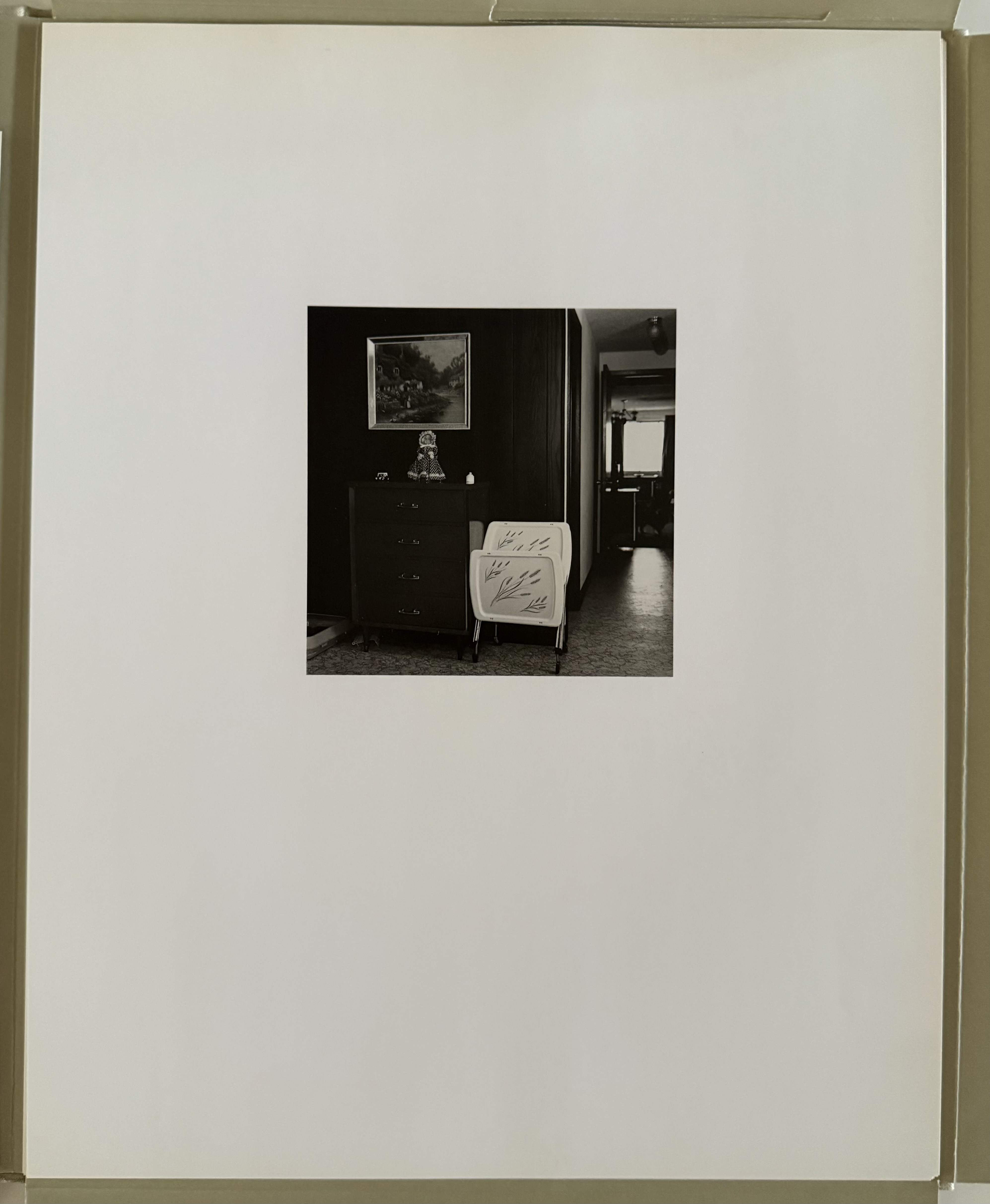


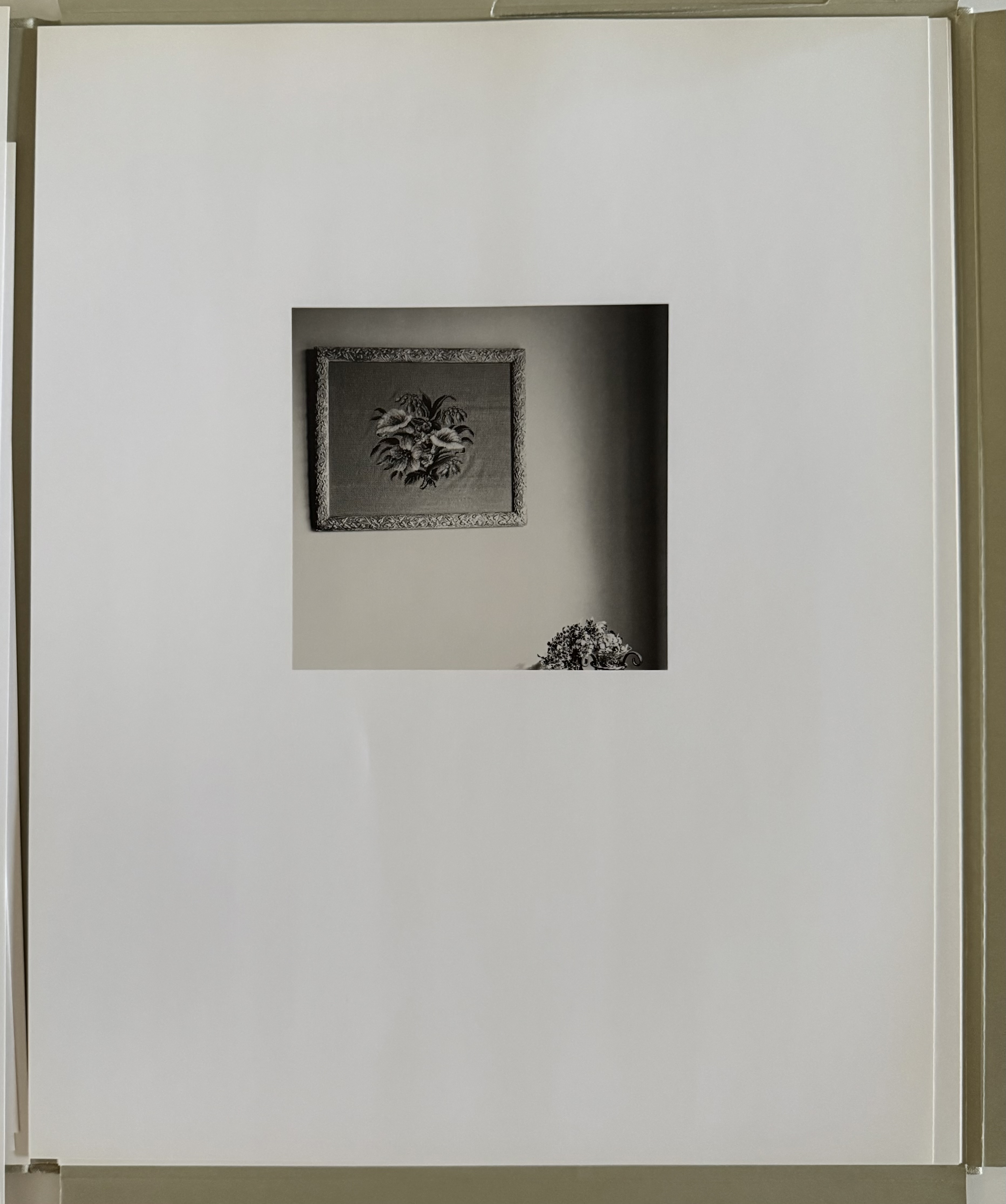
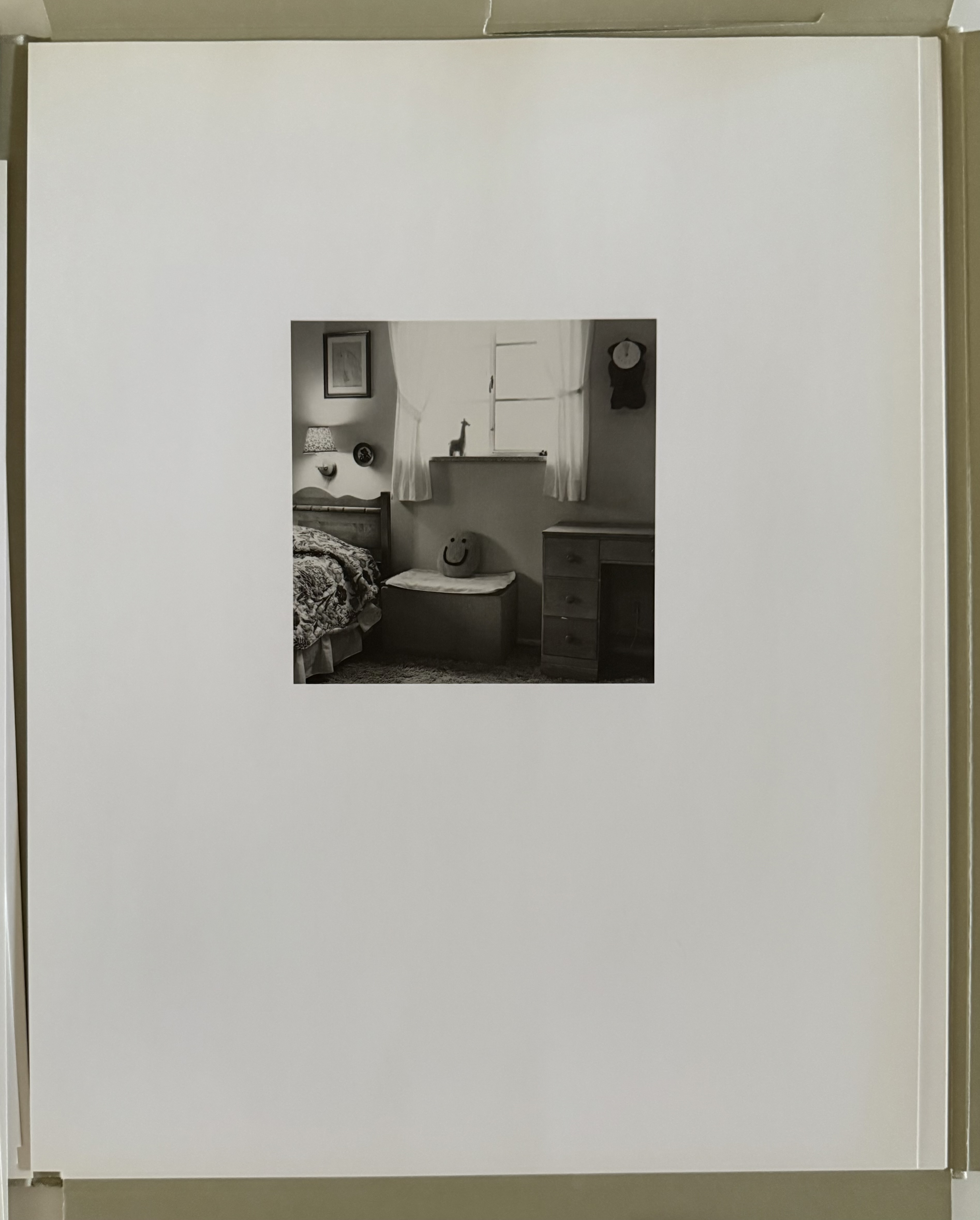

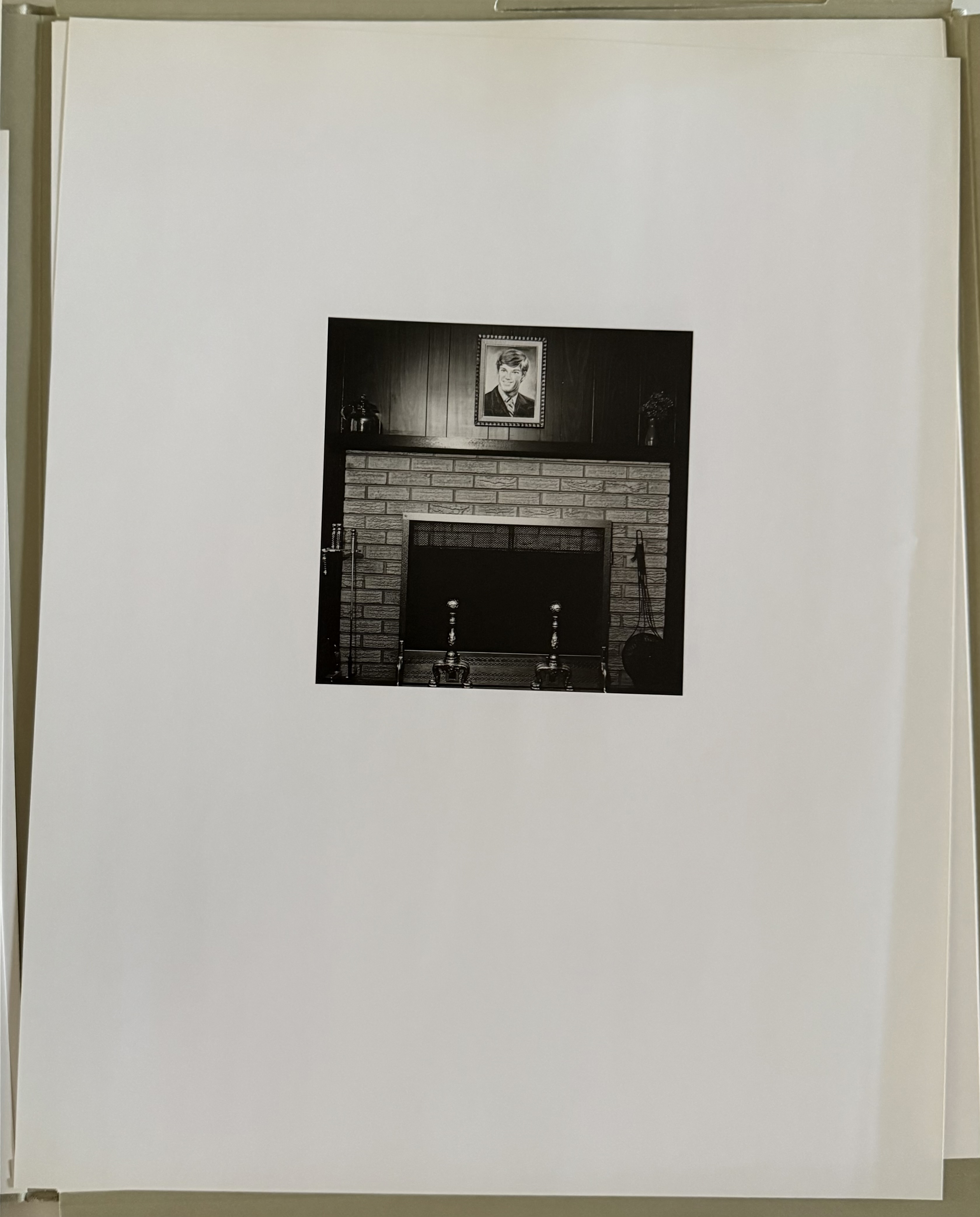

Robert Adams's Interiors 1973–1974 is a fairly quiet but significant late addition to his body of work, it wasn't published until 2006, by Nazraeli Press (working with Fraenkel Gallery), even though the photographs themselves date to the early '70s, the same period as his classic Denver-area landscape work. Its theme of empty residential interiors is central to Bushwick Sur Seine.
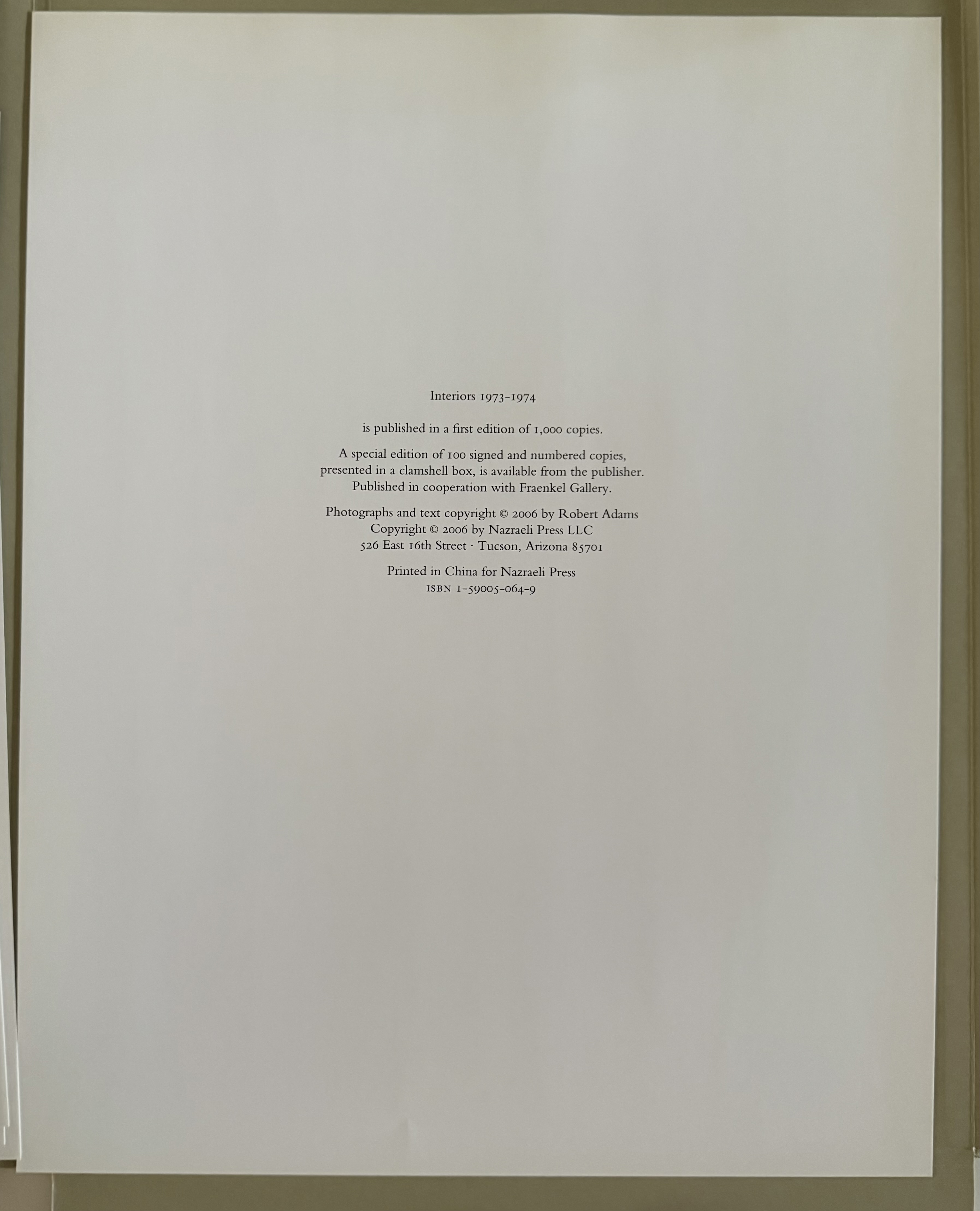
The book is a portfolio rather than a conventional bound volume, 24 duotone plates on loose 11×14" sheets of heavy matte stock, housed in a cloth-covered presentation case and clamshell box, no dust jacket. Nazraeli issued it in two forms simultaneously: a trade edition of 1,000 copies and a signed, numbered limited edition of 100 (no priority between them). This copy is one of the few copies of the trade edition, which were signed by Adams.
Content-wise, it's Adams turning his eye indoors, photographing the domestic interiors of Denver-area homes during the same years he was shooting the tract-house landscapes that made his name. Where his landscape work (The New West, etc.) is often read through the "New Topographics" lens, a cool, deadpan look at the man-altered land that helped link documentary photography to Conceptual art, Interiors softens that register. It's about what people gather around themselves inside those houses: modest possessions, arranged rooms, small gestures of care. Adams himself framed it as looking for "evidence... of caring," and the underlying idea echoed in later writing about the work, is that our domestic clutter is "all we have" against an indifferent, vast landscape outside the window. So critically, it's often discussed as the tender, interior counterpart to his more famous exterior/landscape photography: the same subject (how people inhabit a fragmented, suburbanizing West) with opposite scale.

Robert Adams's Interiors 1973–1974 is a fairly quiet but significant late addition to his body of work, it wasn't published until 2006, by Nazraeli Press (working with Fraenkel Gallery), even though the photographs themselves date to the early '70s, the same period as his classic Denver-area landscape work. Its theme of empty residential interiors is central to Bushwick Sur Seine.
The book is a portfolio rather than a conventional bound volume, 24 duotone plates on loose 11×14" sheets of heavy matte stock, housed in a cloth-covered presentation case and clamshell box, no dust jacket. Nazraeli issued it in two forms simultaneously: a trade edition of 1,000 copies and a signed, numbered limited edition of 100 (no priority between them). This copy is one of the few copies of the trade edition, which were signed by Adams.
Content-wise, it's Adams turning his eye indoors, photographing the domestic interiors of Denver-area homes during the same years he was shooting the tract-house landscapes that made his name. Where his landscape work (The New West, etc.) is often read through the "New Topographics" lens, a cool, deadpan look at the man-altered land that helped link documentary photography to Conceptual art, Interiors softens that register. It's about what people gather around themselves inside those houses: modest possessions, arranged rooms, small gestures of care. Adams himself framed it as looking for "evidence... of caring," and the underlying idea echoed in later writing about the work, is that our domestic clutter is "all we have" against an indifferent, vast landscape outside the window. So critically, it's often discussed as the tender, interior counterpart to his more famous exterior/landscape photography: the same subject (how people inhabit a fragmented, suburbanizing West) with opposite scale.