

Softcover
ISBN:


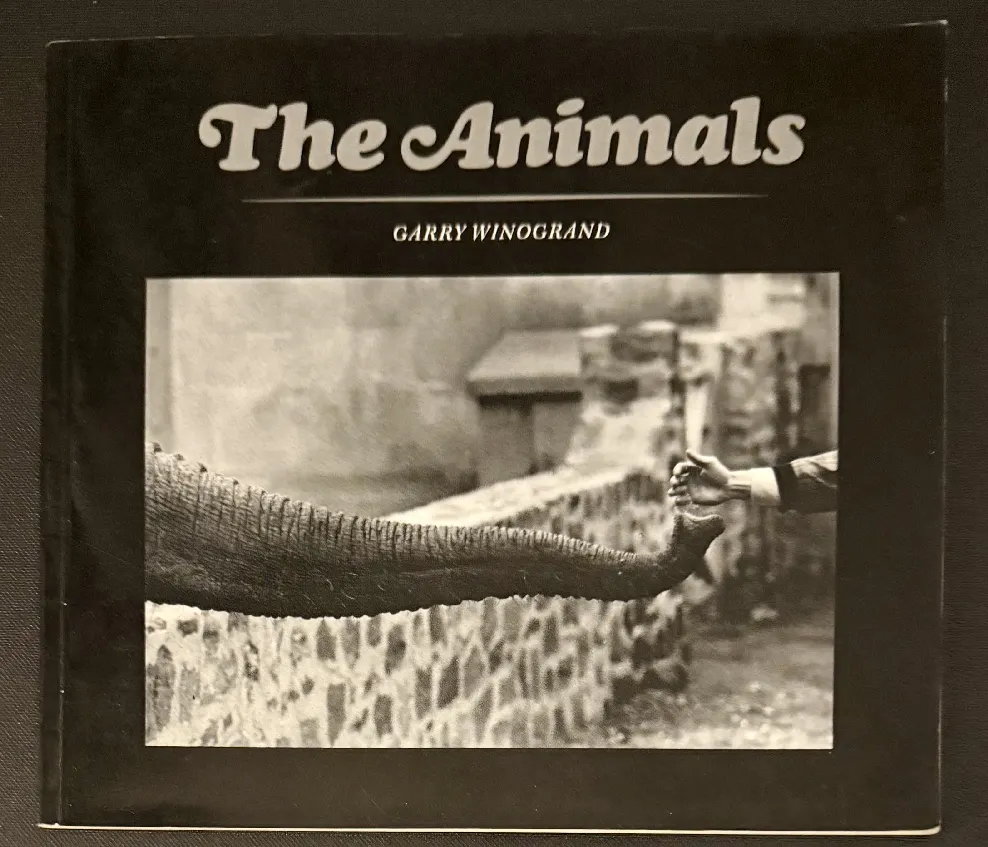
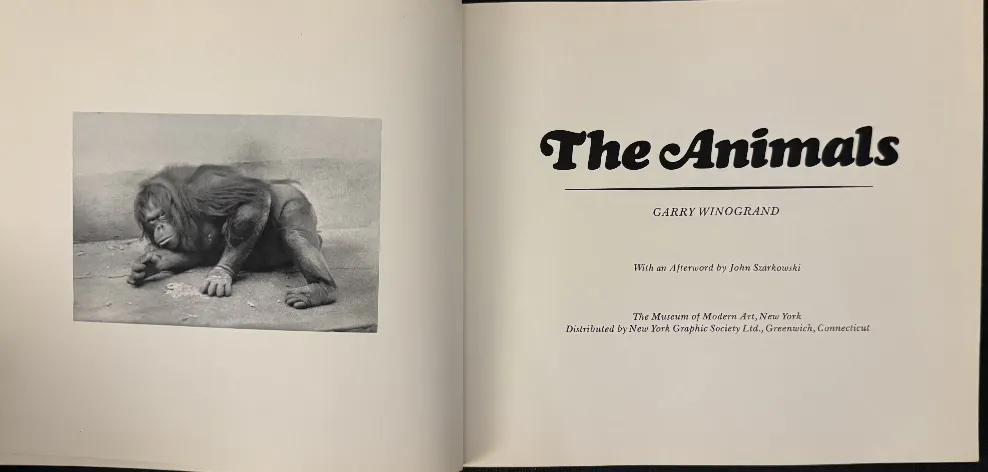
The Animals (1969) was Winogrand's first published monograph, a slim volume of black-and-white photographs taken at the Bronx Zoo and the Coney Island Aquarium. Many of the pictures came out of ordinary outings with his young children during his years as a divorced father, but the resulting images go well beyond casual zoo snapshots: Winogrand pairs animals and human visitors within the same frame so that captivity, display, and behavior blur between the two species. A lion glares through bars at a family doing much the same to it; a hippo yawns; primates and onlookers mirror each other's postures and expressions.
In his afterword, MoMA curator John Szarkowski described the book's world as "a surreal Disneyland where unlikely human beings and jaded careerist animals stare at each other through bars," each side seemingly blind to its own "ludicrous predicament." That absurdist, tragicomic tension, between viewer and viewed, wild and domesticated, dignity and confinement, is the book's central thread, and it's often read as an oblique extension of Winogrand's street photography, applying the same restless eye for social awkwardness and chance juxtaposition to a zoo setting instead of the city sidewalk.
The book marked Winogrand's breakthrough as a published artist: it helped cement his relationship with Szarkowski, who would go on to champion him as one of the defining American photographers of his generation. It's since been included in Martin Parr and Gerry Badger's The Photobook: A History as a landmark of the genre.
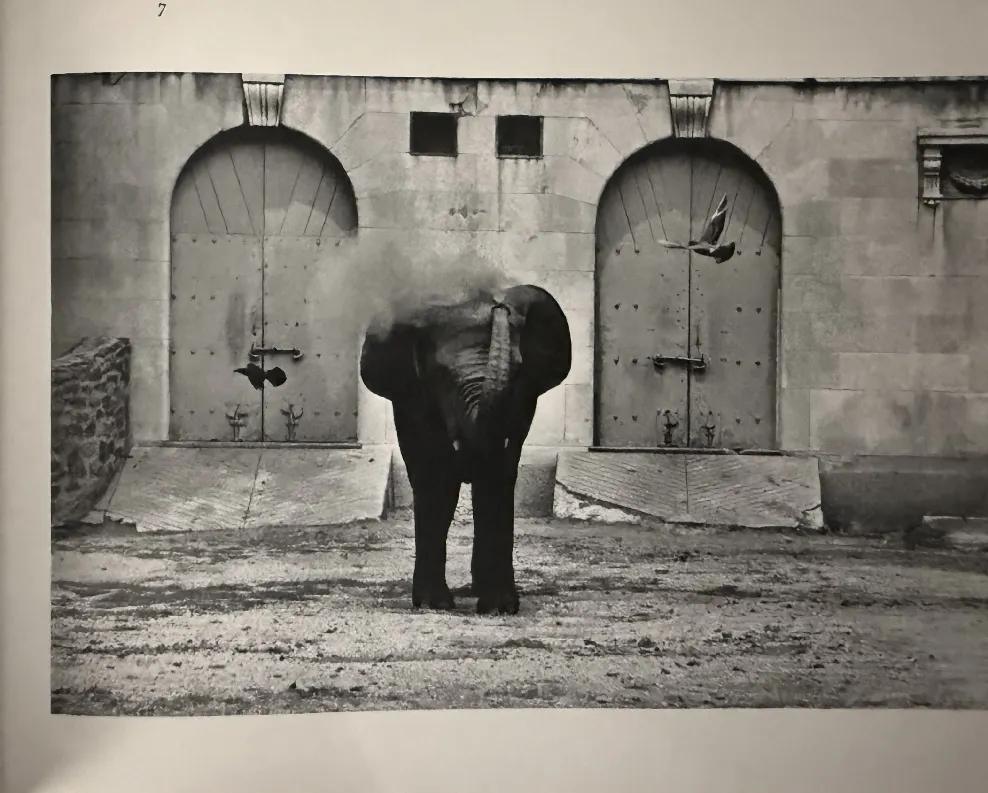
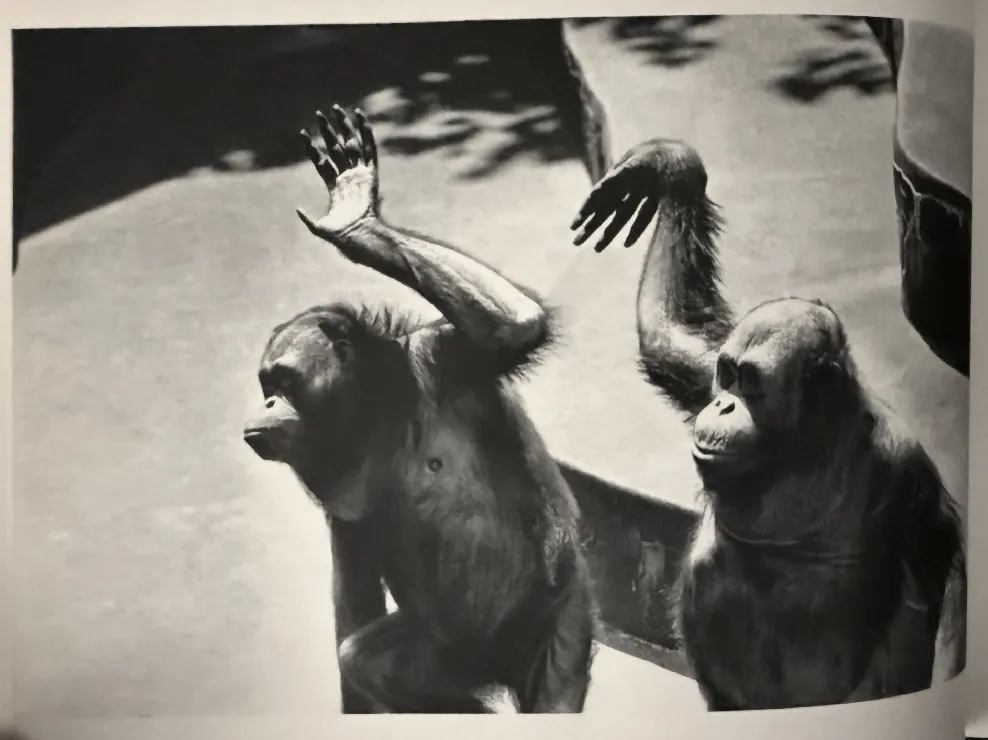
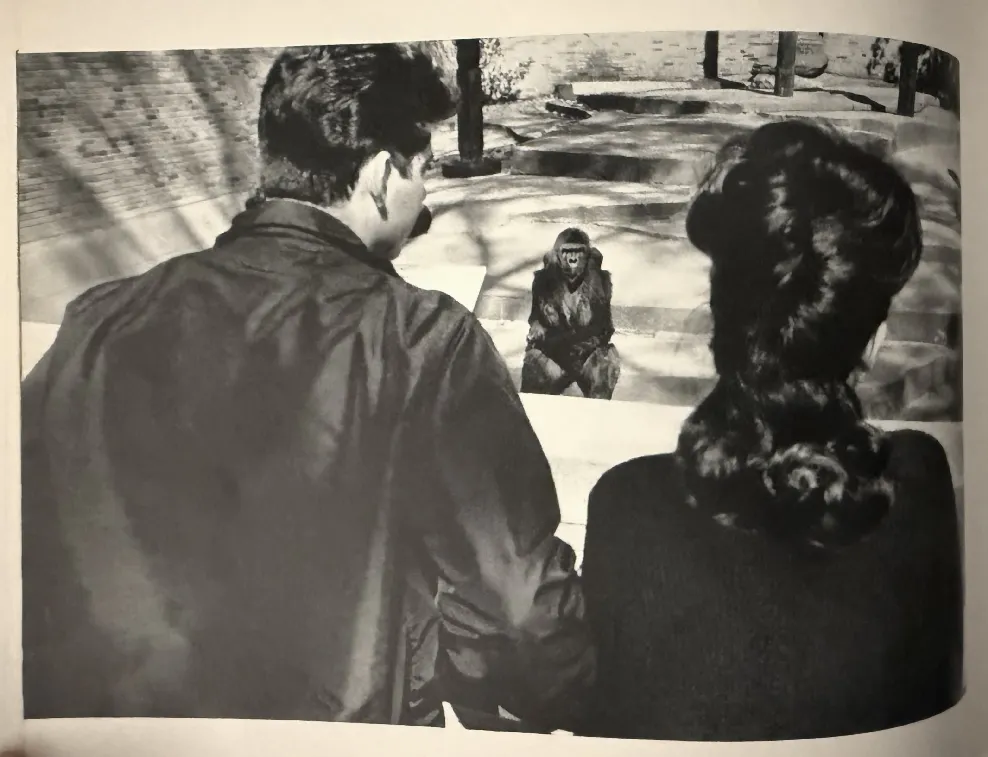
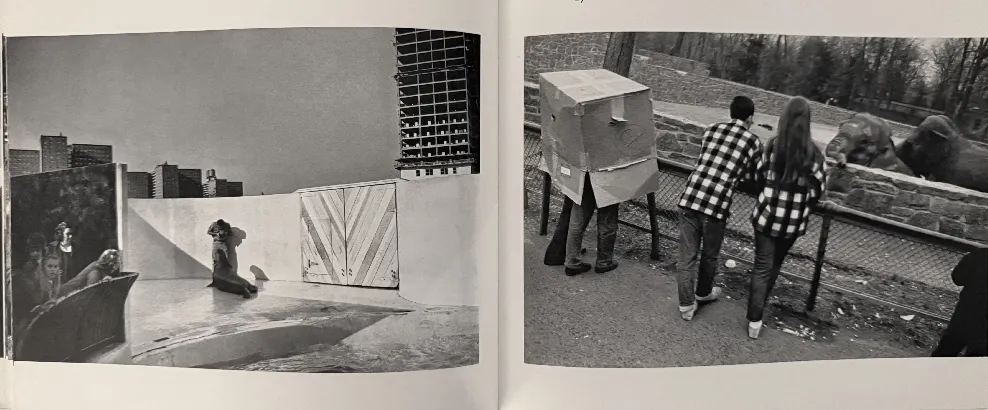
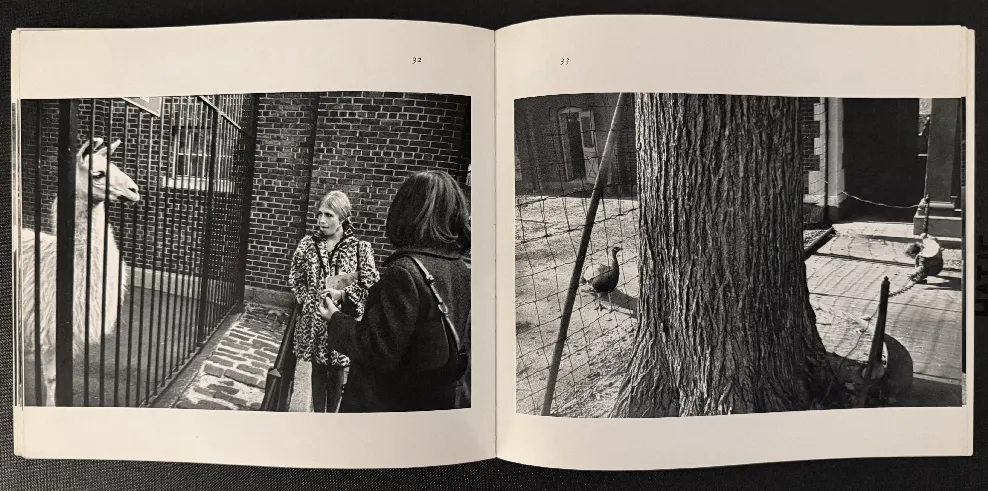
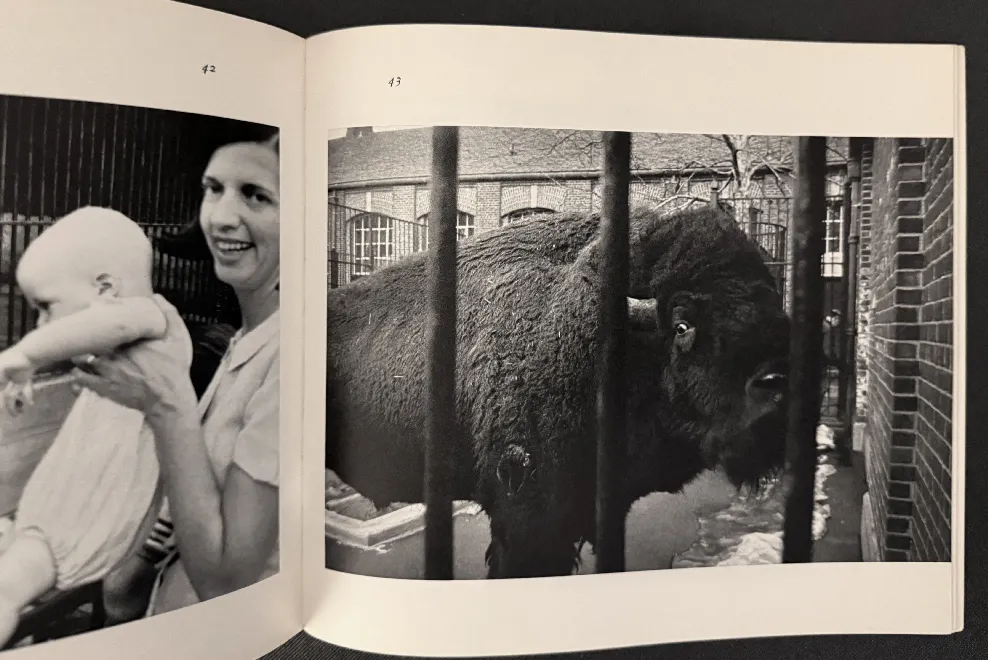
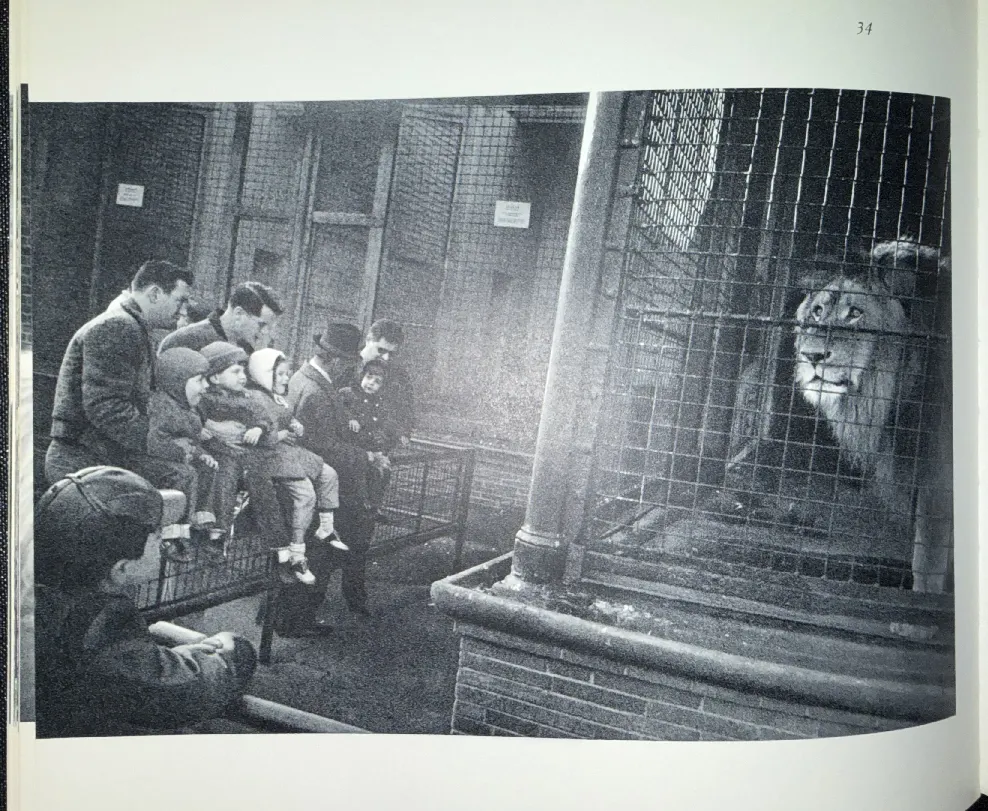
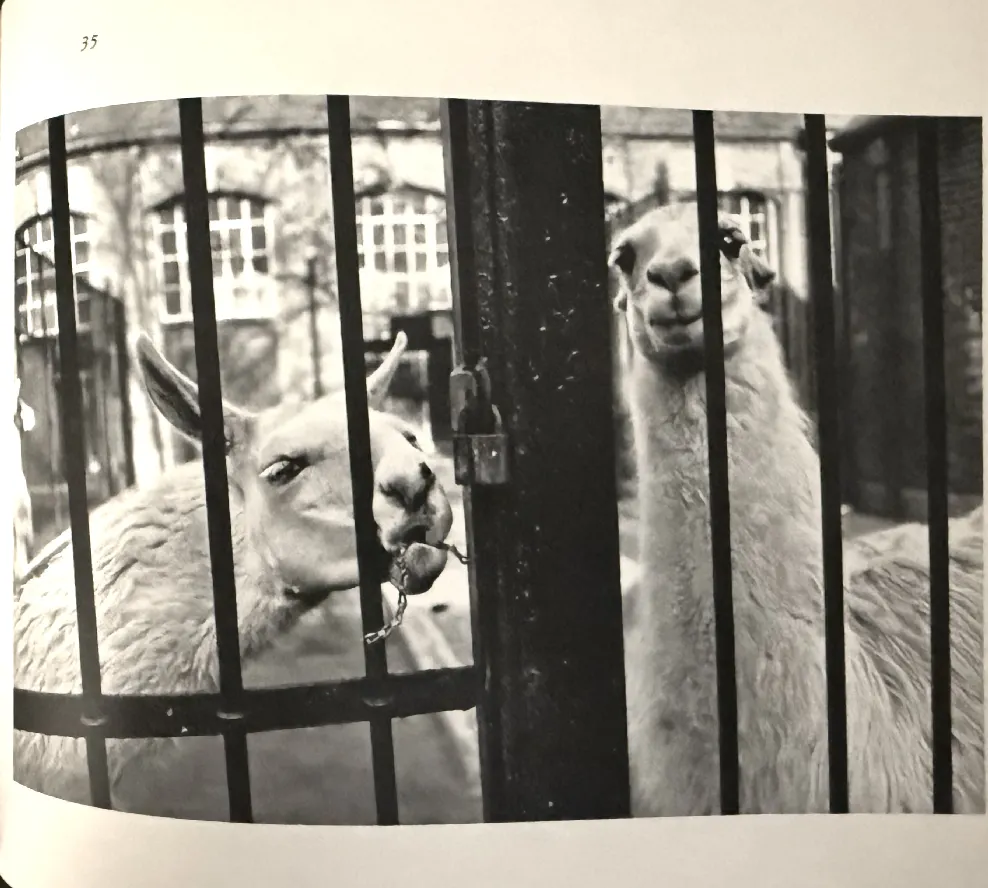
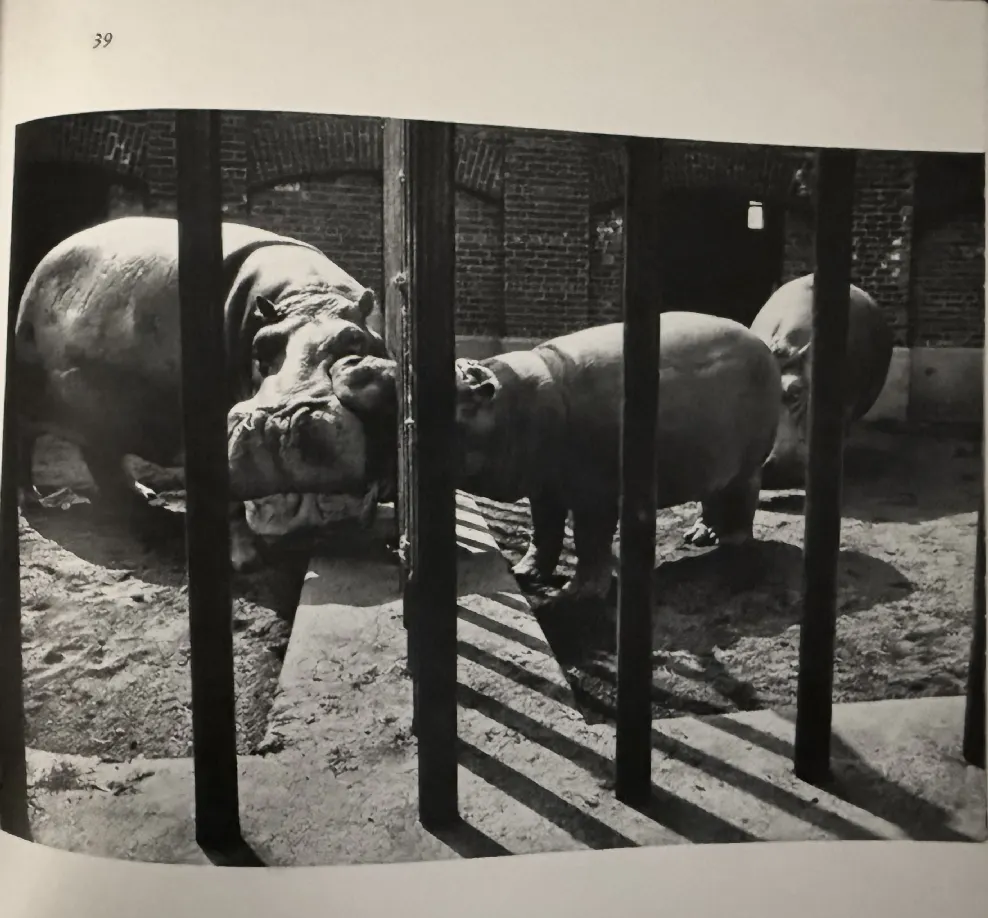
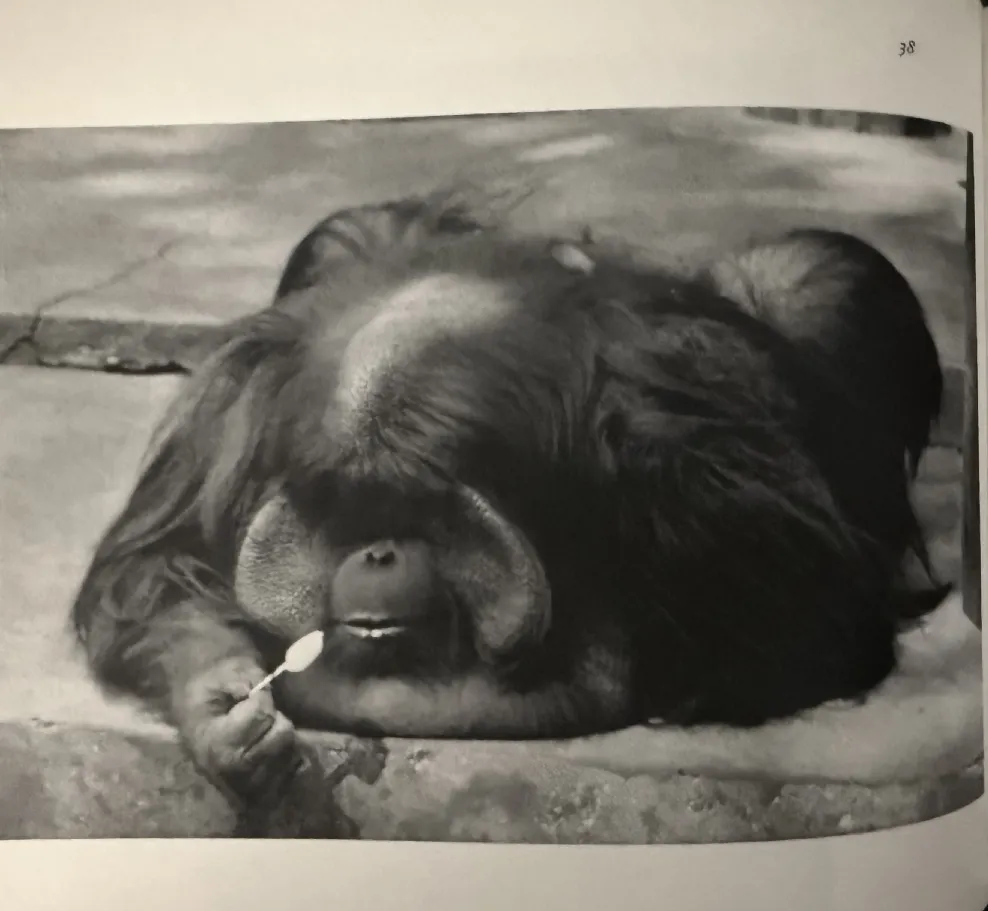
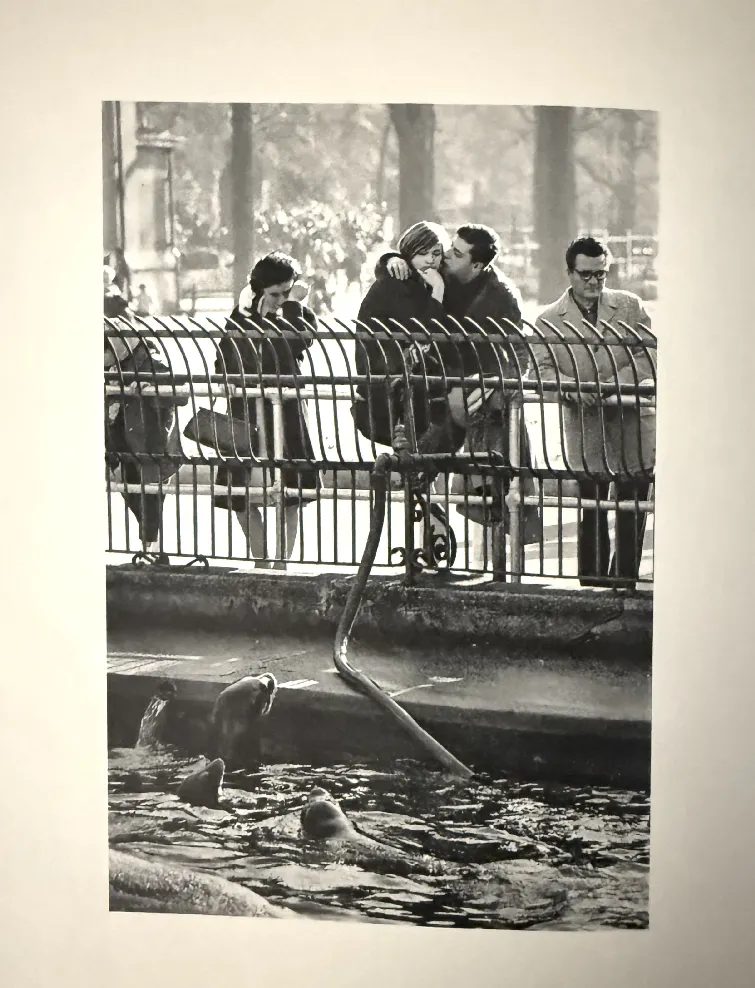
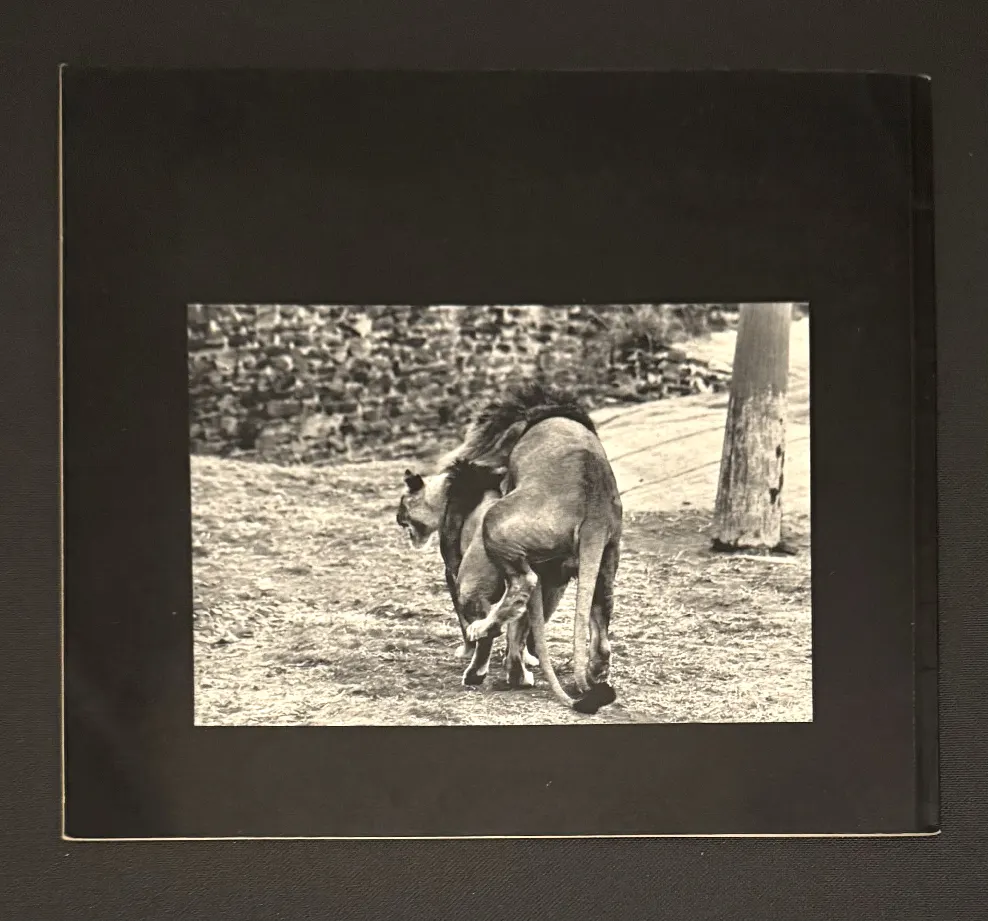
The Animals (1969) was Winogrand's first published monograph, a slim volume of black-and-white photographs taken at the Bronx Zoo and the Coney Island Aquarium. Many of the pictures came out of ordinary outings with his young children during his years as a divorced father, but the resulting images go well beyond casual zoo snapshots: Winogrand pairs animals and human visitors within the same frame so that captivity, display, and behavior blur between the two species. A lion glares through bars at a family doing much the same to it; a hippo yawns; primates and onlookers mirror each other's postures and expressions.
In his afterword, MoMA curator John Szarkowski described the book's world as "a surreal Disneyland where unlikely human beings and jaded careerist animals stare at each other through bars," each side seemingly blind to its own "ludicrous predicament." That absurdist, tragicomic tension, between viewer and viewed, wild and domesticated, dignity and confinement, is the book's central thread, and it's often read as an oblique extension of Winogrand's street photography, applying the same restless eye for social awkwardness and chance juxtaposition to a zoo setting instead of the city sidewalk.
The book marked Winogrand's breakthrough as a published artist: it helped cement his relationship with Szarkowski, who would go on to champion him as one of the defining American photographers of his generation. It's since been included in Martin Parr and Gerry Badger's The Photobook: A History as a landmark of the genre.