
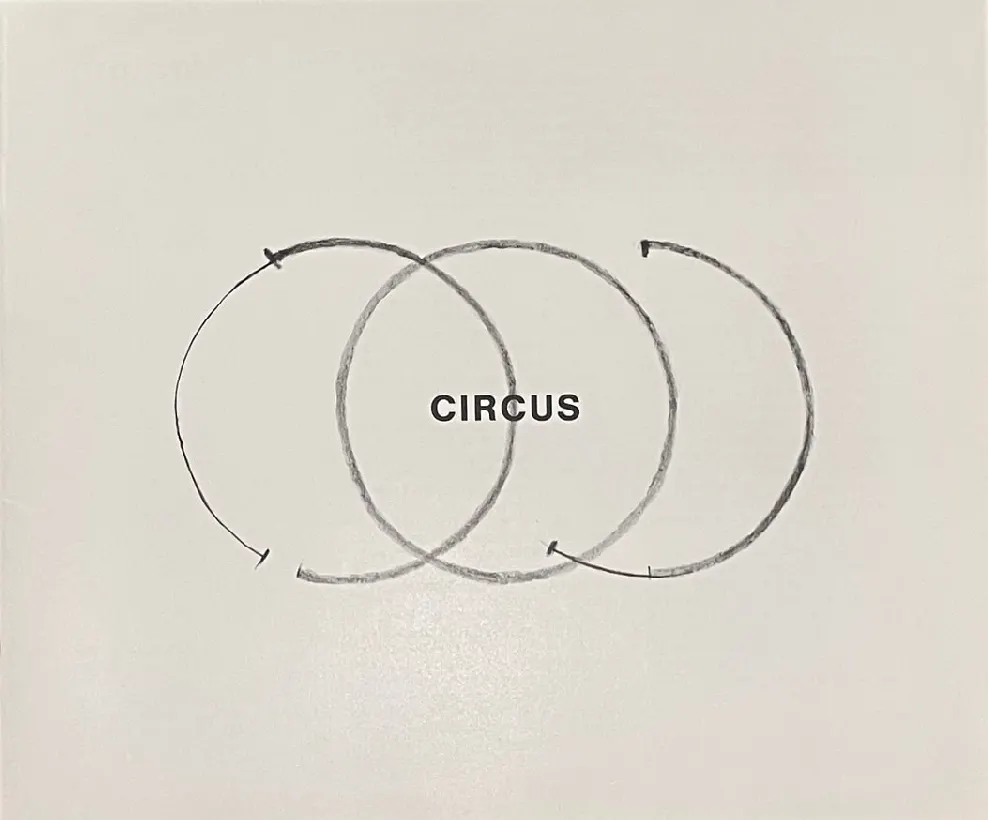
Staple-bound softcover, 20.3 x 24.2 cm.
ISBN:


Gordon Matta-Clark’s Circus originates from his 1978 site-specific intervention, Circus or The Caribbean Orange, commissioned by the Museum of Contemporary Art in Chicago. As his final major architectural cut before his untimely death, the project involved carving complex, intersecting spherical voids through the floors and roof of an adjacent townhouse slated for demolition. The work fundamentally dismantled the utilitarian logic of the domestic space, transforming the static architecture into a dizzying optical instrument that confused interior and exterior perspectives.
The publication serves as the primary surviving record of this ephemeral intervention, compiling the intricate photo-collages, preparatory drawings, and documentary images Matta-Clark created to translate his physical voids into two-dimensional space. Rather than offering straightforward architectural documentation, the book captures his process of slicing and reassembling photographs to mimic the fractured, multi-layered experience of moving through the altered building.