
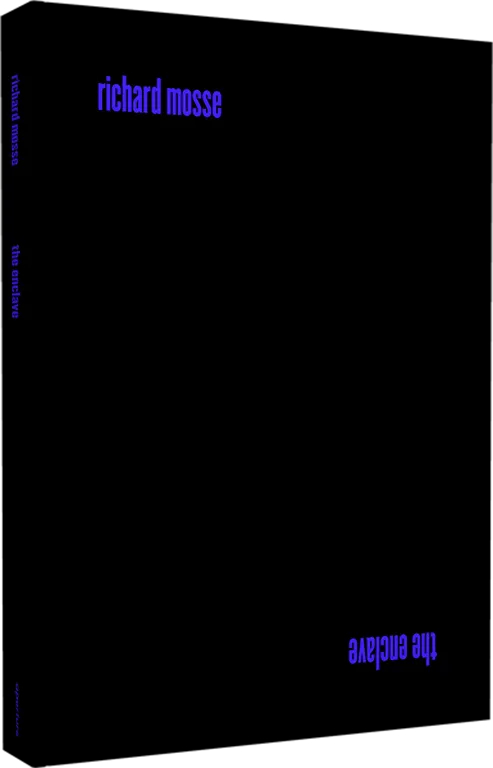
Softcover
ISBN:
9781597112635


Richard Mosse’s The Enclave serves as the monumental culmination of his exploration into the conflict within the Democratic Republic of the Congo, expanding upon the conceptual foundation laid by his earlier work, Infra. Originally conceived as an immersive multimedia installation for the 2013 Venice Biennale, the project confronts the profound limitations of traditional photojournalism in conveying complex, entrenched human tragedies. By utilizing discontinued Kodak Aerochrome infrared film, a military technology designed to reveal camouflaged targets, Mosse subverts the conventional documentary gaze. He forces viewers to engage with the invisible mechanics of war and the overlooked suffering of the region through a deeply disorienting, hallucinatory lens.
The aesthetic language of the publication relies on a startling chromatic shift, rendering the verdant Congolese jungle in vivid, hyper-saturated shades of magenta, crimson, and lavender. This surreal color palette generates a profound psychological friction against the grim reality of the heavily armed rebel fighters and displaced communities depicted within the frame. Employing a large-format camera, Mosse captures the landscape with meticulous, clinical detail, flattening the chaotic environment into highly controlled, graphic compositions. The resulting imagery oscillates uncomfortably between seductive beauty and devastating violence, utilizing rigorous structural order to command and hold the viewer's attention.