
Hardcover with dust jacket
ISBN:
9788895410036


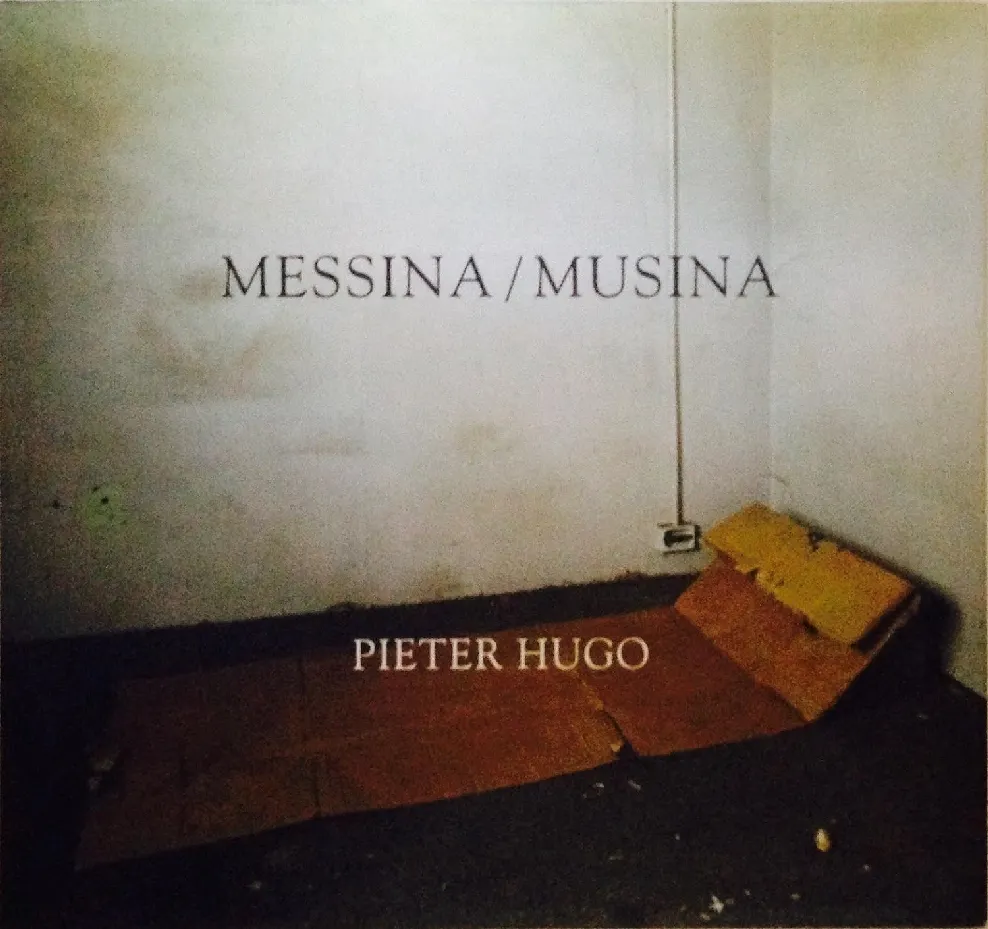
Messina/Musina (2007) by South African photographer Pieter Hugo is a profound documentary study of the country's northernmost town, situated on the Limpopo River border with Zimbabwe. Founded as a colonial copper-mining settlement, the town's name was officially corrected from "Messina" to "Musina" in 2002 as part of ongoing post-apartheid redress. Hugo utilizes this remote geographic margin to explore competing historical narratives and the complex reality of living on the periphery of society. At the time of his project, the town was caught in a turbulent boom-and-bust cycle, heavily exacerbated by the economic collapse of neighboring Zimbabwe. This instability created a highly transient population consisting of truck drivers, diamond miners, smugglers, soldiers, and asylum seekers.
Moving away from rapid photojournalism, Hugo deliberately slowed his process by using a large-format 4x5 camera mounted on a tripod. This methodical approach resulted in highly formalized, unflinching family portraits, stark domestic still lifes, and barren landscapes that capture the fractured, frontier atmosphere of the region.
Published by Punctum Press to accompany his Standard Bank Young Artist award exhibition, the monograph is enriched by a short story by Stacy Hardy and an in-depth conversation between Hugo and photo-editor Joanna Lehan.

Messina/Musina (2007) by South African photographer Pieter Hugo is a profound documentary study of the country's northernmost town, situated on the Limpopo River border with Zimbabwe. Founded as a colonial copper-mining settlement, the town's name was officially corrected from "Messina" to "Musina" in 2002 as part of ongoing post-apartheid redress. Hugo utilizes this remote geographic margin to explore competing historical narratives and the complex reality of living on the periphery of society. At the time of his project, the town was caught in a turbulent boom-and-bust cycle, heavily exacerbated by the economic collapse of neighboring Zimbabwe. This instability created a highly transient population consisting of truck drivers, diamond miners, smugglers, soldiers, and asylum seekers.
Moving away from rapid photojournalism, Hugo deliberately slowed his process by using a large-format 4x5 camera mounted on a tripod. This methodical approach resulted in highly formalized, unflinching family portraits, stark domestic still lifes, and barren landscapes that capture the fractured, frontier atmosphere of the region.
Published by Punctum Press to accompany his Standard Bank Young Artist award exhibition, the monograph is enriched by a short story by Stacy Hardy and an in-depth conversation between Hugo and photo-editor Joanna Lehan.