
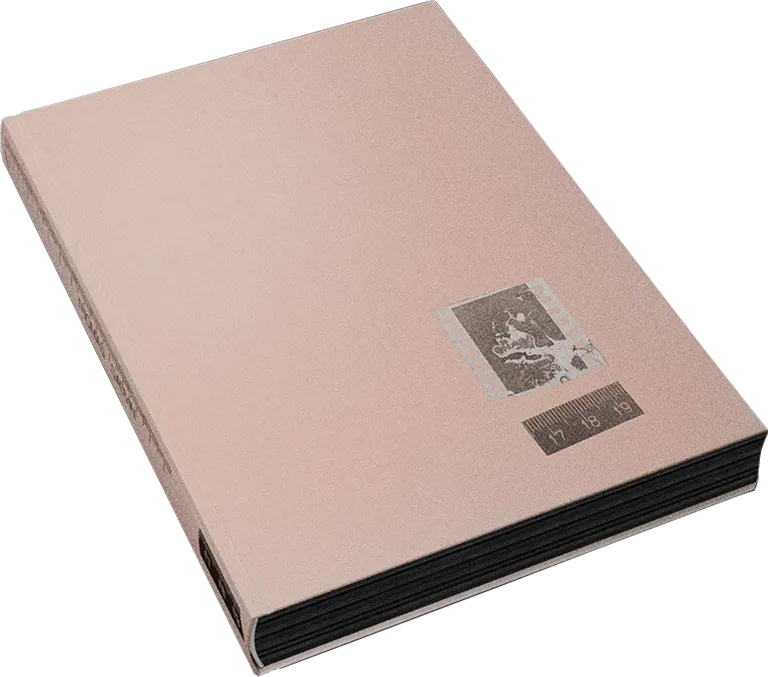


17 18 19 (2019) is a unique extension of Sauvin's Beijing Silvermine project, drawing from a specific, darker sub-archive.
The book's material comes from a bag of over 15,000 scratched, black-and-white negatives salvaged from a recycling plant on the outskirts of Beijing in 2010. These images were originally shot between 1991 and 1993 at a Beijing detention center by police department photographers.
The sequence presents a strange, bureaucratic inventory of confiscated items and crime scene evidence, screwdrivers, pocket knives, shovels, keys, stolen money, and clothing. These objects are frequently photographed next to a small referential ruler bearing the numbers "17 18 19", which gives the book its enigmatic title.
Instead of inverting the negatives into positive images, Sauvin made the deliberate decision to present the photographs exactly as he found them: in negative form. This design transforms ordinary objects into glowing, ghostly artifacts suspended against a dark, empty background, resembling x-rays.
The book is printed exclusively with metallic silver ink on black paper, directly referencing both the visual aesthetic of the negative and the silver nitrate recovery process that originally threatened to destroy the archive.
In 17 18 19, Thomas Sauvin pushes his reappropriation practice beyond simply curating and publishing found vernacular imagery.
Instead of rescuing snapshots to celebrate everyday life, he actively subverts the physical format and the original bureaucratic authority of the archive. The original images were shot by the Chinese police with strictly utilitarian, forensic intentions. By stripping away all police context and presenting the items next to a sterile referential ruler (marked 17, 18, 19), Sauvin replaces the authority of the state with his own authorship. He transforms definitive legal evidence into ambiguous, hyper-potent visual puzzles.
The book's design plays with the concept of criminality and investigation. The publication even features Sauvin’s own fingerprints stamped on a Bertillon-style identification card, implicating the artist as a participant. By presenting only fragmented, glowing artifacts against a black void, the book forces the reader out of passive observation and into the role of an active investigator trying to decode the remnants of anonymous lives
