SOLD
Copyright ©
George Tice
or applicable right holders.
Poster


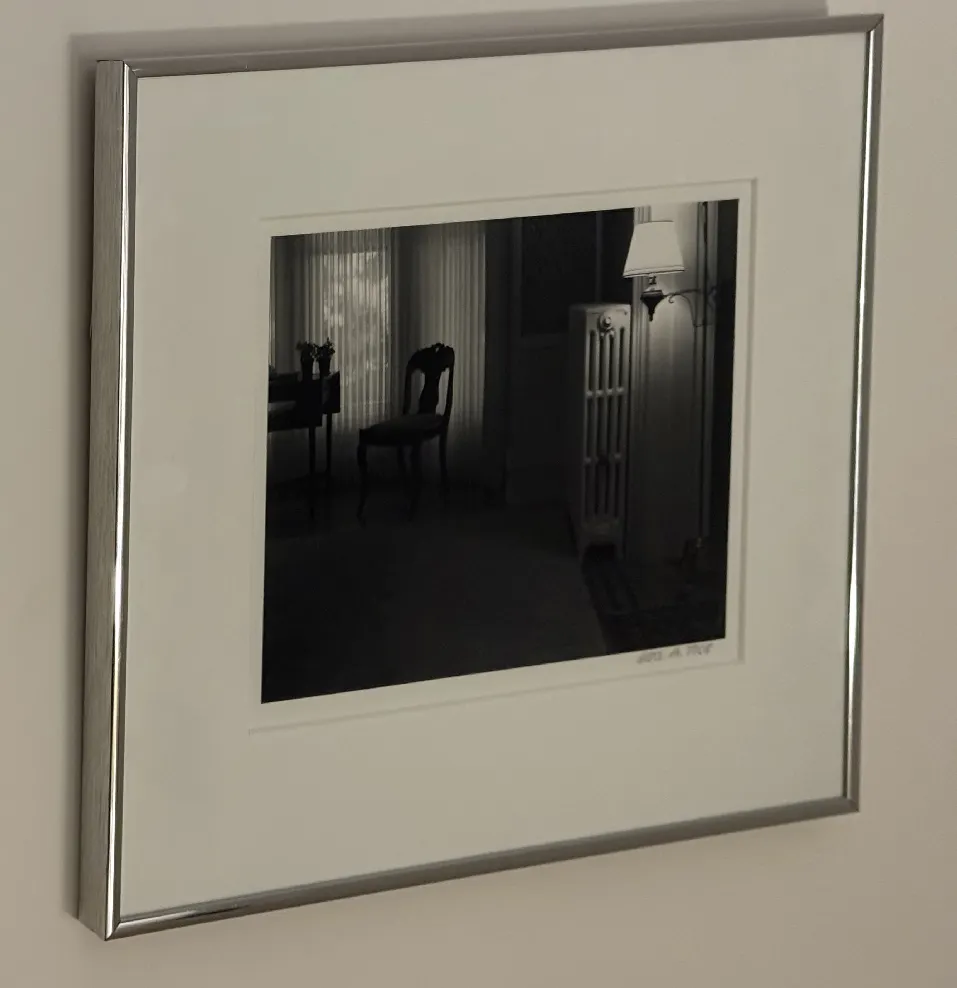
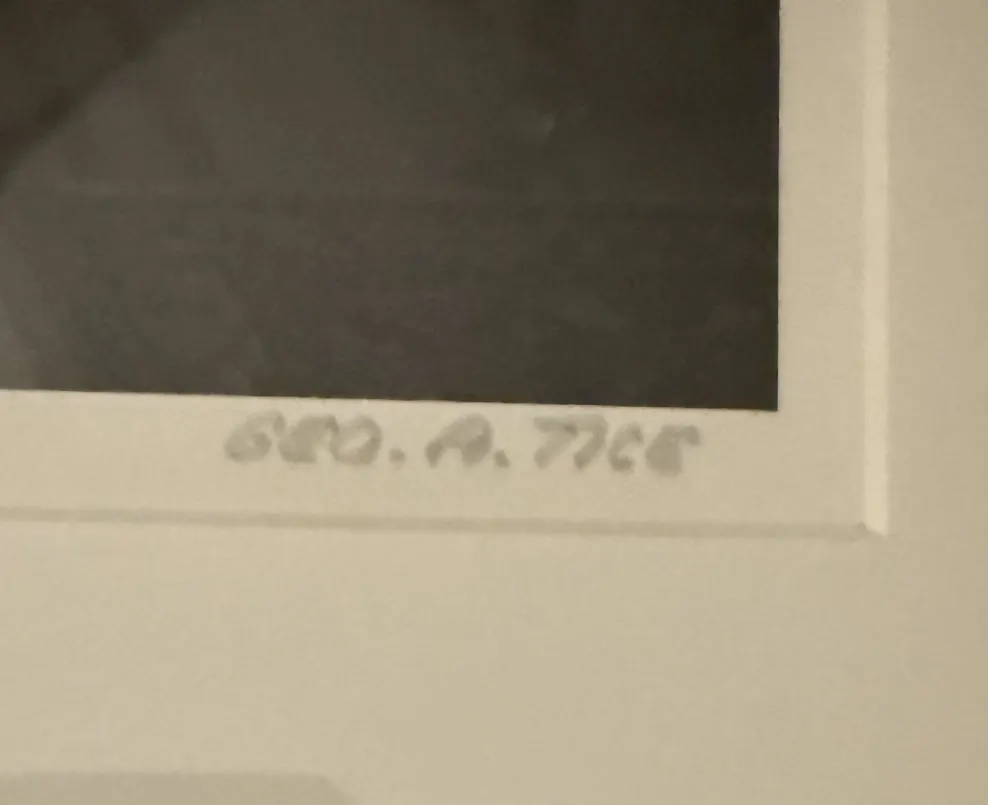

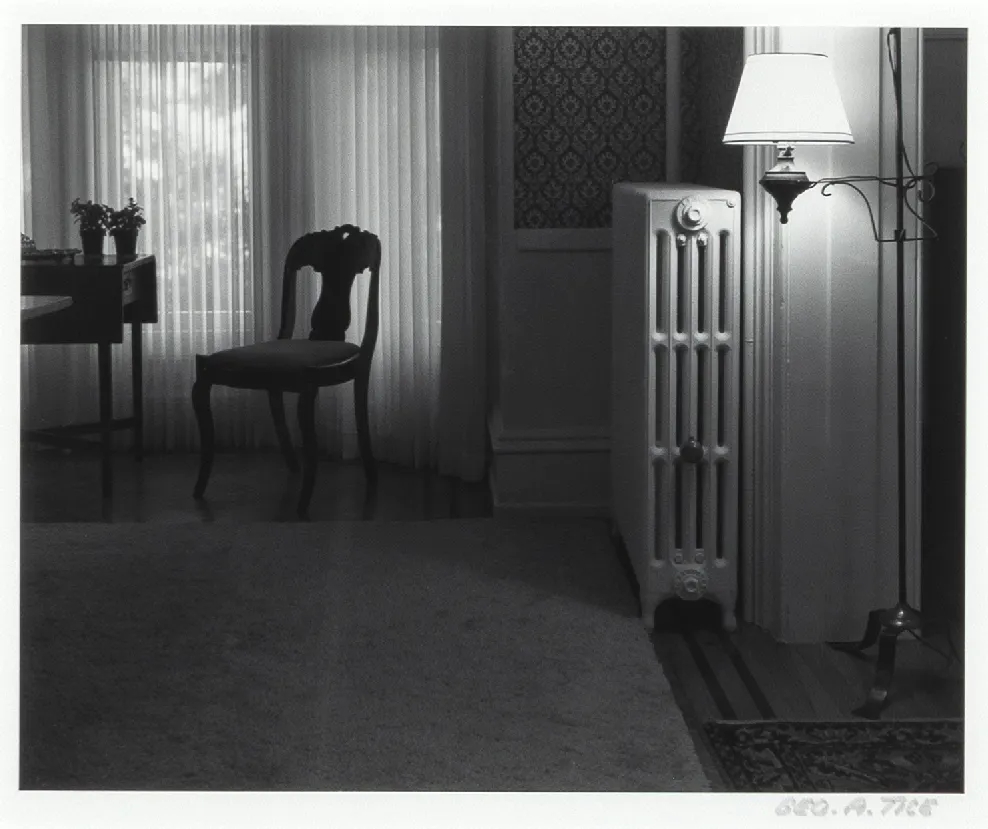
George Tice’s Interior, W. Milton Ave., Rahway, NJ (1973) serves as a exacting document of American vernacular architecture and domestic quietude. Throughout his extensive career, Tice consistently turned his large-format camera toward the working-class and middle-class landscapes of his native New Jersey, seeking enduring structural dignity in seemingly unremarkable spaces. By photographing this unpopulated room, he shifts the documentary focus away from direct human narrative and onto the lingering atmospheric presence left behind by its inhabitants. This approach positions the photograph not merely as a record of a specific mid-century home, but as a deliberate study of the psychological weight inherent in everyday American environments.
This specific print perfectly fits one of the collection’s recurring theme of bare interiors. It demonstrates how a space devoid of people can still hold significant visual weight through precise photographic execution. By translating this quiet domestic scene into a pristine physical artifact, the print champions Tice’s traditional, tactile darkroom methodology, ensuring that the ephemeral light of a 1973 afternoon is permanently solidified as an enduring sculptural object.