SOLD
Copyright ©
Bill Brandt
or applicable right holders.
Poster


Bill Brandt, A Night in London (Country Life - Arts et Métiers, 1938), p. 40
Bill Brandt, A Night in London (Country Life - Arts et Métiers, 1938), p. 40
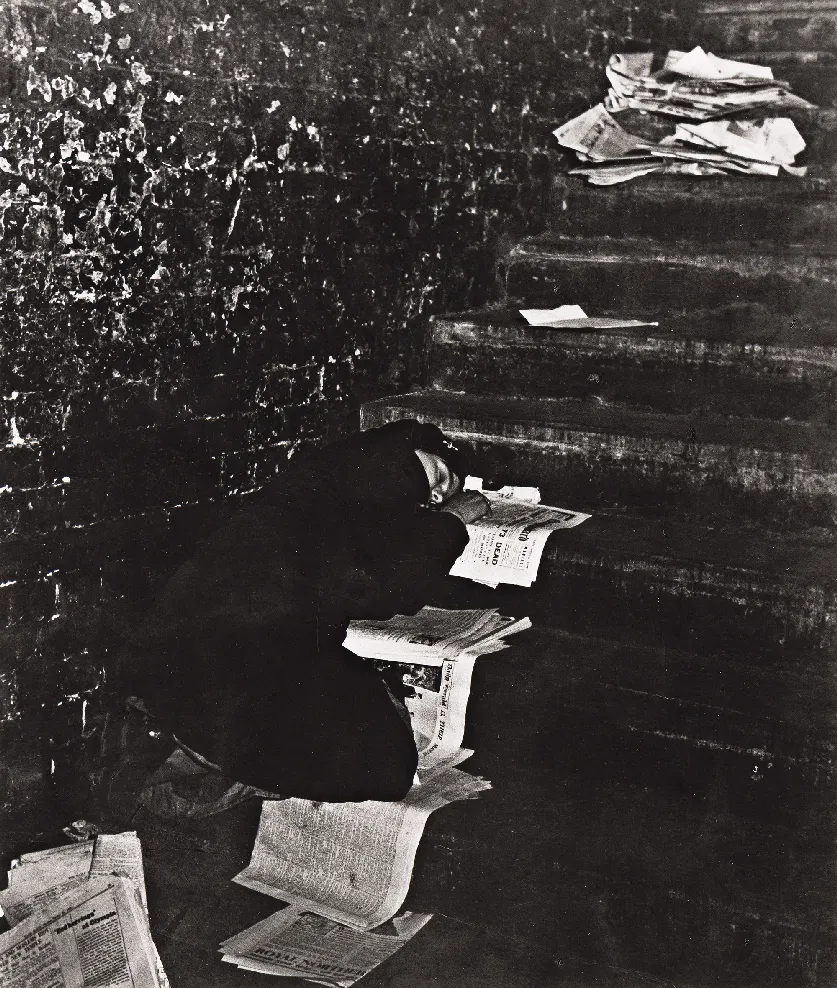
Bill Brandt’s Homeless Girl, London (1930s) is a haunting, poignant documentation of urban poverty, social displacement, and psychological vulnerability in interwar Britain. Emerging from Brandt’s seminal documentation of class disparities in London and the industrial north (published A Night in London/Londres de Nuit, 1938), the work captures a solitary figure against a stark urban backdrop, transforming street reportage into an enduring testament of human empathy and social critique.
The dramatic interplay of deep shadows, stark highlights, and the reflective, wet sheen of the cobblestones encapsulates Brandt's signature mastery of atmosphere and texture. The heavy shadows and direct framing create a spatial and emotional tension between the marginalized subject and the indifferent city, drawing the viewer into an intimate, unflinching confrontation with the human cost of economic depression.
Bill Brandt, A Night in London (Country Life - Arts et Métiers, 1938), p. 40