SOLD
Copyright ©
Richard Mosse
or applicable right holders.
Poster



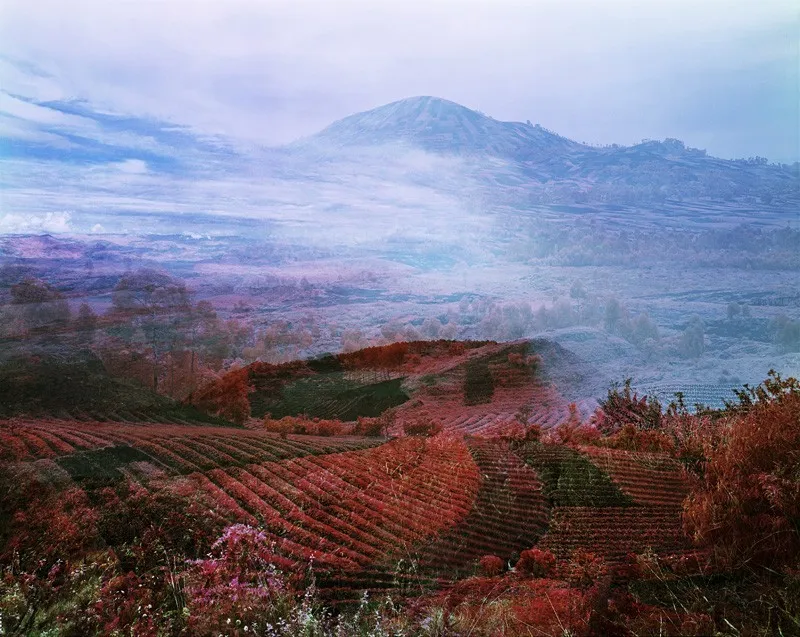
Richard Mosse’s Debris, North Kivu, Eastern Congo (2011) operates as a critical landscape study within his groundbreaking Infra series, fundamentally redefining the visual language of contemporary conflict photography. Depicting the sweeping, terraced hillsides of the contested Congolese terrain, the image confronts the profound structural realities of the region. By utilizing discontinued Kodak Aerochrome, a military reconnaissance infrared film designed to reveal camouflaged targets, Mosse subverts the traditional photojournalistic gaze. He forces the viewer to engage with the invisible mechanics of war and the enduring psychological weight of the landscape through a deeply conceptual, hyper-aestheticized lens.
Aesthetically, the print relies on a startling chromatic shift, rendering the cultivated agricultural terraces and encroaching foliage in vivid, hallucinatory shades of magenta and crimson. This surreal color palette generates a profound psychological friction against the grim, unseen reality of the conflict that permeates this terrain. Employing a large-format camera, Mosse captures the vast vista with meticulous, clinical detail, flattening the rolling hills and atmospheric fog into a highly controlled, graphic composition. The deep focal plane and stark tonal contrasts emphasize the tactile reality of the carved earth against the soft, enveloping mist, creating a mesmerizing structural dynamic between human intervention and the immense scale of the natural environment.