SOLD
Copyright ©
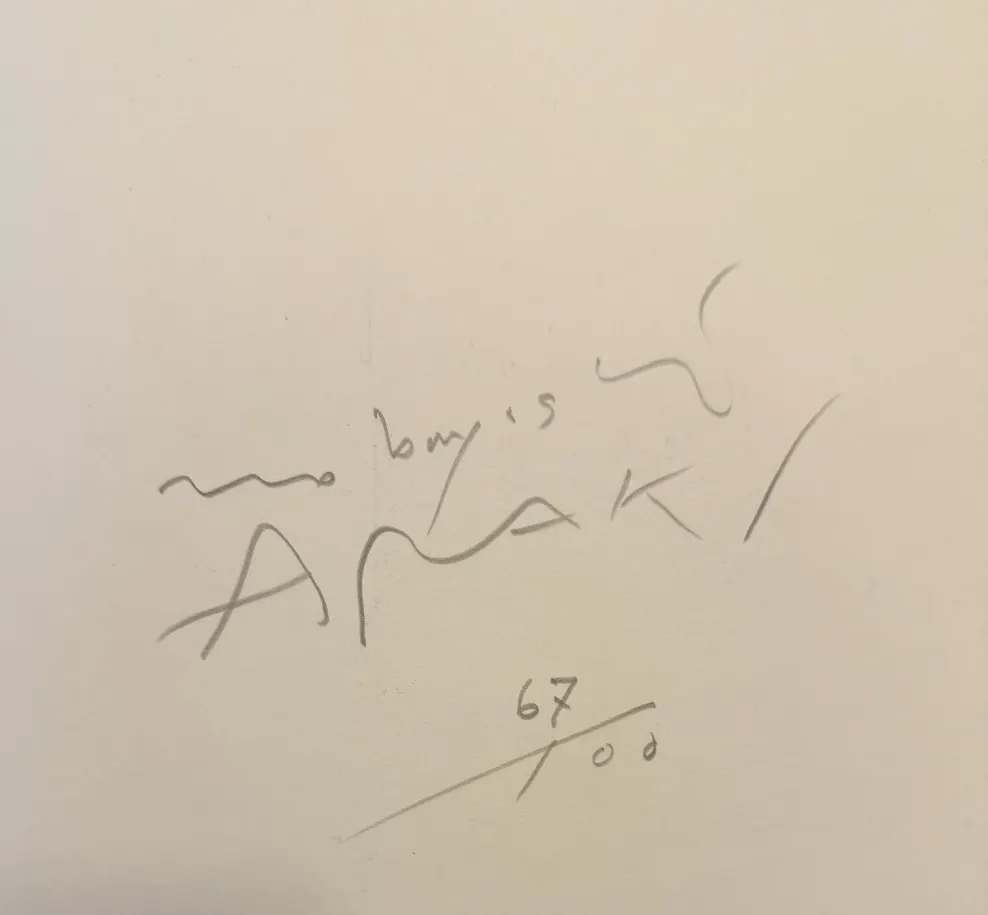
Nobuyoshi araki
or applicable right holders.
Poster


Self, Life, Death, Phaidon, 2005, p. 622.

Self, Life, Death, Phaidon, 2005, p. 622.
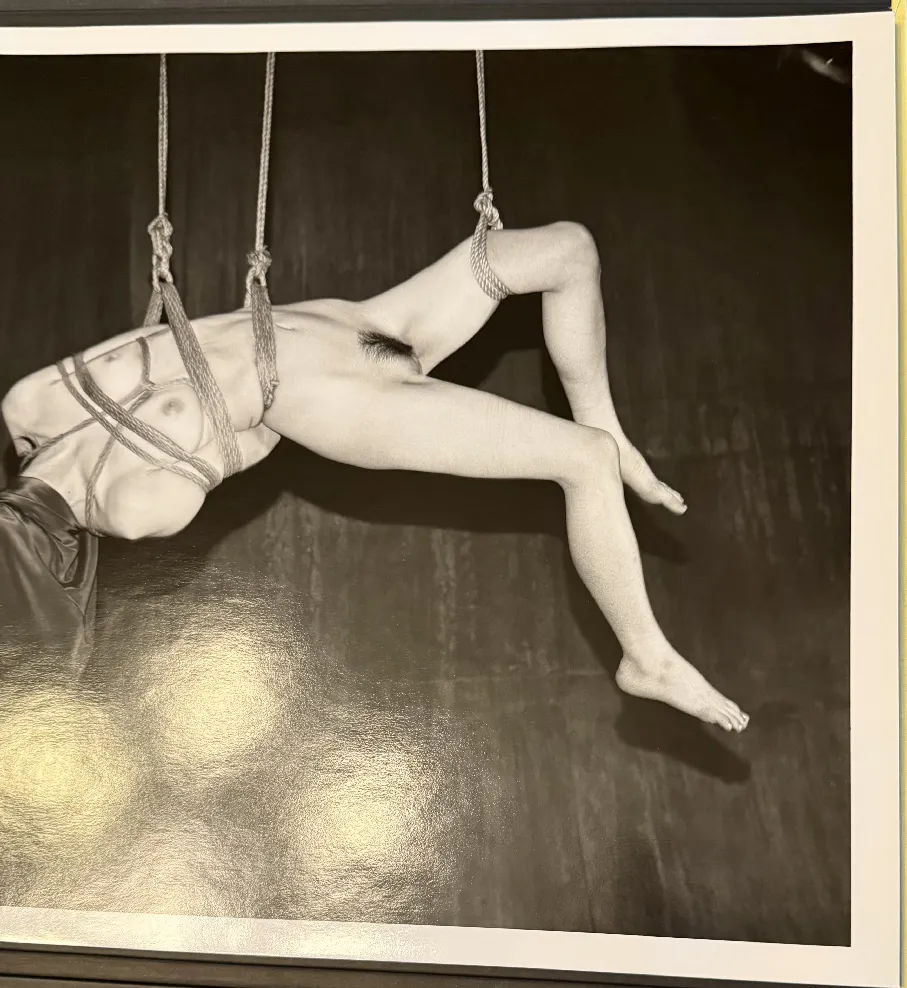
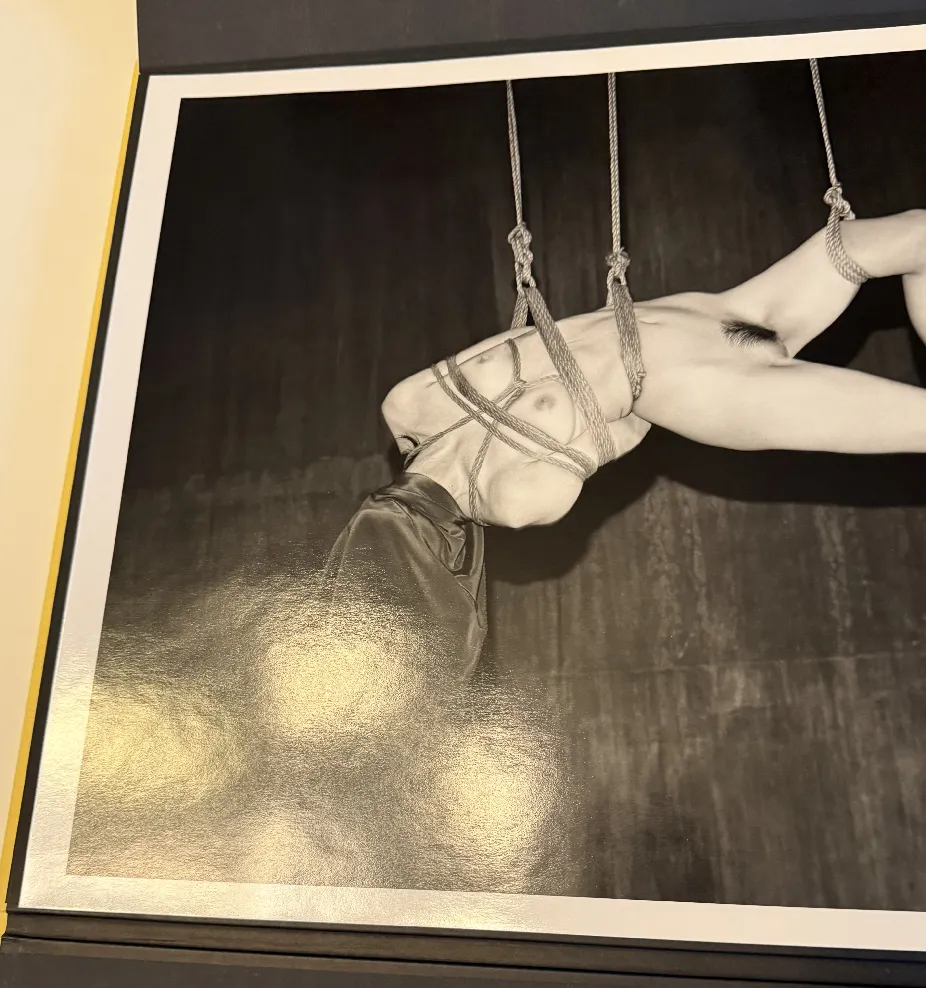
This image explores the complex intersection of eroticism, mortality, and intense emotional devotion. Famously preoccupied with the dual realities of eros and death (thanatos), Araki’s work often uses traditional Japanese bondage (kinbaku) not merely as an exploration of physical restraint, but as a metaphor for deep psychological intimacy, vulnerability, and the tragic inevitability of loss, particularly in the shadow of his wife Yoko's passing.
The composition presents a striking spatial tension with a suspended figure rendered in high-contrast monochrome. The precise geometry of the ropes cuts across the human form, creating a taut architectural grid against a dark, recessive background. Araki emphasizes the tactile grain of the gelatin silver medium, capturing the subtle play of light across skin and fiber while heightening the visceral immediacy of the gesture.
Self, Life, Death, Phaidon, 2005, p. 622.