


Which art books, prints and posters are available by and about this artist? Here is a sample of items of interest to a typical collector:

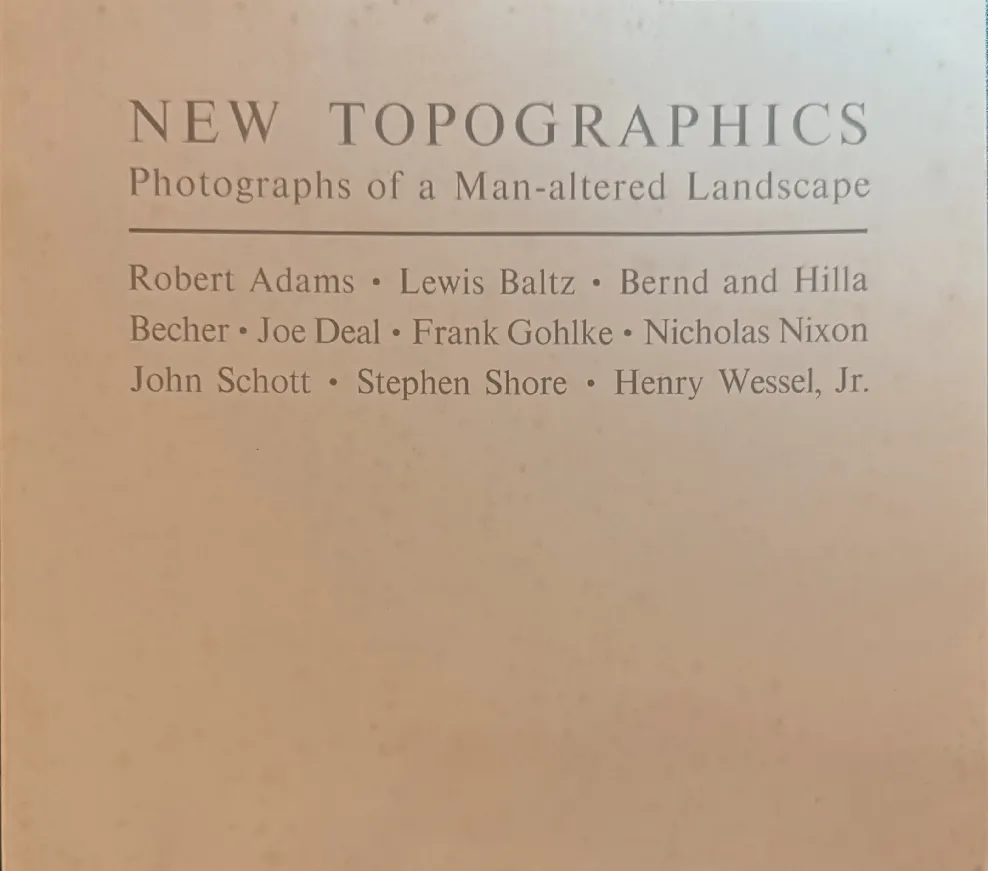
New Topographics: Photographs of a Man-Altered Landscape (1975) is the seminal exhibition catalog published by the International Museum of Photography at George Eastman House for the groundbreaking exhibition curated by William Jenkins.
The catalog documents a pivotal shift in 20th-century American landscape photography away from the idealized, majestic wilderness traditions of Ansel Adams and Edward Weston. Instead, it features artists who approached the modern built environment with deadpan neutrality, clinical detachment, and objective, documentary precision.
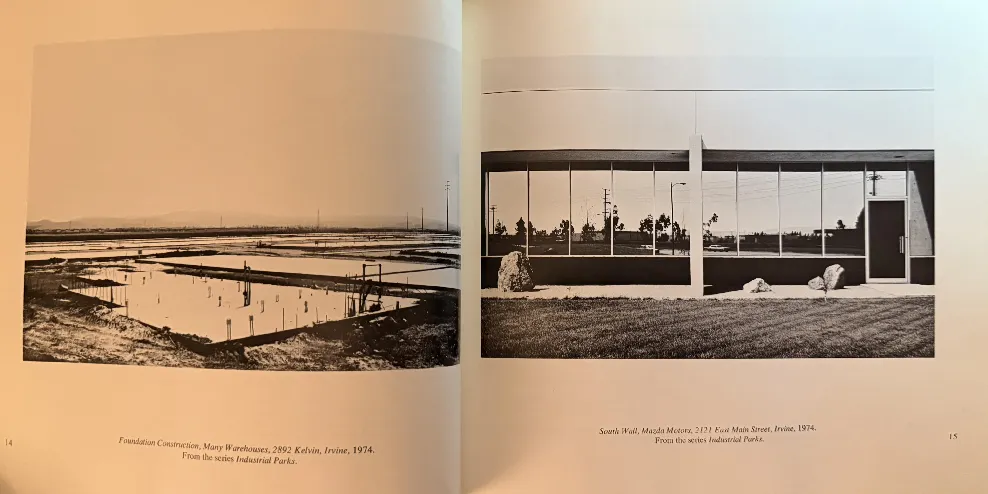
The featured photographers, Robert Adams, Lewis Baltz, Bernd and Hilla Becher, Joe Deal, Frank Gohlke, Nicholas Nixon, John Schott, Stephen Shore, and Henry Wessel, systematically recorded suburban suburban sprawl, industrial parks, highway strip developments, housing developments, and motels across the American West and industrial centers.
Rather than seeking untouched natural beauty, the project examines the visual reality of human intrusion, suburban expansion, and land development. Images are characterized by a banality of subject matter, rigid geometric composition, wide-angle or large-format clarity, and an intentional lack of drama, sentimentality, or overt emotional commentary. Influenced heavily by Bernd and Hilla Becher's systematic documentation of industrial structures in Europe, the catalog emphasizes seriality, architectural forms, and comparative observation.
New Topographics fundamentally redefined how landscape photography was understood and practiced. By elevating ordinary, human-altered environments to formal art, it influenced generations of photographers and remains one of the most important intellectual and aesthetic turning points in contemporary photography.
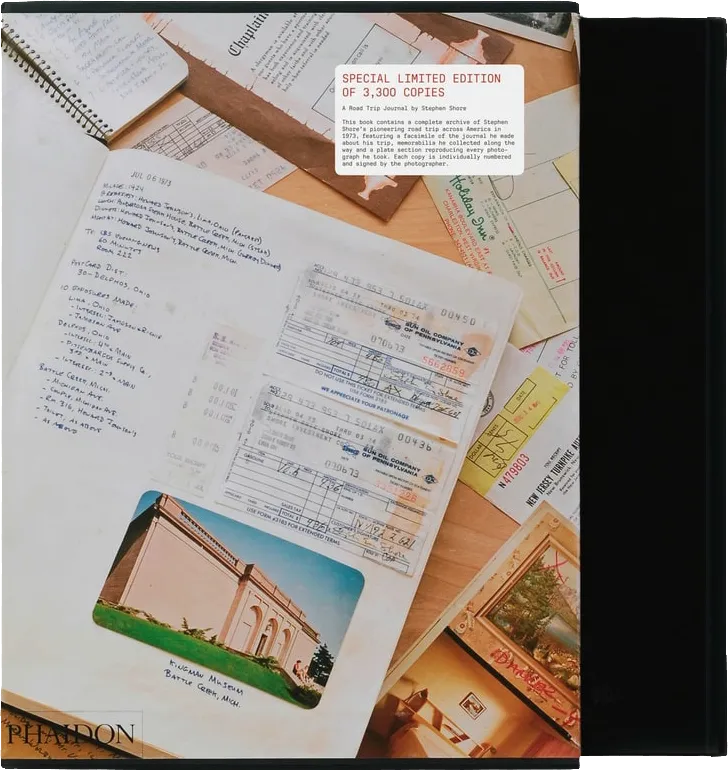
In 1972, Stephen Shore left New York City and set out with a friend to Amarillo, Texas. He didn't drive, so his first view of America was framed by the passenger's window frame. He was taken aback by the fact that his experience of life as a New Yorker had very little in common with the character and aspirations of Middle America. Later that year he set out again, this time on his own, with just a driver's licence and a Rollei 35 - a point-and-shoot camera - to explore the country through the eyes of an everyday tourist.
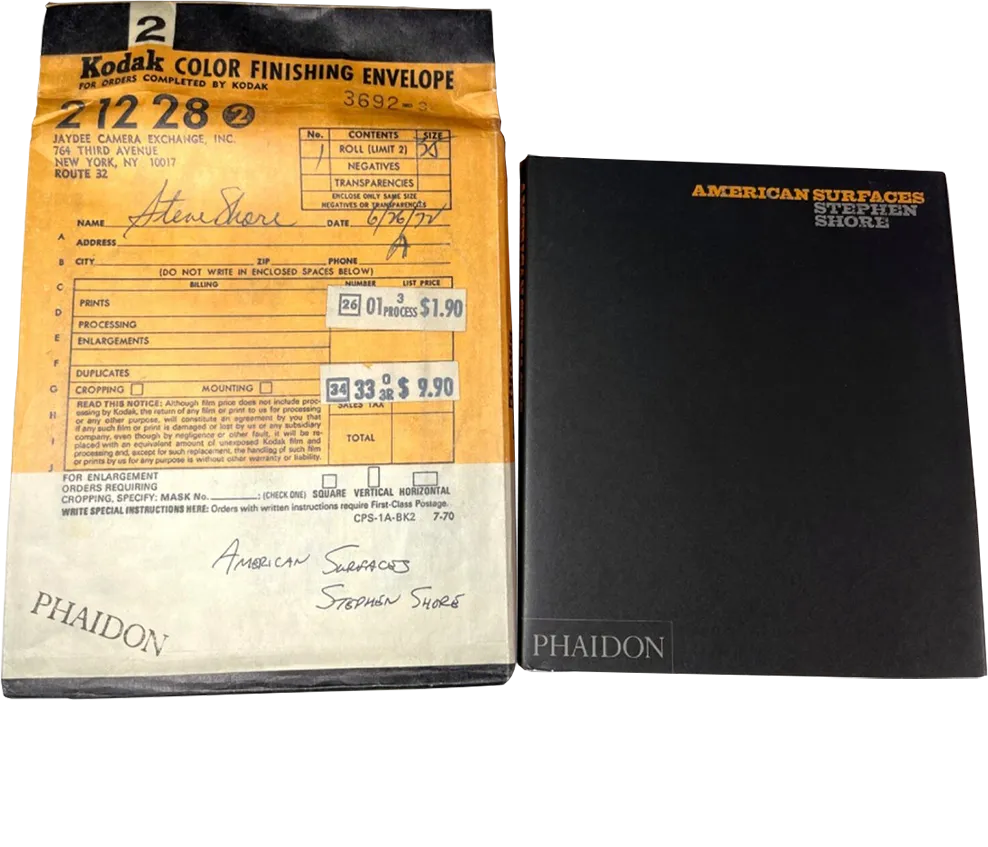
The project was entitled American Surfaces, in reference to the superficial nature of his brief encounters with places and people, and the underlying character of the images that he hoped to capture. Shore photographed relentlessly and returned to New York triumphant, with hundreds of rolls of film spilling from his bags. In order to remain faithful to the conceptual foundations of the project, he followed the lead of most tourists of the time and sent his film to be developed and printed in Kodak's labs in New Jersey.
The result was hundreds and hundreds of exquisitely composed colour pictures, that became the benchmark for documenting our fast-living, consumer-orientated world. The corpus of his work - following on from Walker Evans' and Robert Frank's epic experiences of crossing America - influenced photographers such as Martin Parr and Bernd & Hilla Becher, who in turn introduced a new generation of students to Shore's work.
To pay homage to the original conceptual roots of the 1972 project, where Shore intentionally bypassed professional art labs and sent his film to a standard Kodak processing plant in New Jersey just like an ordinary tourist, Phaidon designed the first edition of this book to be enclosed in a specially designed plastic sleeve that replicated a vintage Kodak color processing order bag.

NRW Forum Dusseldorf / Aperture


%2520copy.webp)
Roman Numerals
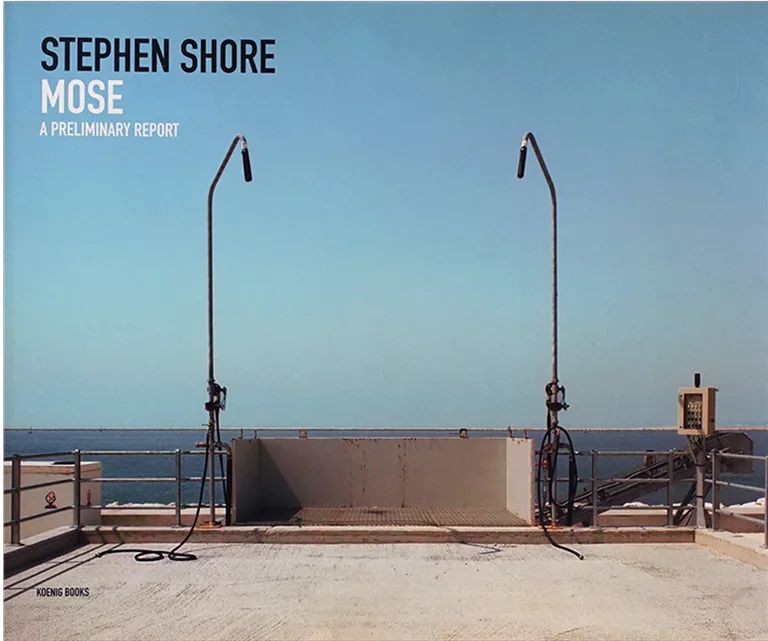
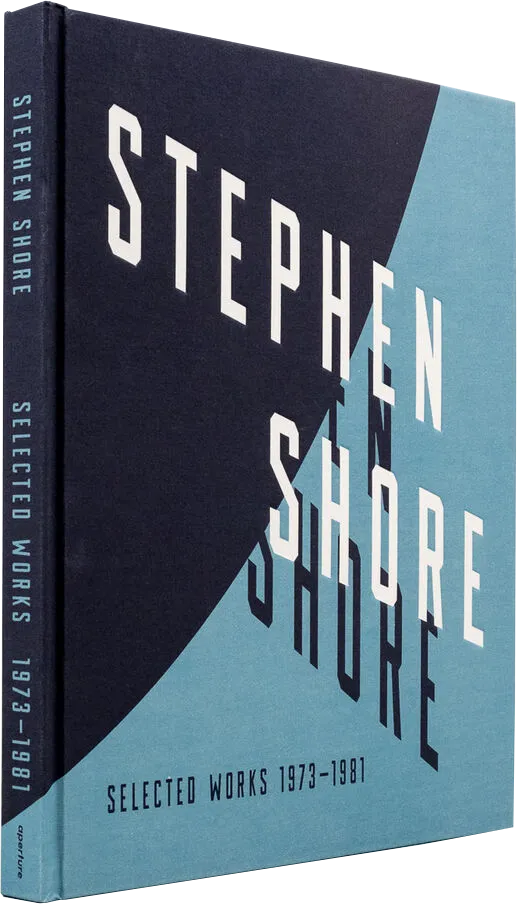
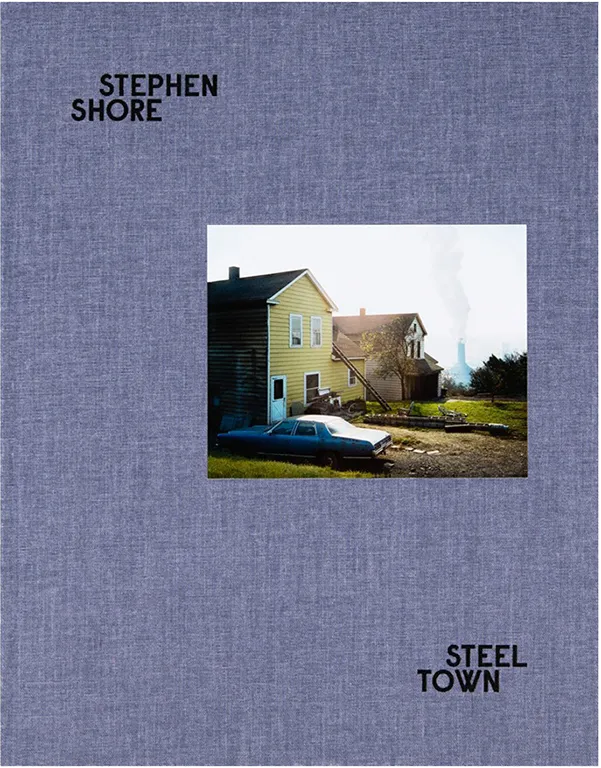


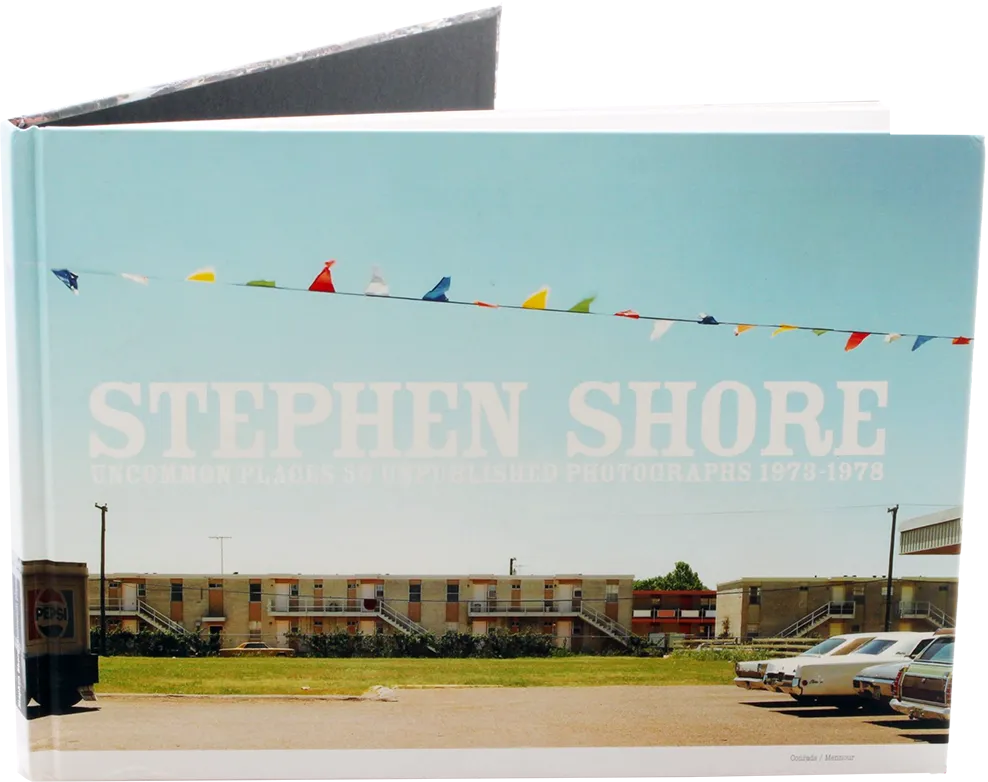
Walter Conrads & Kamel Mennour
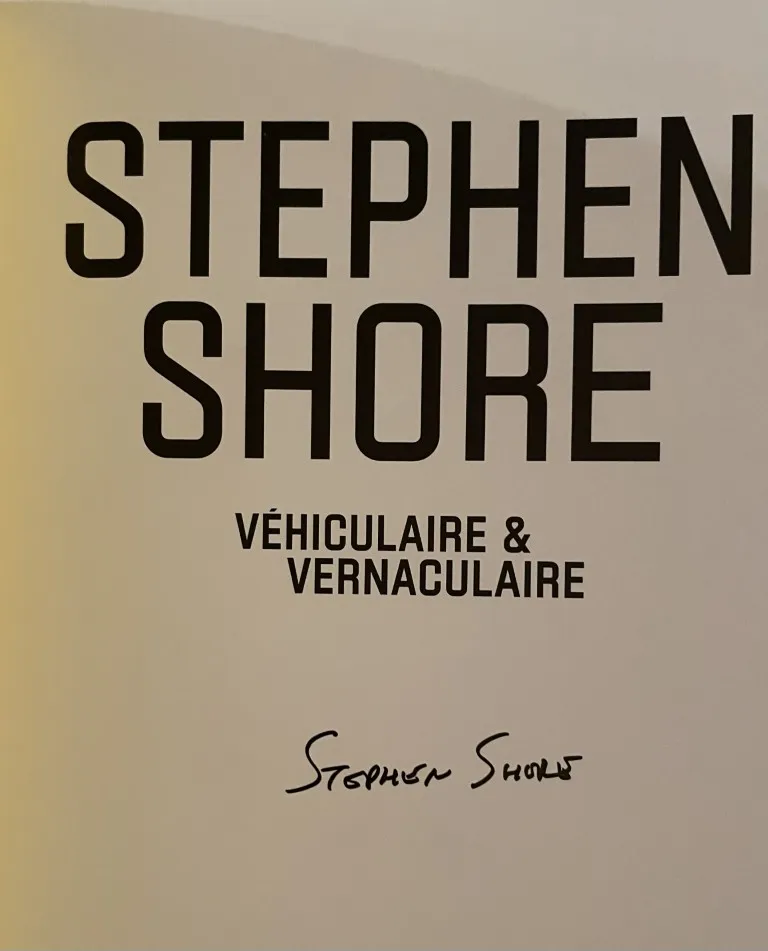

Xavier Barral / Fondation Cartier Bresson
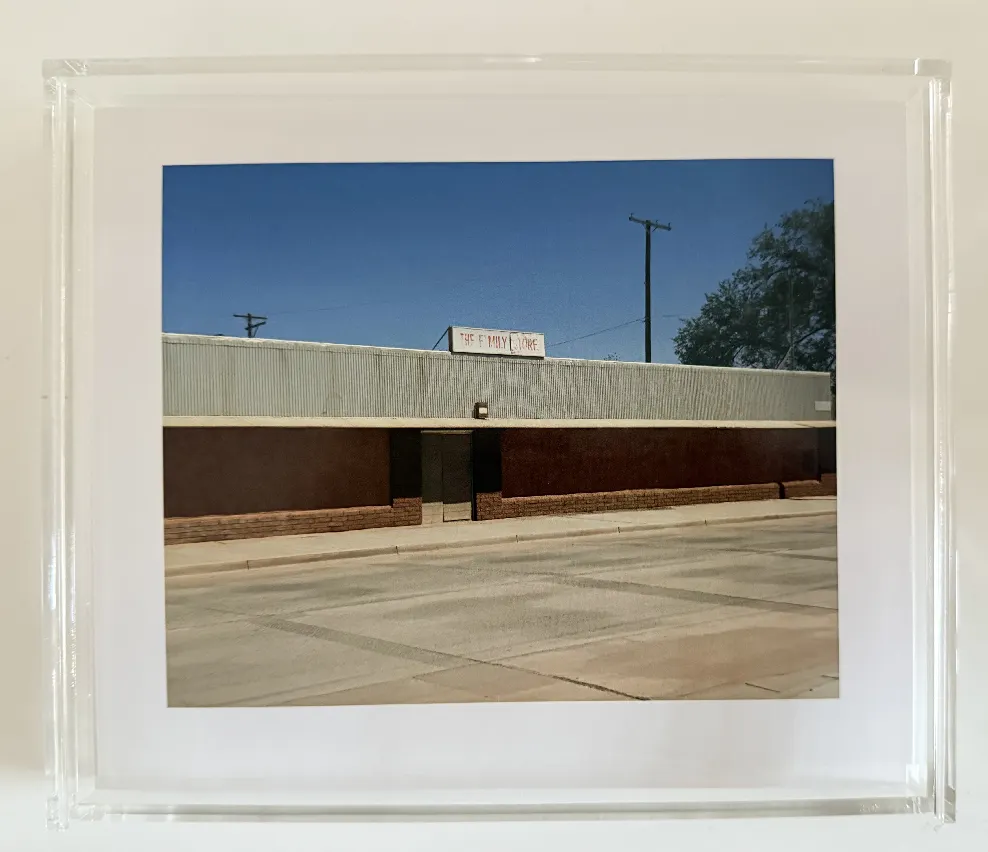
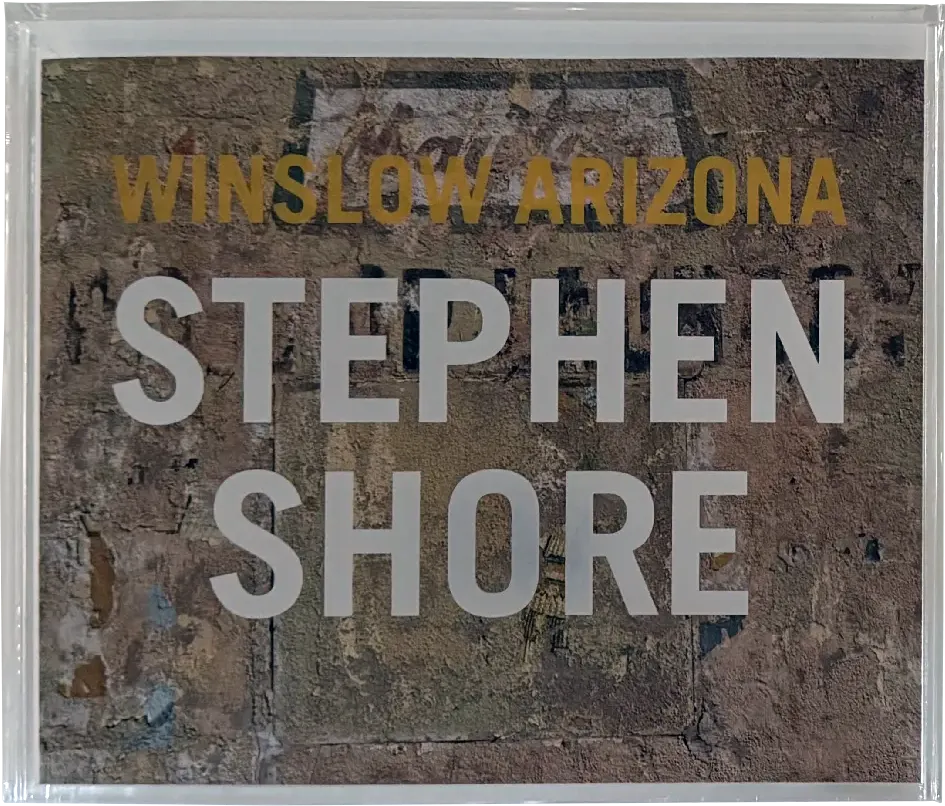
Amana / IMA
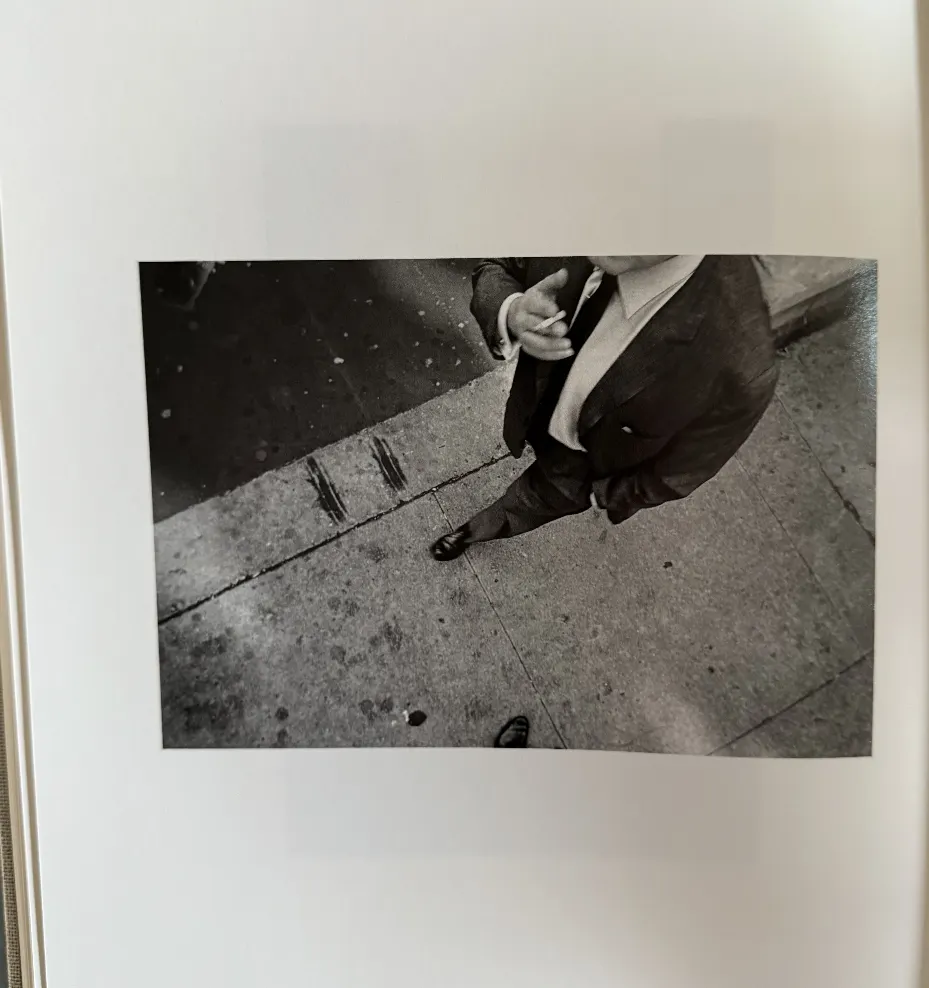
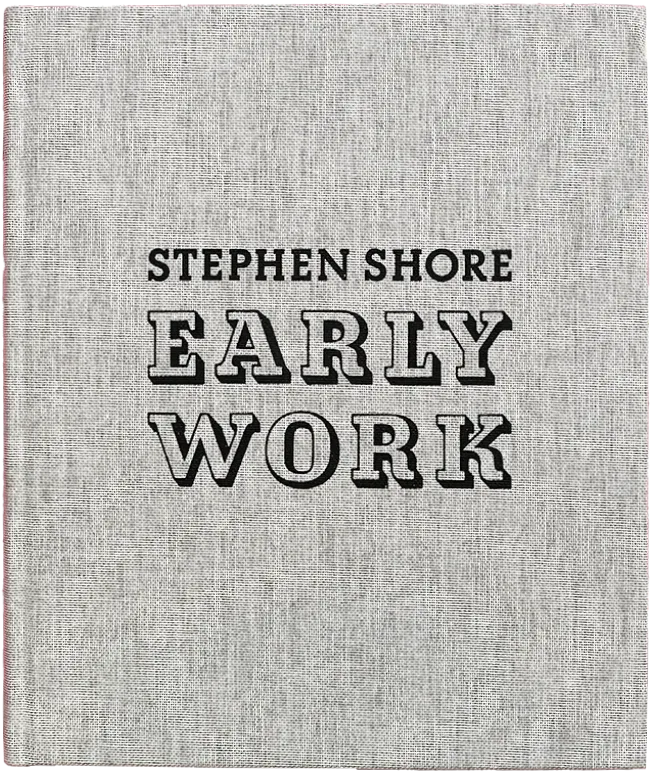


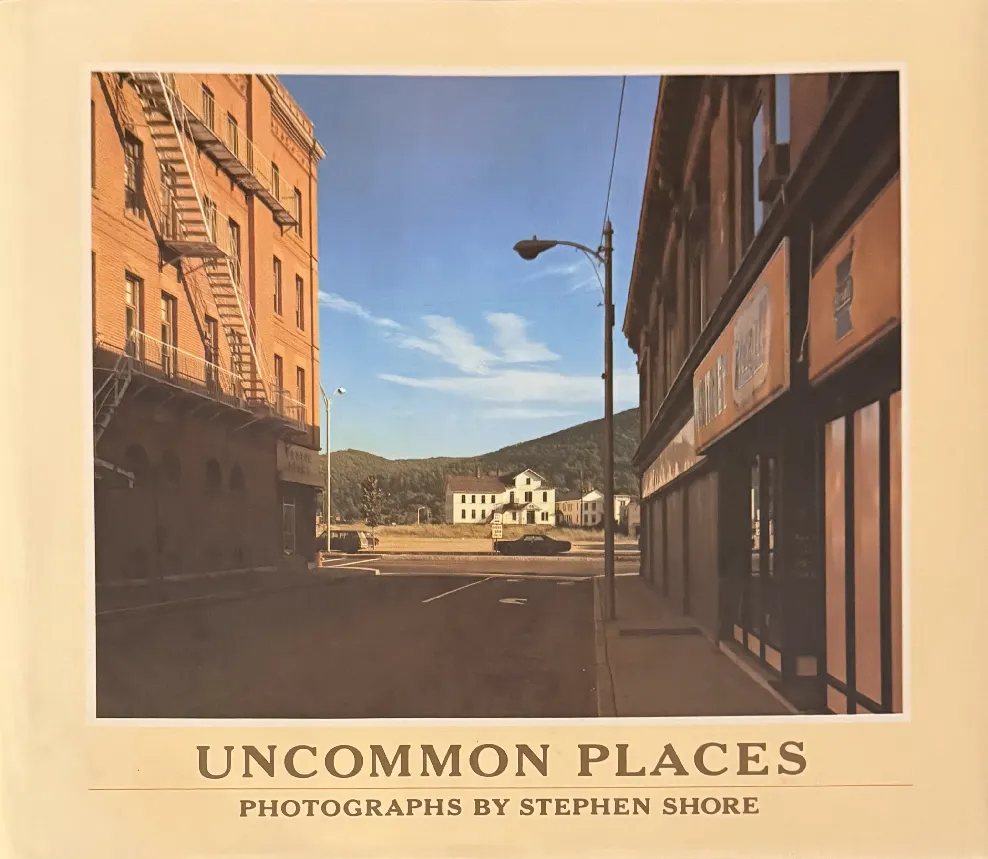
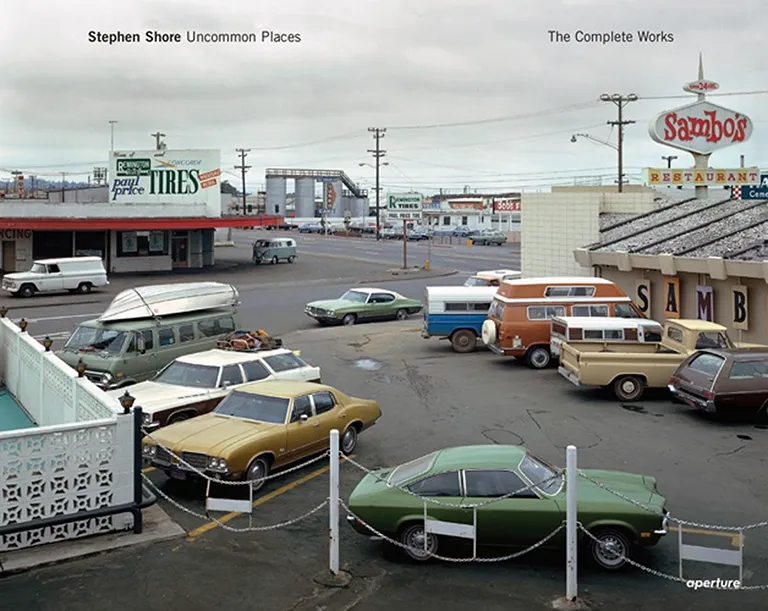
Stephen Shore's Uncommon Places (1982) is a defining masterpiece of the New Topographics and New Color movements, originating from Shore's legendary cross-country road trips across the United States in the early 1970s.
Traveling primarily with an 8x5 view camera, and later a smaller format, Shore systematically documented the vernacular landscape of everyday America: parking lots, roadside diners, motels, main streets, and banal suburban architecture.
Rather than treating color photography as commercial or snapshot material, Shore applied the meticulous composition and deliberate pacing of traditional landscape and architectural photography to the modern commercialized environment. His images elevated the ordinary details of the American highway into profound cultural artifacts.
The work captures the banal architecture and visual clutter of the American roadside, gas stations, signage, storefronts, and motel rooms, finding geometric harmony and dignity in ordinary places. As a pioneer of color art photography (alongside contemporaries like William Eggleston), Shore used natural light and saturated palettes to record the specific, unassuming hues of late 20th-century consumer culture.
The series acts as a visual diary of transit, reflecting the vastness, isolation, and unglamorous reality of America between major metropolitan centers.
Uncommon Places fundamentally altered the trajectory of photography by proving that color and large-format cameras could capture high art in everyday, overlooked environments.